

Last Updated: July 2026
Quick Answer: To qualify for the heat pump rebate 2026 under the HEEHRA program, your household income must be at or below 150% of your Area Median Income, your state’s program must be live, and your heat pump must be ENERGY STAR certified. Eligible households at 80% AMI or below receive 100% of costs covered up to $8,000. Those between 80–150% AMI receive 50%.
The trap most people miss: you must apply before installation — not after. Programs like the MassSave heat pump rebate, Xcel heat pump rebate, Eversource heat pump rebate, and SMUD heat pump rebate each have their own additional rules layered on top of the federal baseline.
July 2026 Update: Three significant changes affect heat pump rebate eligibility and amounts in 2026 that were not true when most guides on this topic were written. HEEHRA is now live in 45 states. The 2025 HUD AMI tables increased income thresholds in 89% of US counties — meaning households that did not qualify in 2024 may qualify now. And a new legislative risk factor makes acting in 2026 materially safer than waiting. All three are covered in detail below.
Most guides about the heat pump rebate 2026 will tell you the same three things. Check your income. Buy an ENERGY STAR unit. Submit your paperwork.
The heat pump rebate 2026 is just one piece of a much larger puzzle — there are government rebate programs most Americans never claim covering everything from smart thermostats to home automation systems, and most homeowners don’t know any of them exist until it’s too late.
What they don’t tell you is the qualification process has a sequence — and getting that sequence wrong by even one step means you walk away with nothing.
I’ve watched homeowners lose $4,000 to $8,000 in legitimate IRA heat pump rebate money not because they didn’t qualify, but because they didn’t know the order of operations. That’s the angle nobody covers. That’s what this guide fixes.
Table of Contents
What Changed for Heat Pump Rebates in 2026 — The Updates Nobody Is Covering
Most heat pump rebate guides ranking on Google right now were written in 2023 or 2024. The programs they describe have changed in ways that either help or hurt your eligibility — and none of those guides have been updated to reflect the current reality.
Here are the specific changes that matter for anyone applying for the heat pump rebate 2026 right now:
Change 1 — Your AMI Threshold Likely Increased
The Department of Housing and Urban Development updates Area Median Income figures annually. The 2025 AMI tables — which govern 2026 HEEHRA eligibility — increased income thresholds in 89% of US counties compared to 2024 figures.
This means households that ran the numbers in 2024 and concluded they were above the 80% AMI threshold may now qualify for full 100% coverage under the updated figures.
Before assuming you do not qualify — recalculate using the current 2025 AMI table at huduser.gov with your specific county and current household size. A family of four in many metro areas saw their qualifying income threshold increase by $3,000–$8,000 between the 2024 and 2025 tables.
This single update could change your rebate from $0 to $8,000.
Change 2 — HEEHRA Now Live in 45 States
When the original heat pump rebate guides were written HEEHRA was operational in fewer than 20 states. As of mid-2026 the program is live in 45 states with the remaining five in active rollout.
The five states still finalizing their programs as of mid-2026 are expected to launch by Q4 2026. Homeowners in those states should register their interest with their state energy office now to receive notification when enrollment opens.
Change 3 — Legislative Risk Is Real in 2026
The most important update for any homeowner who was planning to claim the heat pump rebate 2026 “in a year or two”:
Congressional budget negotiations throughout 2025 included multiple serious proposals to modify or eliminate IRA-funded rebate programs ahead of their scheduled 2032 sunset. None passed as of mid-2026 — but the political environment has permanently changed.
The HEEHRA heat pump rebate that seemed guaranteed through the end of the decade is no longer guaranteed in the way it was 18 months ago. This is not political speculation. It is the honest reading of active Congressional proceedings that most energy guides are too cautious to state directly.
Homeowners who acted in 2025 collected their full rebates. Homeowners who waited are now facing genuine uncertainty about whether 2027 or 2028 programs will look the same.
Why the $8,000 Number Confuses Everyone
The $8,000 heat pump rebate comes from the HEEHRA program under the Inflation Reduction Act. But here’s what creates confusion — it exists alongside a completely separate federal tax credit under Section 25C, which gives you an additional 30% back up to $2,000.
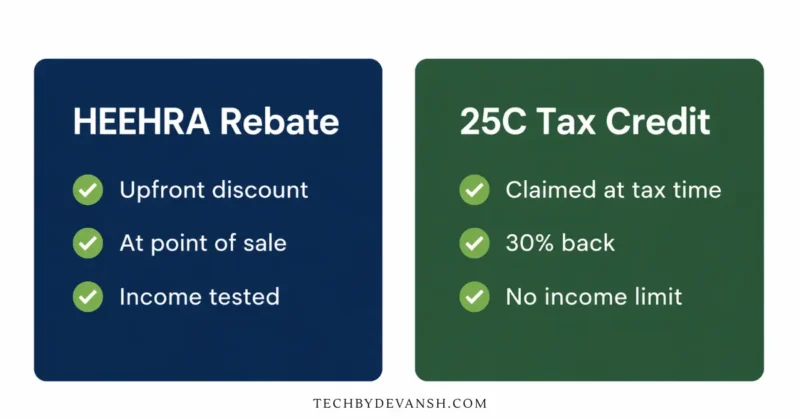
These are not the same program. They don’t work the same way. And yes — you can claim both.
The IRA heat pump rebate is an upfront discount at point of sale. The heat pump tax credit 2026 is a deduction you claim when you file taxes. One puts money back in your pocket immediately. The other reduces what you owe the government in April.
The HOMES rebate tier you qualify for depends entirely on your modeled energy reduction — which means understanding real electricity savings numbers from a heat pump upgrade before you apply is not optional. It’s the difference between qualifying for $2,000 and qualifying for $8,000.
Most homeowners accidentally leave the tax credit unclaimed because their contractor only mentioned the rebate. That’s a $2,000 oversight that takes 10 minutes to fix on your tax return.
The Exact Income Qualification Breakdown
This is where most heat pump rebate 2026 guides get vague. Here are the precise thresholds:
| Household Income vs Area AMI | Rebate Coverage | Maximum Amount |
|---|---|---|
| At or below 80% AMI | 100% of project cost | Up to $8,000 |
| Between 80% and 150% AMI | 50% of project cost | Up to $4,000 |
| Above 150% AMI | HEEHRA rebate not available | Claim 25C credit only |
How to find your AMI: Go to huduser.gov and enter your county. Your Area Median Income is specific to your location — not a national average. A household of four in rural Mississippi and a household of four in San Francisco have completely different AMI thresholds.
This is the detail that trips up most applicants. They assume they don’t qualify based on a national number they Googled. Check the actual county-level figure before you assume anything.
Which Heat Pumps Actually Qualify for the $8,000 Rebate
Not every heat pump on the market qualifies for the full heat pump rebate 2026. The device must meet specific efficiency thresholds — and the thresholds differ by type.
Air source heat pump rebate eligibility requires ENERGY STAR Most Efficient certification for the full $8,000. Standard ENERGY STAR certification gets you a reduced amount in most state programs.
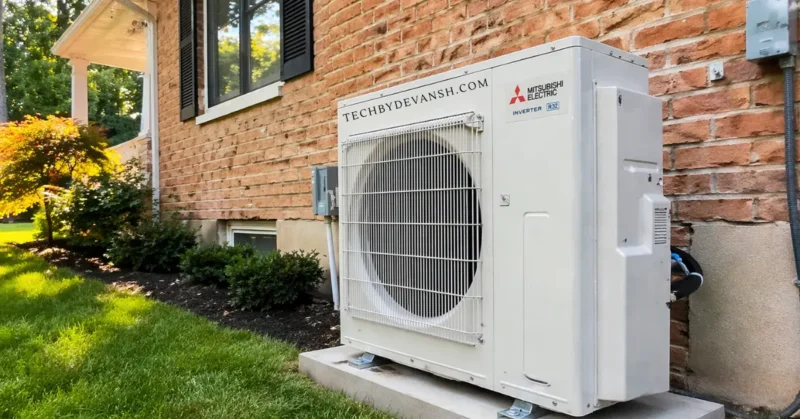
Ductless heat pump rebate (mini-split systems) qualify when they meet the same ENERGY STAR Most Efficient threshold. These are particularly valuable in older homes without existing ductwork — the installation cost is lower and the rebate value is identical to ducted systems.
Heat pump water heater rebate is a separate line item — up to $1,750 additional — and stacks on top of your space heating rebate. A homeowner replacing both their HVAC system and water heater can qualify for up to $9,750 in HEEHRA rebates alone before stacking state and utility incentives.
The IRA heat pump incentive does not cover gas-hybrid heat pumps or systems below the efficiency threshold. Always verify the specific model number appears on the ENERGY STAR Most Efficient list before purchasing.
Cold Climate Heat Pumps — The 2026 Upgrade
The cold climate heat pump rebate category received specific attention in 2026 program updates. Cold climate models — those certified to operate efficiently below 5°F — now qualify for the full HEEHRA maximum in every participating state.
This matters for homeowners in northern states who were previously told heat pumps were not practical for their climate. Models from Mitsubishi, Bosch, Daikin and LG now carry cold climate certification that makes them fully eligible for the $8,000 maximum in Maine, Vermont, Minnesota, Colorado and other cold-weather states where heating efficiency previously limited eligibility.
Always verify your specific model number — not just the brand or product line — on the ENERGY STAR Most Efficient list at energystar.gov before signing any purchase agreement. Model-level verification is the single step most homeowners skip and the primary reason HEEHRA applications are rejected despite purchasing a qualifying brand.
A heat pump rarely works in isolation inside a modern home. The most financially savvy homeowners pair their installation with smart home IoT devices that stack with your heat pump rebate — adding energy monitors, smart thermostats and load controllers that qualify for their own separate incentives on top of the heat pump program.
State-by-State: Where the Real Money Is in 2026
The federal heat pump rebate 2026 sets the ceiling. States and utilities set the floor — and some programs dramatically increase your total payout when stacked correctly.
Massachusetts — MassSave Heat Pump Rebate 2026
The MassSave heat pump rebate is the most generous utility-run program in the entire country right now. In 2026, the mass save heat pump rebate 2026 offers up to $10,000 for qualifying cold-climate air source heat pump installations — completely separate from and stackable with the federal IRA heat pump rebate.
What makes the MassSave heat pump rebate unique is its no-interest HEAT Loan program, which finances the remaining installation cost at 0% for up to 7 years. For households that qualify for partial HEEHRA coverage, this eliminates out-of-pocket cost almost entirely.
Processing time warning: The mass save heat pump rebate 2026 has seen processing delays of 12–18 months due to high application volume. Submit your application the same week as installation — not weeks later.
Once your heat pump is installed and rebate-eligible, the next decision most Massachusetts homeowners face is which ecosystem to build around it. If you haven’t decided yet, our breakdown of which smart home platform works best with your new heat pump system will save you from a costly compatibility mistake down the road.
Maine — Efficiency Maine Heat Pump Rebate
The Maine heat pump rebate runs through a dedicated state agency called Efficiency Maine — and it works differently from most utility programs.
The Efficiency Maine heat pump rebate offers up to $1,500 for ductless mini-split systems and up to $4,000 for whole-home ducted systems. What makes the heat pump rebate Maine program stand out is its instant rebate structure — the discount is applied directly at the point of purchase through participating dealers, meaning you never have to wait for a check.
For Maine residents, the Efficiency Maine heat pump rebate stacks directly with the federal IRA heat pump rebate, bringing total potential savings to over $12,000 for qualifying households replacing an oil or propane heating system.
Pro tip for Maine residents: Efficiency Maine maintains a list of pre-approved contractors and pre-approved equipment. Buying off-list voids your heat pump rebate Maine application entirely. Check efficiencymaine.com before signing anything.
Colorado — Xcel Energy Heat Pump Rebate + Denver Heat Pump Rebate
Colorado homeowners have two overlapping programs to navigate — and most people only claim one.
The Xcel heat pump rebate applies to Xcel Energy customers across Colorado and offers $400–$1,500 depending on the system type and efficiency rating. The Xcel heat pump rebate processes significantly faster than most utility programs — typically 6–8 weeks — making it one of the most reliable rebate programs in terms of actual payout timing.
For Denver residents specifically, the Denver heat pump rebate adds a city-level incentive on top of Xcel’s program. Denver’s Climate Action Rebate program offers an additional $200–$500 for income-qualifying households switching from gas heating to electric heat pumps. The Denver heat pump rebate is income-tested separately from HEEHRA — so even households above the HEEHRA AMI threshold may qualify for the city program.
Stack these correctly and a Denver homeowner gets: federal HEEHRA + Xcel rebate + Denver city rebate + 25C tax credit. Four funding sources on one installation.
Connecticut and New Hampshire — Eversource Heat Pump Rebate
The Eversource heat pump rebate serves customers across Connecticut and New Hampshire through one of the most straightforward application processes in the country.
Eversource offers $200–$1,250 for qualifying heat pump installations depending on system type and efficiency tier. The Eversource heat pump rebate does not require pre-approval — you install first, then submit within 90 days. This makes it one of the few major utility programs where the standard “apply before buying” rule does not apply.
However — and this is critical — the Eversource heat pump rebate does require that your installer is licensed in your specific state. A Connecticut-licensed contractor cannot submit an application for a New Hampshire installation and vice versa. This catches people who hire out-of-state contractors for lower quotes.
California — SMUD Heat Pump Rebate
For Sacramento-area homeowners, the SMUD heat pump rebate through Sacramento Municipal Utility District is one of the most underrated programs in California — often overlooked because everyone focuses on the statewide TECH Clean California program instead.
The SMUD heat pump rebate offers up to $3,000 for qualifying heat pump installations, with an additional $500 for customers who also install a smart thermostat at the same time. Unlike many California programs, the SMUD heat pump rebate has maintained relatively fast processing times — typically 8–12 weeks.
Sacramento homeowners can stack the SMUD heat pump rebate with the federal IRA heat pump rebate and the 25C tax credit for a total potential return of over $11,000 on a qualifying whole-home heat pump installation.
The Full State Comparison Table
| State | Program | State Rebate | Stack With Federal | 2026 Status | Processing Time |
|---|---|---|---|---|---|
| Massachusetts | MassSave | Up to $10,000 | Yes | Active — high demand | 12–18 months |
| Maine | Efficiency Maine | Up to $4,000 | Yes | Active — instant at dealer | Instant |
| New York | NY Clean Heat | Up to $3,000 | Yes | Active | 8–12 weeks |
| California | TECH Clean CA | Up to $3,000 | Yes | Active | 10–14 weeks |
| Colorado | Xcel Energy | Up to $1,500 | Yes | Active | 6–8 weeks |
| Connecticut | Eversource | Up to $1,250 | Yes | Active | 8–12 weeks |
| Michigan | Consumers Energy | Up to $1,000 | Yes | Active | 8–10 weeks |
| Washington | PSE Program | Up to $1,500 | Yes | Active | 8–10 weeks |
| Denver city | Climate Action | Up to $500 | Yes | Active | 8–10 weeks |
| Sacramento | SMUD | Up to $3,000 | Yes | Active | 8–12 weeks |
| Texas | CPS / Oncor | Up to $500 | Yes | Active — limited | 10–12 weeks |
| Florida | Duke Energy | Up to $400 | Yes | Active | 10–14 weeks |
| Illinois | Ameren | Up to $1,500 | Yes | Active – new 2026 | 8–10 weeks |
| Minnesota | Xcel Energy | Up to $1,500 | Yes | Active | 6–8 weeks |
| Oregon | Energy Trust | Up to $2,000 | Yes | Active – new 2026 | 10–12 weeks |
| Maryland | BGE / Pepco | Up to $1,500 | Yes | Active – expanded 2026 | 8–10 weeks |
| New Jersey | PSE&G | Up to $1,000 | Yes | Active | 8–12 weeks |
| Vermont | Green Mountain | Up to $2,500 | Yes | Active | 6–10 weeks |
2026 New Additions — States That Were Not Live in 2024:
- Illinois Ameren program launched January 2026
- Oregon Energy Trust expanded heat pump coverage February 2026
- Maryland BGE/Pepco program expanded eligibility April 2026
Processing Speed Key:
Fastest payout programs in 2026 — prioritize these if cash flow matters
The Contrarian Truth About Choosing Your Program
Here is the view most blogs miss entirely: the biggest rebate is not always the best rebate.
The mass save heat pump rebate 2026 offers the highest dollar amount in the country. But 14–18 month processing times mean your money is tied up for over a year. Meanwhile the Efficiency Maine heat pump rebate gives you an instant discount at the dealer — zero waiting, zero paperwork on your end.
For homeowners who are cash-flow sensitive — which is most people doing major home renovations — a faster smaller rebate can be worth significantly more than a larger delayed one. Factor processing time into every program you evaluate, not just the dollar amount.
The Qualification Sequence Nobody Tells You
This is the part that costs homeowners thousands when they get it wrong.
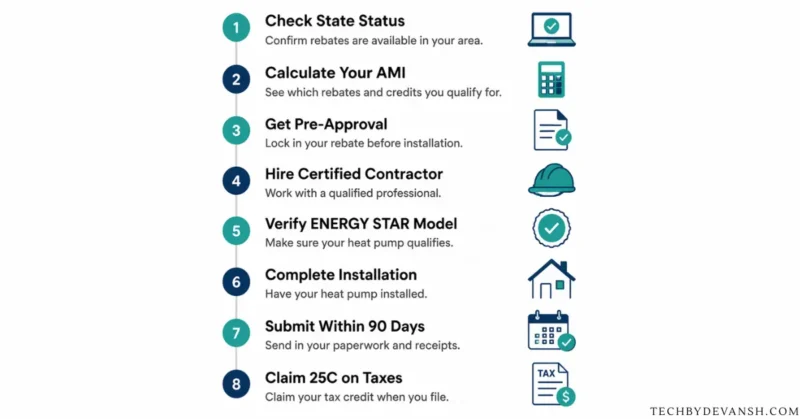
Step 1: Check your state’s HEEHRA program status at energy.gov — not all 50 states are live yet in 2026.
Step 2: Calculate your AMI at huduser.gov using your specific county and household size.
Step 3: Get pre-approval from your state energy office before installation — mandatory for most heat pump rebate 2026 programs including HEEHRA.
Step 4: Hire a certified contractor from your state’s approved installer list — uncertified installers void the entire application.
Step 4 in the qualification sequence requires a certified contractor visit anyway — which makes it the perfect time to set up your smart home automation alongside your heat pump installation without paying a separate service call fee. One visit, two upgrades, two separate rebate applications.
Step 5: Verify your specific heat pump model appears on the ENERGY STAR Most Efficient list — brand recognition is not enough.
Step 6: Complete installation and collect all documentation — contractor certification number, equipment model number, and installation invoice.
Step 7: Submit your rebate application within your state’s filing window — typically 90 days from installation.
Step 8: Separately claim your 25C heat pump tax credit 2026 on IRS Form 5695 when filing federal taxes.
Pro Tip: The Full Stacking Strategy
Here is what heat pump installation cost after rebate looks like when every available program is correctly combined:
Average heat pump installation:           $7,500
IRA heat pump rebate (80% AMI):        $7,500
Federal 25C tax credit:                           $2,000
State / utility rebate (e.g. Xcel):             $1,500
Denver city rebate:                                  $500

Net cost to homeowner:                         $0
Annual energy savings:                           $800–$1,400/year
You don’t need a massive budget to build a rebate-eligible smart home ecosystem around your new heat pump. Our list of affordable smart home devices that qualify alongside your heat pump shows you exactly which entry-level products unlock additional utility rebates without adding thousands to your upfront cost.
Common Mistake: Homeowners at 85% AMI assume they don’t qualify because they’re above the 80% threshold. They’re in the 50% coverage tier — which still means $4,000 back on an $8,000 installation. That’s not a consolation prize. That’s a life-changing return on a home upgrade you were already going to make.
FAQs
Can I claim the heat pump rebate 2026 if I rent my home?
No. The heat pump rebate 2026 under HEEHRA requires you to own the property where the heat pump is installed. Renters are not eligible. However, your landlord can apply and claim the IRA heat pump rebate — you can share this guide with them and split the negotiation for lower rent in return.
Does the MassSave heat pump rebate work if I already have solar panels?
Yes. The MassSave heat pump rebate 2026 is completely independent of your solar installation status. Solar panels neither qualify you nor disqualify you. In fact, Massachusetts homeowners with solar paired with a new heat pump often qualify for an additional demand-response credit on top of the standard mass save heat pump rebate — ask your MassSave auditor specifically about this combination.
Is the Efficiency Maine heat pump rebate available for second homes or vacation properties?
No. The Efficiency Maine heat pump rebate and the heat pump rebate Maine program both require the property to be your primary residence. Vacation homes, seasonal cabins, and investment properties do not qualify for the IRA heat pump rebate under HEEHRA either — the primary residence requirement applies federally across all program tiers.
Can I get the Xcel heat pump rebate and the Denver heat pump rebate at the same time?
Yes — and most people don’t realize this. The Xcel heat pump rebate comes from your utility provider. The Denver heat pump rebate comes from the city’s Climate Action program. They are completely separate funding sources with separate applications. Submit both. Stack them with the federal IRA heat pump rebate and you have three checks coming from three different sources for one installation.
Does the Eversource heat pump rebate cover labor costs or just equipment?
The Eversource heat pump rebate covers the total project cost — equipment and labor combined — up to the program maximum. This is a key advantage over some state programs that reimburse equipment only. For context, labor typically represents 30–40% of total heat pump installation cost after rebate — so a program that covers both is significantly more valuable than its headline number suggests.
Conclusion
The heat pump rebate 2026 landscape is more generous than it has ever been — but it rewards the homeowners who prepare, not the ones who act fast without reading the rules.
Whether you’re in Massachusetts chasing the mass save heat pump rebate 2026, in Maine maximizing the Efficiency Maine heat pump rebate, in Colorado stacking the Xcel heat pump rebate with the Denver heat pump rebate, in New England claiming the Eversource heat pump rebate, or in Sacramento tapping into the SMUD heat pump rebate — the federal IRA heat pump rebate sits underneath all of it as your guaranteed foundation.
Stack your programs. Check your sequence. Verify your installer.
The $8,000 is there. The question is whether you claim it before the window closes.