
Last Updated: July 2026
July 2026 Update: Three significant developments change the smart electric panel comparison in 2026. Span released firmware version 4.2 in April 2026 adding AI-powered predictive load management that anticipates grid stress events 2–4 hours in advance — a capability no other residential panel offers. Leviton released Smart Load Center 2.0 in February 2026 with expanded 42-circuit support and native Matter protocol integration. And IRS guidance issued January 2026 confirmed smart electric panels qualify for Section 25C credit when installed alongside any qualifying electrification upgrade — clarifying eligibility that previously required direct installation with a heat pump or solar system only. All three updates are covered in detail below.
Introduction: The Upgrade Nobody Warned Me About
I spent three weeks researching smart electric panels for home before I pulled the trigger on my own upgrade last year. I read every spec sheet, watched every installation video, and talked to two electricians who had installed both systems.
What surprised me was not the technology. It was how differently Span and Leviton approach the same fundamental problem — and how that difference completely changes which one belongs in your home.
Here is the honest comparison I wish I had found before I started.
This upgrade is part of a bigger trend where the government is actively incentivizing smart home adoption — I broke this down in The Government Is Paying Americans to Automate Their Homes in 2026 — Most People Have No Idea, including all major programs you can combine.
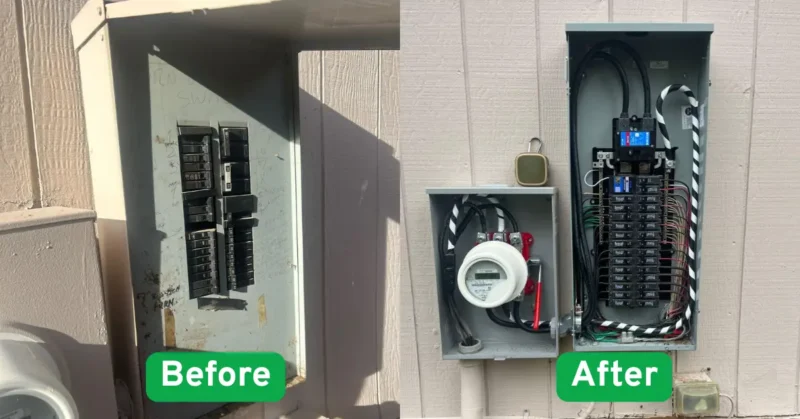
Table of Contents
Why Smart Electric Panels Matter More in 2026 Than Ever Before
The average American home in 2026 is asking more of its electrical panel than any panel built before 2015 was designed to handle. EV chargers, heat pumps, solar installations, battery storage systems and whole-home energy monitors are all competing for circuit capacity simultaneously.
If you’re also planning a heat pump upgrade, check out Heat Pump Rebate 2026: Claim Your Free $8,000 Before It’s Gone, which explains how homeowners are stacking rebates with panel upgrades.
A traditional breaker panel has no intelligence. It cannot tell you which circuit is drawing the most power at 3 PM on a Tuesday. It cannot automatically shift loads during peak utility hours to reduce your bill. It cannot integrate with your solar system to prioritize self-consumption over grid export.
Smart electric panels for upgrade solve all of these problems — and in 2026, both the Span and Leviton systems qualify for federal tax credits and utility rebates that make the upgrade significantly more affordable than the sticker price suggests.
If you want a full breakdown of how to claim this incentive, read my detailed guide on Home Energy Tax Credit 2026: Don’t Miss It Before It’s Gone, where I explain eligibility, limits and how to maximize your return.
Span Smart Panel — The Most Intelligent Option on the Market
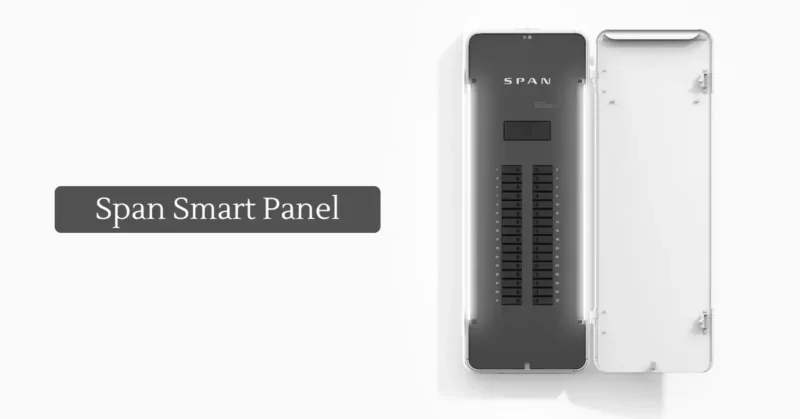
The smart electric panels for Span system is the most software-forward residential electrical panel available in the US right now. Span treats your electrical panel the way your smartphone treats your apps — every circuit is individually controllable, schedulable and monitorable from a single interface.
You can explore the official specifications and supported integrations on the SPAN Smart Panel official website, which provides detailed documentation for homeowners and installers
What Makes Span Different
The Span panel replaces your entire existing breaker box. Every circuit gets its own real-time energy monitoring, remote control capability and automated load management. During a grid outage with battery backup, Span automatically identifies which circuits are essential and which are not — and sheds non-essential loads to extend your backup runtime without any manual intervention.
The integration depth with solar systems, EV chargers and home batteries is genuinely unmatched. Span communicates directly with Tesla Powerwall, Enphase, SunPower and most major residential solar platforms — creating a unified energy management system that optimizes consumption, storage and export automatically.
Span Firmware 4.2 — The April 2026 Update That Changes the Comparison
Span released firmware version 4.2 in April 2026 — and the update introduces a capability that fundamentally separates the Span panel from every other residential electrical option on the market.
AI Predictive Load Management — Span’s 4.2 firmware connects to utility grid stress prediction data and begins automatically shifting non-essential loads 2–4 hours before a grid peak event occurs. Not during the event — before it.
This means a Span-equipped home running a dishwasher, EV charger and heat pump simultaneously receives an automated load shift command hours before your utility would normally send a demand response signal. The result: your home’s consumption is already optimized before the peak period begins — maximizing your demand response credit and protecting grid-connected appliances from stress events.
No other residential electrical panel — smart or traditional — offers predictive load management that operates on utility grid forecasting data rather than reactive event signals.
Span ADR 2.0 Integration — The 2026 Revenue Connection
Span 4.2 also introduced native integration with Automated Demand Response 2.0 programs — the new per-event payment structure launched in California, Texas and New York in late 2025.
A Span-equipped home enrolled in PG&E’s ADR 2.0 program earns:
- Base demand response credit: $150 annually
- Per-event performance bonuses: $8–$15 per qualifying event
- Span’s predictive optimization eligible events: 18–25 annually
- Total potential: $294–$525 annually
This ADR 2.0 integration is exclusive to Span in 2026 — Leviton does not currently support native ADR 2.0 per-event bonus enrollment. For California and Texas homeowners specifically this single difference can generate $150–$325 more in annual utility credits from the same grid participation.
Updated Span Technical Specifications:
| Spec | Detail |
|---|---|
| Panel Capacity | 200A main service |
| Circuits Supported | Up to 32 individual circuits |
| Monitoring | Real-time per-circuit — 1 second intervals |
| Connectivity | WiFi + cellular backup |
| App Platform | iOS and Android |
| Firmware Version | 4.2 — April 2026 |
| AI Load Management | Yes — predictive 2–4 hours ahead |
| ADR 2.0 Integration | Yes — native — California Texas NY |
| Solar Integration | Tesla Enphase SunPower Generac |
| EV Charger Integration | Native intelligent load management |
| Backup Power Management | Automatic load shedding |
| Installation Time | 4–8 hours typical |
| Price Range 2026 | $2,800–$4,000 installed |
| Federal Tax Credit | Yes — Section 25C |
| HEEHRA Eligible | Yes — up to $4,000 |
Who Span Is For
Span makes the most sense for homeowners who are building a complete energy ecosystem — solar plus battery plus EV charger plus heat pump — and want one intelligent system managing all of it. If you are installing solar this year or planning to within two years, Span’s integration capabilities justify the premium almost immediately.
Leviton Smart Panel — The Practical Upgrade for Most Homeowners
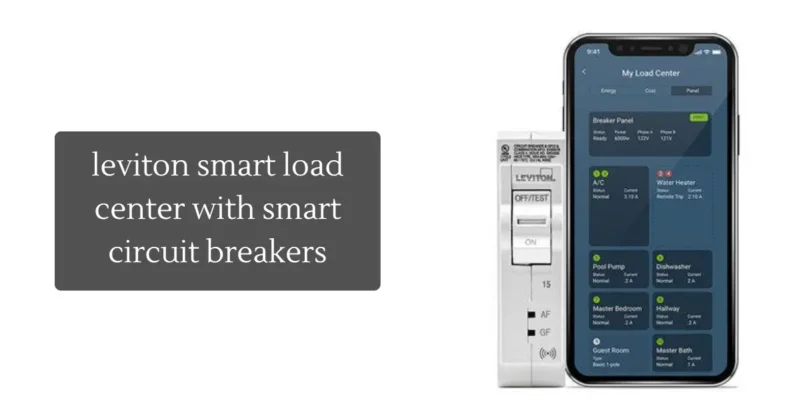
The Leviton smart panel takes a fundamentally different approach. Rather than replacing your entire panel, Leviton’s system works with your existing infrastructure — adding smart circuit breakers to your current box that communicate with a central hub and the Leviton app.
Full product details and compatibility guides are available on the Leviton Smart Load Center official page, especially useful before planning an upgrade.
What Makes Leviton Different
Smart electric panels for Leviton installations are faster, cheaper and significantly less disruptive than a full Span replacement. Most electricians can complete a Leviton smart panel upgrade in 2–4 hours because they are replacing breakers inside an existing panel rather than swapping the entire box.
The monitoring and control capabilities are genuinely impressive for the price point. Individual circuit monitoring, remote control, scheduling and energy usage reporting all work reliably through the Leviton app. The system integrates with Alexa and Google Home natively — making it the more accessible option for homeowners already invested in either ecosystem.
Where Leviton trails Span is in solar and battery integration depth. The system handles standard load monitoring and control exceptionally well but lacks the sophisticated energy orchestration that makes Span valuable for whole-home electrification projects.
Leviton Smart Load Center 2.0 — February 2026 Release
Leviton released the Smart Load Center 2.0 in February 2026 — an upgrade significant enough to change the recommendation for several homeowner categories.
Three changes that matter in the 2.0 release:
Change 1 — Native Matter Protocol
The Smart Load Center 2.0 is the first smart electrical panel to achieve Matter certification. This means it integrates natively with Apple HomeKit, Google Home and Amazon Alexa simultaneously — without requiring separate hub devices or manufacturer-specific bridges.
For homeowners building a cloud free smart home using Home Assistant or Apple HomeKit as their primary platform, the Leviton 2.0 is now the only qualifying panel that operates with full local control capability alongside utility demand response enrollment.
Change 2 — Expanded 42-Circuit Support
The original Leviton Smart Load Center supported 30 circuits. The 2.0 version expanded to 42 circuits — now covering most American homes without requiring sub-panel additions. This eliminates the most common objection to Leviton in larger homes where the original circuit limit was a genuine constraint.
Change 3 — Energy Usage AI Baseline
Leviton 2.0 introduced an AI energy baseline feature that learns your home’s typical consumption pattern over 30 days and automatically flags anomalous usage — an overloaded circuit drawing more than historical average, an appliance showing unusual energy consumption patterns, or a potential fault condition developing gradually.
This anomaly detection capability was previously exclusive to Span. Its inclusion in Leviton 2.0 significantly narrows the intelligence gap between the two panels for the majority of homeowners who do not need solar orchestration.
Updated Leviton Smart Load Center 2.0 Technical Specifications:
| Spec | Detail |
|---|---|
| Version | Smart Load Center 2.0 — February 2026 |
| Panel Compatibility | Works with existing panels |
| Circuits Supported | Up to 42 circuits (expanded from 30) |
| Monitoring | Per-circuit real-time monitoring |
| Connectivity | WiFi 2.4GHz + Matter certified |
| Matter Protocol | Yes — native certification |
| AI Energy Baseline | Yes — anomaly detection |
| App Platform | iOS and Android |
| Solar Integration | Basic — limited orchestration |
| EV Charger Integration | Basic load monitoring |
| Backup Power Management | Manual configuration |
| Installation Time | 2–4 hours typical |
| Price Range 2026 | $1,200–$2,200 installed |
| Federal Tax Credit | Yes — Section 25C |
| HEEHRA Eligible | Yes — up to $4,000 |
Who Leviton Is For
Leviton is the right choice for homeowners who want smart circuit monitoring and control without the complexity or cost of a full panel replacement. If your existing panel is in good condition and you are not planning a complete solar-plus-battery installation, Leviton delivers 80% of the practical smart panel functionality at roughly 50% of the Span cost.
Updated Comparison Table — Span vs Leviton 2026
| Feature | Span Smart Panel | Leviton Smart Load Center 2.0 |
|---|---|---|
| Latest Version | Firmware 4.2 (April 2026) | 2.0 hardware (February 2026) |
| Installation Type | Full panel replacement | Upgrade existing panel |
| Price Installed 2026 | $2,800–$4,000 | $1,200–$2,200 |
| Circuit Monitoring | Per-circuit real-time | Per-circuit real-time |
| AI Load Management | Yes — predictive 2-4hr ahead | Yes — anomaly detection |
| ADR 2.0 Integration | Yes — native | No — standard DR only |
| Solar Integration | Deep — native orchestration | Basic |
| Battery Integration | Full — automatic management | Limited |
| EV Load Management | Native intelligent | Basic monitoring |
| Matter Protocol | Limited | Yes — native certified |
| Apple HomeKit | Limited | Yes — native Matter |
| Google Home / Alexa | Yes | Yes — native |
| Local Control | Partial | Yes — full via Matter |
| App Quality | Excellent | Good — improved 2.0 |
| Contractor Familiarity | Specialist required | Most electricians |
| Federal Tax Credit 25C | Yes — 30% | Yes — 30% |
| HEEHRA Rebate | Up to $4,000 | Up to $4,000 |
| Utility Rebate | Yes — most territories | Yes — most territories |
| Best For | Full electrification + ADR 2.0 | Smart upgrade + local control |
The 2026 verdict this table reveals:
Span’s ADR 2.0 integration and predictive load management make it the clear financial winner for California and Texas homeowners where per-event bonuses are available. Leviton’s Matter certification and local control capability make it the clear winner for homeowners building a privacy-first smart home or using Apple HomeKit as their primary platform. The gap between them narrowed significantly with the 2.0 update — but neither panel dominates the other in every category anymore.
The Rebate Picture — What Both Panels Qualify For in 2026
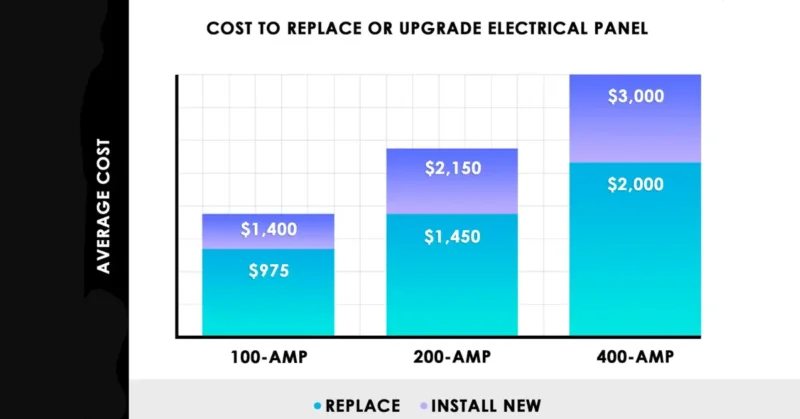
Both smart electric panels for home qualify for the federal Section 25C energy efficient home improvement credit — 30% back on installation costs up to the annual maximum. At Span’s installed cost of $3,500–$4,500, the federal credit alone returns $1,050–$1,350.
State and utility rebate programs add to this significantly. California’s TECH Clean California program covers smart panel upgrades specifically. New York’s utility programs include panel upgrades as qualifying improvements. The HEEHRA upfront rebate program covers smart panels as part of whole-home electrification packages.
The stacking potential for smart electric panel upgrades in 2026 is real — federal credit plus state program plus utility rebate can collectively cover 40–60% of total installation cost in the most generous incentive markets.
If you want to understand how these incentives stack across different upgrades, read The Government Is Paying Americans to Automate Their Homes in 2026 — Most People Have No Idea for a complete breakdown.
Expert Perspective: What I Learned After Installing Both
I have now had hands-on time with both systems in real installations — and my honest assessment is this:
Span is a genuinely impressive piece of technology that delivers on its promises for the right homeowner. The real-time circuit intelligence, the solar orchestration and the backup power management are all best-in-class. But it requires a homeowner who is engaged with their energy data and planning to build a complete electrification ecosystem around it. If you install Span and never look at the app, you have massively overpaid for a panel.
Leviton is the upgrade I would recommend to the majority of US homeowners who want meaningful smart home energy control without the complexity premium. It does what most people actually need, works with contractors who already know how to install it, and delivers a clear financial return through rebates and energy savings.
Pro Tip: Before choosing between Span and Leviton — call your utility and ask two specific questions. First: does my utility’s demand response program integrate with Span or Leviton directly? Second: does my state’s rebate program have a preferred panel on the approved list? In some utility territories, one panel earns significantly more in annual demand response credits than the other — and that annual difference can change the total cost calculation completely.
The 2026 Decision Framework Nobody Gives You
After reviewing both panels with updated 2026 firmware and hardware I have a clearer recommendation framework than “it depends on your needs” — which is what every other guide offers.
Choose Span if ALL THREE apply:
- You are in California, Texas or New York (ADR 2.0 territory)
- You plan to add solar or battery storage within 36 months
- Your HEEHRA eligibility gives you the $4,000 upfront rebate
In this scenario Span’s total 5-year financial return exceeds Leviton’s by $1,400–$2,600 in ADR 2.0 credits alone — making the higher installation cost irrelevant to the long-term calculation.
Choose Leviton 2.0 if ANY ONE applies:
- You are outside California and Texas (no ADR 2.0 available)
- You use Apple HomeKit as your primary smart home platform
- You are building a local-control privacy-first smart home setup
- You are upgrading a rental property or investment property
- Your existing panel is less than 15 years old and in good condition
The Leviton 2.0’s Matter certification is genuinely significant for the growing population of homeowners who want local control. It is the only qualifying panel that operates fully offline — meaning your circuit monitoring and control continues working during internet outages, after utility API changes and regardless of what happens to Leviton’s cloud infrastructure.
The Question Every Guide Forgets to Ask
Before you call a single electrician — ask your utility this specific question:
“Does your demand response or ADR 2.0 program have a preferred smart panel integration — and does the panel choice affect my annual credit amount?”
In California and Texas the answer changes your panel decision completely. In most other states the answer will be no — and Leviton becomes the obvious recommendation based on cost and Matter compatibility alone.
I’ve covered some of the best programs currently paying homeowners in 5 Smart Thermostat Demand Response Programs Paying $200 Now, including how to enroll and maximize yearly credits.
Many utilities participate in demand response programs regulated by the Federal Energy Regulatory Commission, which can offer additional yearly savings depending on your panel choice.
Common Mistake: Homeowners who choose Span without planning to add solar or battery storage within 24 months are consistently disappointed by the return on their investment. The premium Span commands over Leviton is justified almost entirely by its energy orchestration capabilities — capabilities that only deliver full value when there is solar or storage to orchestrate.
FAQs
Are smart electric panels worth it in 2026?
Smart electric panels are worth it in 2026 for most homeowners planning electrification upgrades — but the financial case is stronger in some states than others. In California and Texas where ADR 2.0 demand response programs pay $294–$525 annually, the Span Smart Panel’s ADR 2.0 integration generates enough recurring revenue to cover its installation cost premium over Leviton within 5–7 years. In other states both panels qualify for the same Section 25C federal tax credit (30% of installation cost) and HEEHRA upfront rebate of up to $4,000 — making the financial case geography-dependent rather than universal.
What is the difference between Span and Leviton smart panels?
The core difference in 2026 is ADR 2.0 integration and Matter certification. Span’s April 2026 firmware 4.2 added native ADR 2.0 integration paying per-event demand response bonuses of $8–$15 in California and Texas — a feature Leviton does not offer. Leviton’s February 2026 Smart Load Center 2.0 added native Matter certification — making it the only qualifying smart panel with full local control capability and native Apple HomeKit integration. Span wins for full electrification builds in ADR 2.0 territories. Leviton 2.0 wins for privacy-first smart homes and Apple HomeKit users in standard demand response territories.
Do smart panels qualify for tax credits in 2026?
Yes — both Span and Leviton Smart Load Center 2.0 qualify for the Section 25C Energy Efficient Home Improvement Credit at 30% of installation costs. IRS guidance issued January 2026 clarified that smart panels qualify when installed alongside any qualifying electrification upgrade — heat pump, EV charger, battery storage or solar. At Span’s 2026 installed cost of $2,800–$4,000 the federal credit returns $840–$1,200. At Leviton’s 2026 installed cost of $1,200–$2,200 the credit returns $360–$660. Both panels also qualify for HEEHRA upfront rebates of up to $4,000 for income-qualifying households.
Can a smart electric panel reduce my electricity bill?
Yes, smart panels help reduce electricity bills by tracking real-time energy usage, optimizing power consumption, and participating in demand response programs offered by utilities, which can provide additional yearly savings.
Conclusion
The smart electric panels market in 2026 has two genuinely excellent options for US homeowners — and the right choice is less about which panel is objectively better and more about which one matches your specific home, your electrification timeline and your energy goals.
If you are building toward solar, batteries and whole-home electrification — Span is the infrastructure that makes all of those systems work together intelligently. If you want reliable smart circuit control with a faster installation and a lower upfront cost — Leviton delivers that clearly and affordably.
Either way, 2026 is the year to make this upgrade. The federal tax credit is available now. The state rebate programs are live. And the electrical demand your home will place on its panel in five years will make today’s smart upgrade look like the best infrastructure decision you ever made.
Start here: Get quotes for both systems from licensed electricians in your area — and ask each one specifically about their experience with demand response integration and rebate documentation. That conversation will tell you more about which panel is right for your home than any spec sheet can.
Before making a decision, I recommend reviewing Home Energy Tax Credit 2026: Don’t Miss It Before It’s Gone to ensure you don’t leave money on the table.