
Last Updated: September 2026
▶ Quick Answer
The fastest way to figure out how to go viral YouTube Shorts in 2026 isn’t a hashtag trick or a posting time — it’s understanding that YouTube’s algorithm now runs on an “explore and exploit” model where retention percentage beats raw views. A Short with 10,000 views and 75% retention gets pushed harder than one with 100,000 views and 40% retention. Repurposing long-form content with AI clip tools, nailing a 1.5-second hook, and hitting 38–58 seconds runtime still matters — but retention is the actual lever everything else serves.
For a deeper understanding of how these metrics work, see YouTube’s official Shorts analytics guide
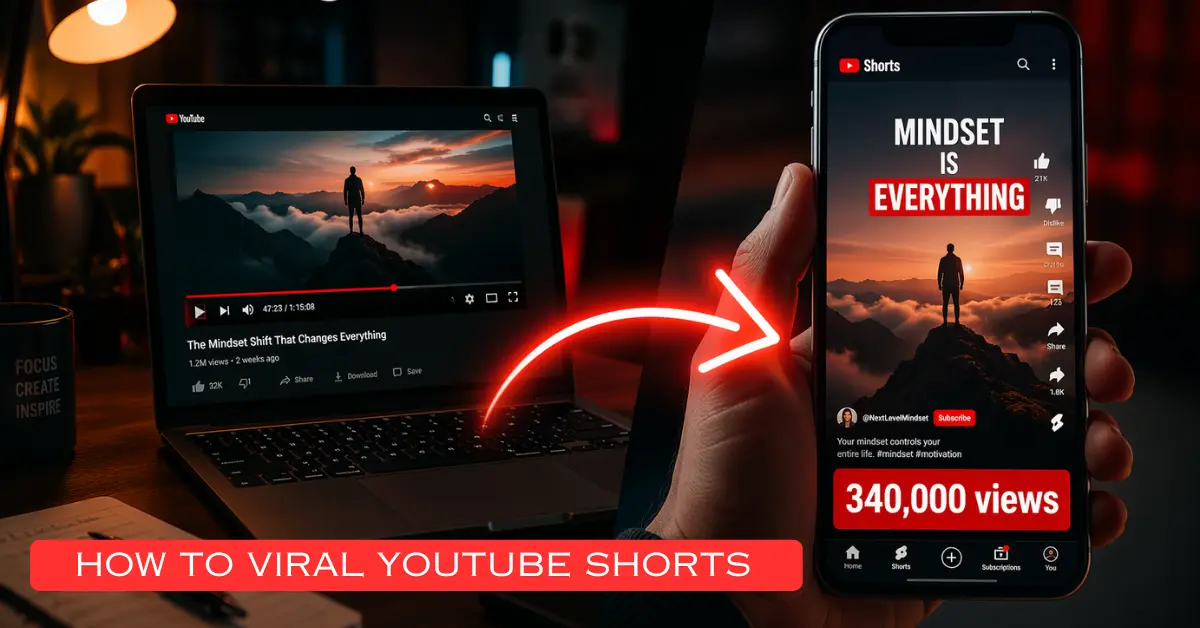
I’ll be straight with you: six months ago, I had a 47-minute YouTube video sitting at 1,200 views after two weeks. I sliced a 58-second clip from the middle, ran it through an AI repurposing tool, and posted it as a Short. By the next morning: 84,000 views. By the end of the week: 340,000.
That wasn’t luck — it was a system. This guide covers exactly how to go viral YouTube Shorts using that system: the algorithm mechanics competitors gloss over, the real AI tools worth using, which niches actually pay in 2026, and hashtags that still work.
Key stats worth knowing: YouTube generated $40.4 billion in ad revenue and paid creators over $20 billion in 2025 — bigger than Disney, NBCUniversal, and Warner Bros. combined ad spend in that category.
Shorts now cross 200 billion daily views globally, and per vidIQ’s 2026 analysis of 35 billion Shorts views, clips over 40 seconds get 33% higher engagement than shorter ones.
You can also see YouTube’s official Shorts announcement for the platform’s latest Shorts audience milestone.
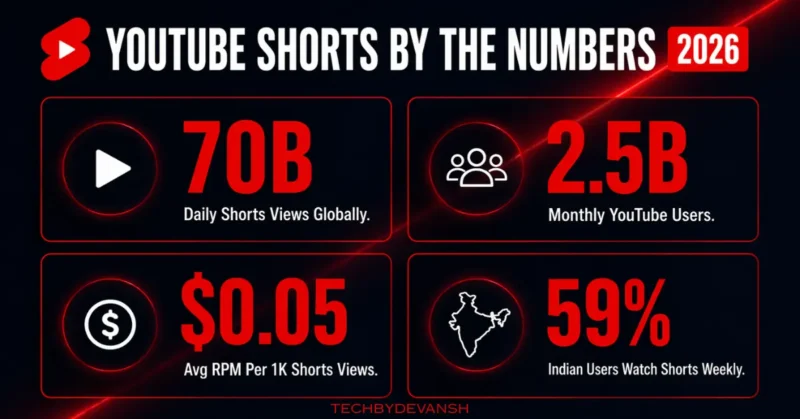
Table of Contents
The Retention Rule That Actually Decides Virality
Here’s what most “how to go viral YouTube Shorts” guides skip entirely, and it’s the single most important mechanic to understand in 2026.
YouTube’s Shorts algorithm doesn’t just count views — it runs on an explore-and-exploit model. Every Short gets a small seed audience (200–800 views).
If retention in that window clears roughly 70–75%, the algorithm pushes it wider. If it doesn’t, the Short stalls regardless of how many total views it eventually gets.
This means a smaller, tighter, more focused Short consistently beats a longer, looser one with more raw views — the opposite of what most creators assume.
Practical takeaway: don’t optimize for a big number. Optimize for finishing the video. That’s the actual growth lever behind how to make viral YouTube Shorts consistently, not a one-time lucky upload.
You can monitor this behavior directly through YouTube audience retention analytics.
The Real Problem: Long-Form Content Is Invisible Without a Shorts Feeder
Most YouTubers treat Shorts and long-form as separate projects requiring separate ideas. That’s expensive and exhausting. The smarter approach: use your existing long-form videos as raw material.
A 30-minute video typically contains 6–10 Shorts-worthy moments — a surprising fact, a hot take, a demonstration.
The challenge isn’t finding them; it’s extracting them fast, which is exactly why AI repurposing tools have become the default answer to how to go viral YouTube Shorts in 2026.
And if the bigger problem is finding what to create in the first place, see my guide to AI tools for content ideas and research.
“Object Talk” Videos: A Real Format, With an Honest Caveat
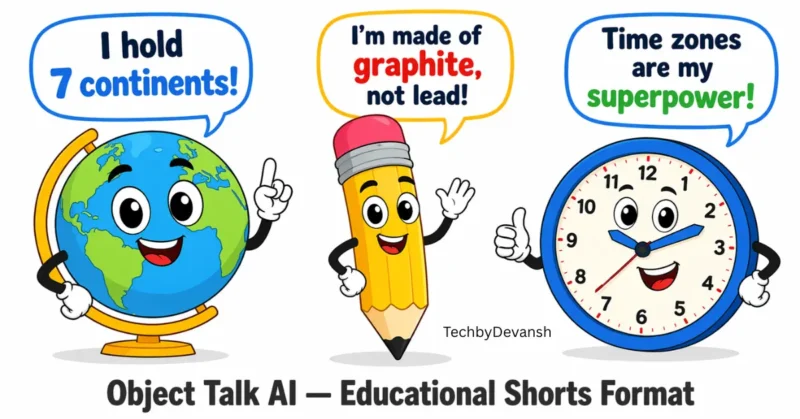
If you’ve researched how to create an object talk video, here’s what you need to know clearly: “Object Talk” is a content format, not a single confirmed app or brand.
It’s where a narrator or AI voice speaks as an object — a coffee cup, a pencil, a clock — explaining a concept directly to the viewer.
It’s especially strong for kids’ education (fractions, planets, historical facts) because an anthropomorphized narrator drives Average View Duration, which YouTube’s algorithm weights heavily.
Several general-purpose AI animation and video tools can produce this style — character/object animation platforms with mouth-sync and multilingual voiceover support are the category to look for, rather than any single named product.
Test a few free trials before committing to a paid plan, since tool quality in this space changes fast.
A quick object talk video workflow that works:
- Pick an unexpected pairing — a dollar bill explaining inflation, a globe explaining the water cycle
- Write a 45–55 second script: Hook → Explanation → Payoff, under 150 words
- Generate the animated object and voiceover using your chosen tool (test Hindi, Tamil, or other regional voice options if targeting India)
- Manually verify caption sync before publishing — mismatched captions kill retention in the first 3 seconds
- Publish with a sub-60-character title, 3–5 hashtags, and a pinned comment linking to your long-form source
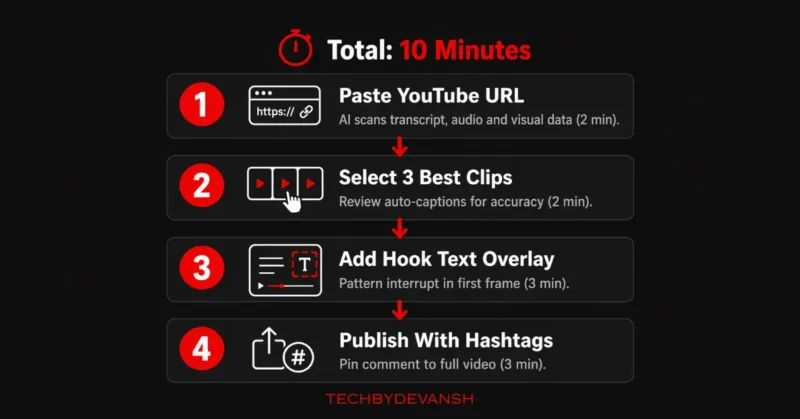
My Exact AI Repurposing Workflow (Under 10 Minutes)
Tool stack: An AI clip finder (OpusClip, Klap, Munch, or Vozo’s Long-to-Shorts) to auto-identify 6–12 viral-moment candidates from a long video URL.
CapCut’s free web version for caption styling.
TubeBuddy or VidIQ for hashtag research and title A/B testing.
If you’re building a broader AI-powered content workflow, check out my guide to the best AI tools for content creators in 2026, where I cover tools beyond Shorts editing and repurposing.
The sprint:
- Paste your long-form URL into an AI clip finder (2 min) — look for clips scoring above 80/100 with a 35–58 second runtime
- Pick 3 clips, check the auto-captions (2 min) — AI transcription frequently misreads proper nouns and technical terms
- Add a pattern-interrupt hook (3 min) — a 1–2 word title card (“Wait—”, “Nobody tells you this:”) in the first frame. This alone can double click-through. For creators who want to make those hooks more visually engaging, I also tested AI B-roll generators for creating cinematic footage.
- Export, write title + hashtags, publish (3 min) — sentence case, 45–55 characters, pin a comment to your full video
Pro tip: Batch by theme, not by video. Pull clips from five related long-form videos and publish them as a themed series over 10 days. The algorithm treats them as connected content and cross-boosts distribution once the first one gets traction.
Most Viral YouTube Niches 2026 — With Real CPM Data
Niche selection is the highest-leverage decision you’ll make, and the CPM gap between niches is far bigger than most guides admit.
| Niche | RPM Range | Why It Works |
|---|---|---|
| Make Money Online / Finance | $8–18 (some reports up to $13.52 avg CPM) | High commercial intent, advertisers pay premium |
| AI Tools & Productivity | $5–12 | Fast-growing search demand, low saturation |
| Senior Health & Longevity | Rising fast (19x YoY growth reported) | Low competition, high commercial intent |
| English Learning / Language | Rising fast (21x YoY growth reported) | Global audience, evergreen demand |
| Educational / Object Talk (Kids) | $3–8 | Very high retention (68–82% AVD) |
| Rural Homesteading / Lifestyle | Rising fast (16x YoY growth reported) | Low competition, strong niche loyalty |
| Entertainment (generic) | As low as $0.10 | High views, weak advertiser demand |
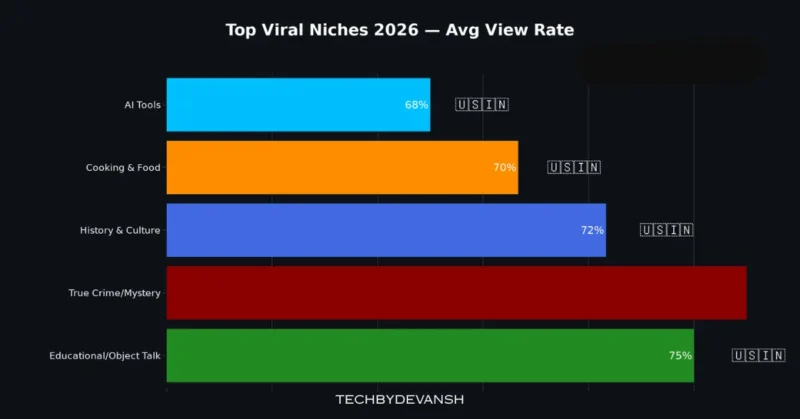
The gap is stark: a faceless entertainment Shorts channel can run CPMs near $0.10, while a long-form finance video in the same view range can hit $20 — roughly a 200x difference for the same audience size.
Niche selection isn’t a minor decision; it’s the single largest revenue lever you control.
Always cross-check any niche against current Google Trends data before committing — rising search lines matter more than a niche simply being popular today.
Viral YouTube Hashtags 2026 — What’s Actually Working
YouTube uses hashtags for categorization, not follower growth — that changes your strategy completely versus Instagram or TikTok.
The 3+2 Rule: 3 evergreen niche hashtags + 2 trend-adjacent ones. Skip standalone #Shorts — it’s too broad to add any targeting value in 2026.
High-performing tags by category:
- Educational: #LearnOnShorts #ObjectTalk #ScienceFacts #DidYouKnow #FactsInShorts
- AI & Tech: #AIHacks2026 #CreatorAI #AITools #YouTubeGrowth
- India-specific: #IndianCreators #BharatKiShorts #TechIndia #StudyMotivation
Common mistake: stacking 20–30 hashtags. This signals spam to YouTube’s classifier and actively suppresses reach. Stay at 5–7 maximum — targeted beats quantity every time.
7 Non-Negotiable Elements for How to Make Viral YouTube Shorts
- Hook in 1.5 seconds or less — pattern interrupt via text, an unexpected visual, or an unfinished sentence
- No intro, no logo, no “hey guys” — branded intros lose 30–45% of viewers in the first 2 seconds
- Captions, always — most Shorts are watched muted; bold, high-contrast text is non-negotiable
- Visual change every 2–3 seconds — cutaways, zooms, text pops
- Runtime: 38–58 seconds — the 2026 data (33% higher engagement past 40 seconds) pushes this slightly longer than older advice suggested For the current platform limits, check YouTube’s official Shorts length guidelines.
- End with an unresolved question or teaser — loop-friendly content gets an algorithmic boost
- Post 3+ times weekly for 90 days — most channels report this as the threshold before YouTube “locks in” a content category and starts proactive distribution
FAQ — How to Go Viral YouTube Shorts
What’s the single biggest factor in how to go viral YouTube Shorts in 2026?
Retention percentage in the first seed audience (your first 200–800 views), not raw view count. A tight, focused Short that keeps 70%+ of viewers watching gets pushed far harder than a longer one with more total views but weaker retention.
What are the best niches for faceless AI YouTube Shorts in 2026?
Make money online and finance still lead on raw CPM, but senior health, English learning, and rural homesteading are documented high-growth, low-competition niches worth testing before they saturate.
Is “Object Talk AI” a real tool I can download?
Not as a single confirmed product — it’s a content format (an object or character narrating educational content) that several general-purpose AI animation tools can produce. Look for character/object animation platforms with multilingual voiceover support rather than searching for one specific branded app.
How to go viral on a YouTube channel overall, not just one Short?
Consistency compounds distribution. Posting 3+ Shorts weekly for 90 days is the threshold most channels report before YouTube proactively pushes their content category — a single viral Short rarely sustains channel growth alone.
What’s the best free AI YouTube Shorts generator to start with?
CapCut’s free web-based AI auto-clip feature is genuinely capable for testing your niche and workflow before paying for OpusClip, Klap, or Munch once you’re posting consistently.
Can AI make a YouTube Short go viral?
No. AI can speed up scripting, editing, and captioning, but virality depends on audience retention, share velocity, and topic timing — none of which AI can guarantee.
How do I make YouTube Shorts with AI?
Use an AI tool to generate or repurpose a script and rough cut, then manually rebuild the hook, verify captions, and edit pacing by hand before publishing.
Can I make faceless YouTube Shorts with AI?
Yes — object-narrative, screen-recording, and text-on-screen formats all work without showing your face, and none are penalized by the algorithm compared to on-camera content.
If you’re planning to build an entire channel around this approach, see my guide to building a faceless AI YouTube channel.
Why are my YouTube Shorts not getting views?
The most common causes are a weak first 1.5 seconds, low completion rate, or posting inconsistently — check your Shorts analytics’ retention graph before changing anything else.
Does AI-generated content get monetized on YouTube?
YouTube’s policy requires content to be original and not repetitive or mass-produced to qualify for monetization — heavily AI-generated content with little human input risks falling outside that policy. Check YouTube’s current monetization policy directly before relying on fully automated content as a revenue stream.
Final Word: Stop Overthinking. Start Repurposing.
The biggest mistake creators make is treating Shorts like a separate project needing its own ideas and budget. It doesn’t. Your best Shorts are already sitting inside long videos nobody’s watching, and the real answer to how to go viral YouTube Shorts isn’t making more content — it’s using what you already have, with retention as your north star metric instead of raw views.
Start with one long video this week.
You can also repurpose the same workflow for Instagram by following my guide to AI tools for Instagram Reels.
Run it through an AI clip finder.
Pick the three highest-scoring clips.
Add a pattern-interrupt hook.
Post over five days and watch what actually happens.