

Last Updated: September 2026
The space industry is moving faster than almost anyone predicted a year ago — and unlike a lot of “space technology 2025” content still floating around online, this update covers what genuinely happened, not what was merely planned. Artemis II already flew. SpaceX hit real turbulence with Starship. ISRO shifted its human spaceflight timeline. And the space junk problem got measurably worse, with real numbers to prove it.
This is the latest space technology news 2026 as it actually stands — AI in space exploration, NASA’s real mission results, ISRO’s updated roadmap, and the SpaceX Mars project update that’s more complicated than the hype suggested.
Table of Contents
Why Space Technology Matters More Than Ever in 2026
Space and technology are now inseparable. Today, satellites quietly power global internet, GPS navigation, military communication, weather forecasting, smart cities, IoT, and financial transactions. Without space technology, modern life would functionally stop.
Space agencies are now running machine learning, robotics, 3D printing, and autonomous navigation as standard tools, not experimental add-ons — which is exactly why this category of news moves so fast that anything written even a year ago is already outdated in places.
AI in Space Exploration — The Real Game Changer
AI in space exploration has moved from “assisting” to “operating independently” in a genuinely significant way this year.

Machine Learning works like the spacecraft’s brain. It predicts system failures before they happen, optimizes launch timing and mission planning, helps rovers move independently across Mars, and makes decisions faster than any human-in-the-loop system could.
Computer Vision acts as the spacecraft’s eyes — identifying safe landing zones, detecting craters and surface risks, avoiding collisions with debris, and tracking dangerous asteroids in real time.
Quick Example Table
| Space Agency | AI Technology Used |
|---|---|
| NASA | AI navigation + sample detection |
| SpaceX | AI rocket landing algorithms |
| ISRO | AI satellite health monitoring |
| ESA | AI failure prediction systems |
NASA’s Perseverance Rover continues operating without waiting for human commands, detecting obstacles and navigating Mars autonomously — a genuinely proven demonstration of AI in space exploration reducing workload and increasing mission efficiency, not just a marketing claim.
Satellite Internet Technology — Global Connectivity at Real Scale
Satellite internet technology remains one of the biggest ongoing stories in space tech. SpaceX’s Starlink constellation has grown dramatically, exceeding 11,000 satellites in low Earth orbit as of August 2026 — a scale that would have sounded like science fiction just a few years ago.
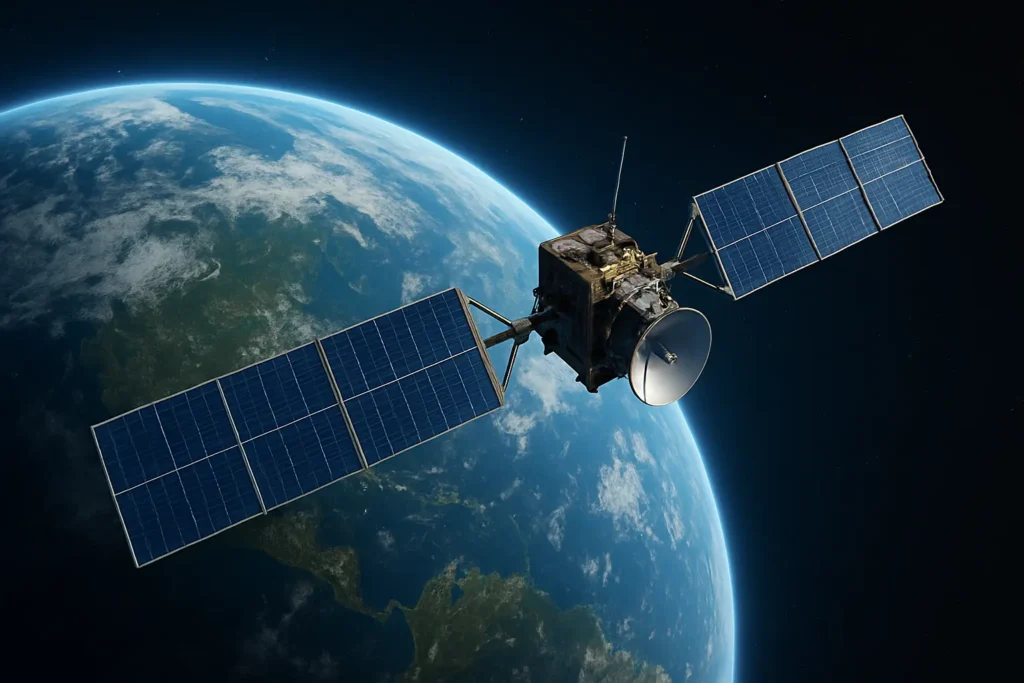
Benefits of satellite internet:
- Helps defense forces operate in remote or contested regions
- Connects genuinely remote areas with no terrestrial infrastructure
- Powers smart cities and IoT deployments
- Assists airplanes and ships with continuous connectivity
- Provides internet access during natural disasters when ground networks fail
Companies like Google, Amazon (via Kuiper), ISRO, and SpaceX remain locked in a genuine race to build faster, cheaper global satellite internet technology — and the competition is accelerating, not settling.
Quantum Computing in Space — Unhackable Communication
Quantum computing in space continues advancing as one of the more futuristic threads in this year’s space technology updates. China’s quantum communication satellite research continues to demonstrate encryption that’s extremely difficult to break, even with powerful classical supercomputers.
| Advantage | Purpose |
|---|---|
| Faster calculations | Mission planning |
| Strong encryption | Cybersecurity |
| Predictive analysis | Space weather |
| Quantum communication | Deep space contact |
Experts continue to believe quantum-powered satellites will eventually enable a genuine Quantum Internet in space — a fully secure global network. This remains one of the most-watched long-term space technology trends.
NASA Latest Mission 2026 — What Actually Happened
his is where the biggest real update lives, and it’s worth being specific because so much online content still describes these missions as future plans rather than completed events.
Artemis II actually flew. After years of delays, NASA launched its Artemis II crewed test flight on April 1, 2026, sending astronauts Reid Wiseman, Victor Glover, Christina Koch, and Canadian astronaut Jeremy Hansen on a roughly 10-day, 694,481-mile journey around the Moon and back — the farthest humans have traveled from Earth since the Apollo era. The crew returned safely, and NASA’s own leadership has since expressed strong confidence in the Artemis III timeline.
Artemis III is targeting 2027, with the actual crewed lunar landing depending heavily on SpaceX’s Starship Human Landing System clearing several remaining technical milestones, including an uncrewed lunar landing and liftoff demonstration. NASA’s Administrator stated in August 2026 that the agency remains “extremely confident” in the 2027 target, though the broader lunar landing itself is still officially targeted for early 2028.
| Mission | Purpose | Status (as of 2026) |
|---|---|---|
| Artemis II | Crewed lunar flyby | Completed successfully, April 2026 |
| Artemis III | Crewed Moon landing | Targeting 2027, pending Starship HLS milestones |
| Mars Sample Return | Martian soil study | Ongoing, timeline under review |
| VIPER Rover | Water search on Moon | In development |
SpaceX Mars Project Update — Progress, But Real Setbacks Too
The honest SpaceX Mars project update for 2026 includes real turbulence, not just hype. SpaceX launched the first test flight of its Starship Version 3 — the iteration intended for actual Artemis missions — and while largely successful, the flight encountered real issues with the Super Heavy booster and Raptor engines. Neither SpaceX nor Blue Origin has yet publicly shown a flight-ready version of their lunar lander hardware.
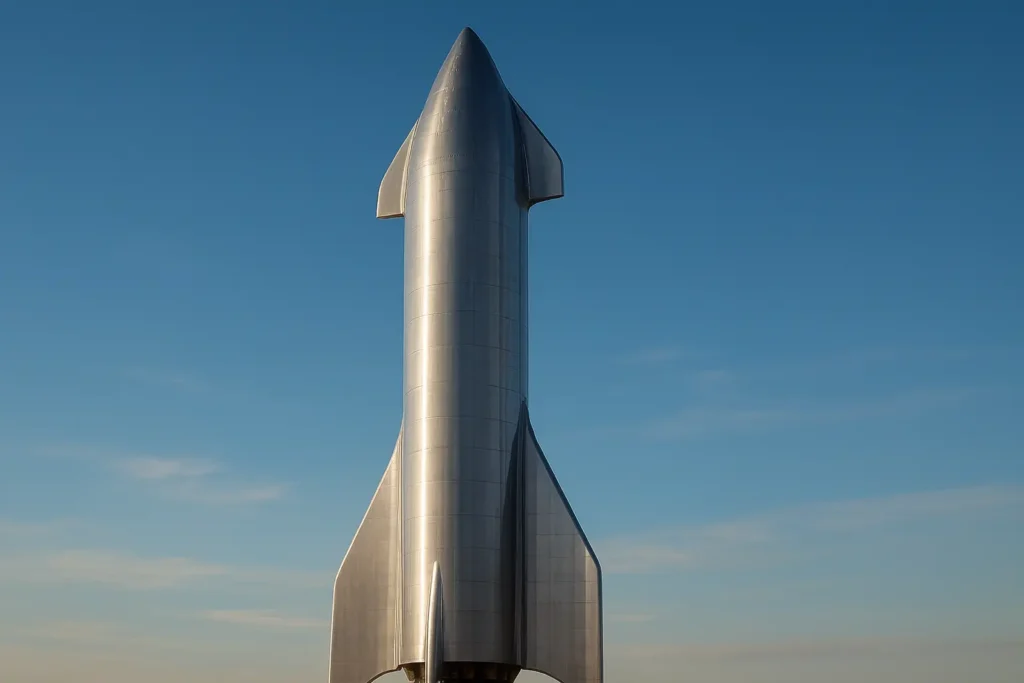
Key Technology in the Starship Rocket
- AI-based auto-landing system
- Stainless steel structure
- Methane-powered engines
- 3D-printed rocket parts
- Autonomous navigation system
Elon Musk’s long-term vision of a multi-planet human species remains unchanged, but 2026’s real technical setbacks are a useful reminder that this SpaceX Mars project update should be read with the same skepticism as any ambitious engineering timeline — genuinely exciting, but not guaranteed to hit every stated date.
If you want the bigger picture on Musk’s current bets across his companies, I’ve also covered his $140 billion Tesla pay package and what it signals about his AI-focused future.
ISRO Upcoming Missions 2026 — India’s Real Timeline Shift
ISRO upcoming missions 2026 look meaningfully different from what was projected even a year ago, and it’s worth being precise about the actual current schedule.
Gaganyaan’s human spaceflight program has been restructured into a clearer multi-stage plan: Gaganyaan-1 (G1), the first uncrewed test flight, is now officially targeted for Q4 2026 and will carry Vyommitra — a humanoid robot designed to simulate crew conditions and gather life-support data. Two more uncrewed tests, G2 and G3, are planned before the first crewed flight, now realistically targeted for 2027, not 2025 as earlier hoped.
| Mission | Purpose | Current Status |
|---|---|---|
| Gaganyaan-1 (G1) | Uncrewed test flight w/ Vyommitra robot | Targeted Q4 2026 |
| Gaganyaan-2 & 3 | Further uncrewed test flights | Planned through 2026–27 |
| Gaganyaan (crewed) | India’s first human spaceflight | Realistically 2027 |
| Shukrayaan-1 | Venus research orbiter | Completing payload selection in 2026 |
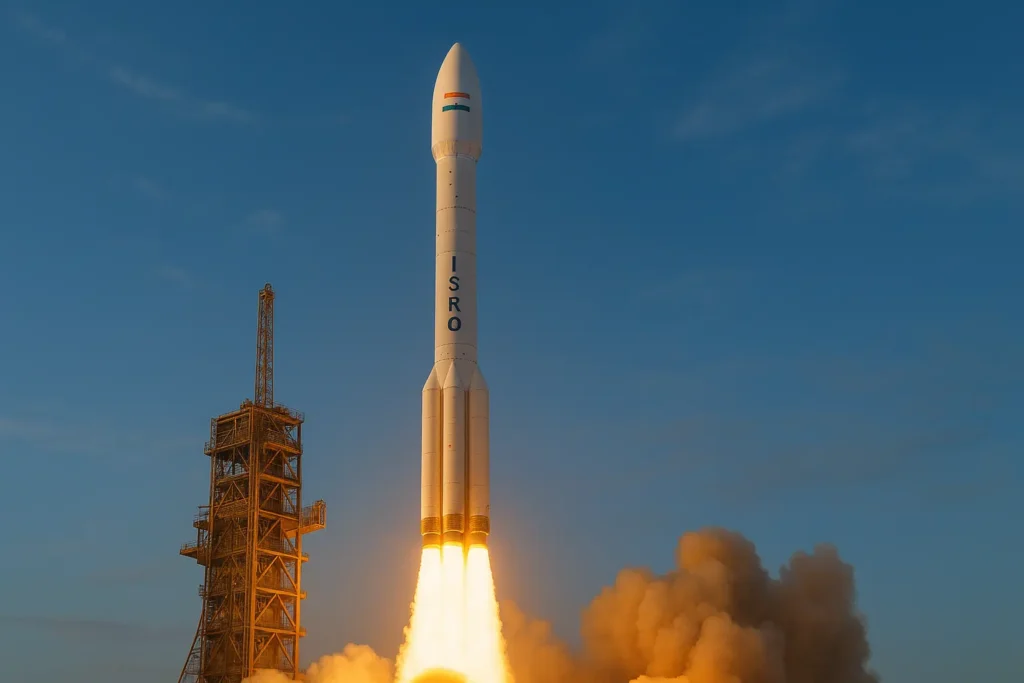
ISRO is also expanding its commercial space arm, NewSpace India Limited (NSIL), growing its international market share throughout 2026 — a genuinely underreported part of India’s space growth story that gets far less attention than the crewed missions.
Space Junk — A Growing Danger, Now With Real Numbers
Space junk has moved from “background concern” to “measurably worsening crisis” in 2026, and the actual tracked numbers are worth knowing.
As of 2026, surveillance networks track over 36,000 objects larger than 10 cm in orbit — but that’s genuinely just the visible tip of the problem. Statistical models from ESA and NASA estimate roughly 1.2 million objects between 1–10 cm, and a staggering over 130 million fragments smaller than 1 cm, all traveling at 7–8 km per second, fast enough that even a paint fleck carries damage potential comparable to a hand grenade at those velocities.
Technologies working to solve space junk:
| Technology | Purpose |
|---|---|
| AI tracking systems | Predict and avoid collisions |
| Active debris removal (robotic arms, “space claws”) | Physically capture and deorbit large debris |
| Magnetic collectors | Catch metal objects |
| Drag-enhancement devices | Speed up natural deorbiting |
ESA’s ClearSpace-1 mission, one of the first real active debris removal demonstrations, aims to capture and deorbit a defunct rocket stage using a four-armed robotic capture system — a genuine proof-of-concept for technology that will need to scale dramatically if orbital debris keeps growing at its current rate.
Moon Bases & Lunar Living — The Next Human Colony
Scientists continue to believe humans might begin living on the Moon within the next 10–15 years. NASA’s long-term plans still include:
- Solar energy power stations
- AI life support systems
- Space farming and water recycling
- Oxygen production systems
- 3D-printed structures using lunar soil
Many experts continue to frame the Moon as a potential long-term backup for humanity if severe Earth-based crises ever escalate — though this remains firmly in the realm of long-term planning rather than near-term reality.
Space Mining — Still a Trillion-Dollar Ambition
Asteroids continue to hold gold, nickel, platinum, and rare minerals worth trillions of dollars, keeping space mining one of the most-discussed long-term space technology trends.
| Company | Space Mining Goal |
|---|---|
| AstroForge | Robotic asteroid miners |
| Planetary Resources | AI-driven mining technology |
| SpaceX | Starship-based resource transport |
| Blue Origin | Extraction technology development |
Asteroid 16 Psyche remains the standout example — its metal content is still estimated to be worth more than the entire global economy, though actual extraction technology remains years away from commercial viability.
Space Jobs & Career Opportunities
Space technology’s rapid growth continues fueling real hiring demand. Agencies and private companies are actively recruiting AI developers, robotics programmers, data scientists, and satellite engineers.
| Career Role | Skills Needed |
|---|---|
| Space Data Scientist | Python, ML, AI |
| Aerospace Software Engineer | C++, CAD, robotics |
| Satellite Communication Engineer | 5G, IoT |
| Space Robotics Developer | Automation, AI |
| Quantum Researcher | Physics + computing |
It’s genuinely surprising how many students still overlook space tech as a career path, given how much real hiring activity is happening across both government agencies and private space companies right now.
How Space Technology Connects With Future Careers
As space technology and AI continue expanding, adjacent career paths are growing too. Even fields like DevOps, cloud computing, automation, and software engineering are becoming genuinely important for space missions — ground systems, mission control software, and satellite fleet management all run on the same infrastructure skills used elsewhere in tech.
If you’re interested in building a broader tech career, I’ve written a detailed breakdown on Is DevOps a Good Career in India? The Honest 2026 Answer covering salary, skills, and real job market reality — and if you want to see how AI specifically is reshaping that field, AI DevOps 2026: The Shocking Truth Most Teams Miss covers exactly that shift.
Future of Space Technology — What’s Next
Experts continue to predict the next 20 years will fundamentally reshape space activity. This ties directly into the broader shifts I’ve covered in Future Tech Trends 2030: What’s Actually Happening, since space is one of the clearest examples of predictions turning into reality faster than expected. Coming developments include:
| Technology | Expected Impact |
|---|---|
| AI Space Stations | Fully autonomous orbital bases |
| Hydrogen Fuel Engines | Eco-friendlier launches |
| Deep Space Internet | Communication on Mars |
| 3D Printing in Space | Building structures using local soil |
| Quantum Satellite Networks | Unhackable communication |
Major tech companies including Google, SpaceX, Microsoft, and Amazon continue actively hiring for space technology projects — a trend accelerating, not slowing, through 2026.
FAQs
Q1. Is space news related to tech?
Yes. Space missions rely heavily on AI, robotics, satellites, sensors, quantum systems, and advanced computing — space and technology are now functionally inseparable.
Q2. What is NASA’s latest mission status in 2026?
Artemis II successfully completed its crewed lunar flyby in April 2026. Artemis III, the crewed lunar landing mission, is targeting 2027, pending further SpaceX Starship Human Landing System milestones.
Q3. How is AI changing space technology?
AI now handles autonomous navigation, failure prediction, satellite health monitoring, and independent rover decision-making — reducing human workload and increasing mission safety and efficiency across nearly every major space agency.
Q4. Can I make a career in space tech?
Yes — demand for AI engineers, data scientists, robotics experts, and satellite developers continues rising globally, across both government space agencies and a rapidly growing private space industry.
Q5. What is ISRO’s Gaganyaan timeline in 2026?
Gaganyaan-1, the first uncrewed test flight carrying the humanoid robot Vyommitra, is targeted for Q4 2026, with the first crewed flight realistically expected in 2027 following two additional uncrewed test flights.
Q6. How much space junk is actually in orbit?
Over 36,000 tracked objects larger than 10 cm, an estimated 1.2 million objects between 1–10 cm, and more than 130 million untracked fragments smaller than 1 cm — all traveling fast enough to seriously damage operational spacecraft.
Conclusion
If there’s one takeaway from this year’s latest space technology news 2026 update, it’s that the gap between “planned” and “actually happened” matters more than ever in this industry. We’re living through a period where space technology news isn’t just science — it’s arguably the biggest ongoing tech story of the decade. From AI in space exploration actually flying autonomous missions, to satellite internet technology connecting the previously unconnected, to ISRO and NASA both navigating real, honest timeline shifts — space is shaping the next generation of technology in ways that are measurable, not speculative.
Space will keep impacting how we communicate, work, travel, defend, study, and potentially even survive long-term. The question really isn’t “can humans live in space” anymore — it’s “how soon, and who gets there first.”
Space technology is evolving fast, and I’ll keep covering the latest space technology news as it genuinely happens, not just as it’s planned.
Follow TechByDevansh for tech news explained in plain language.