
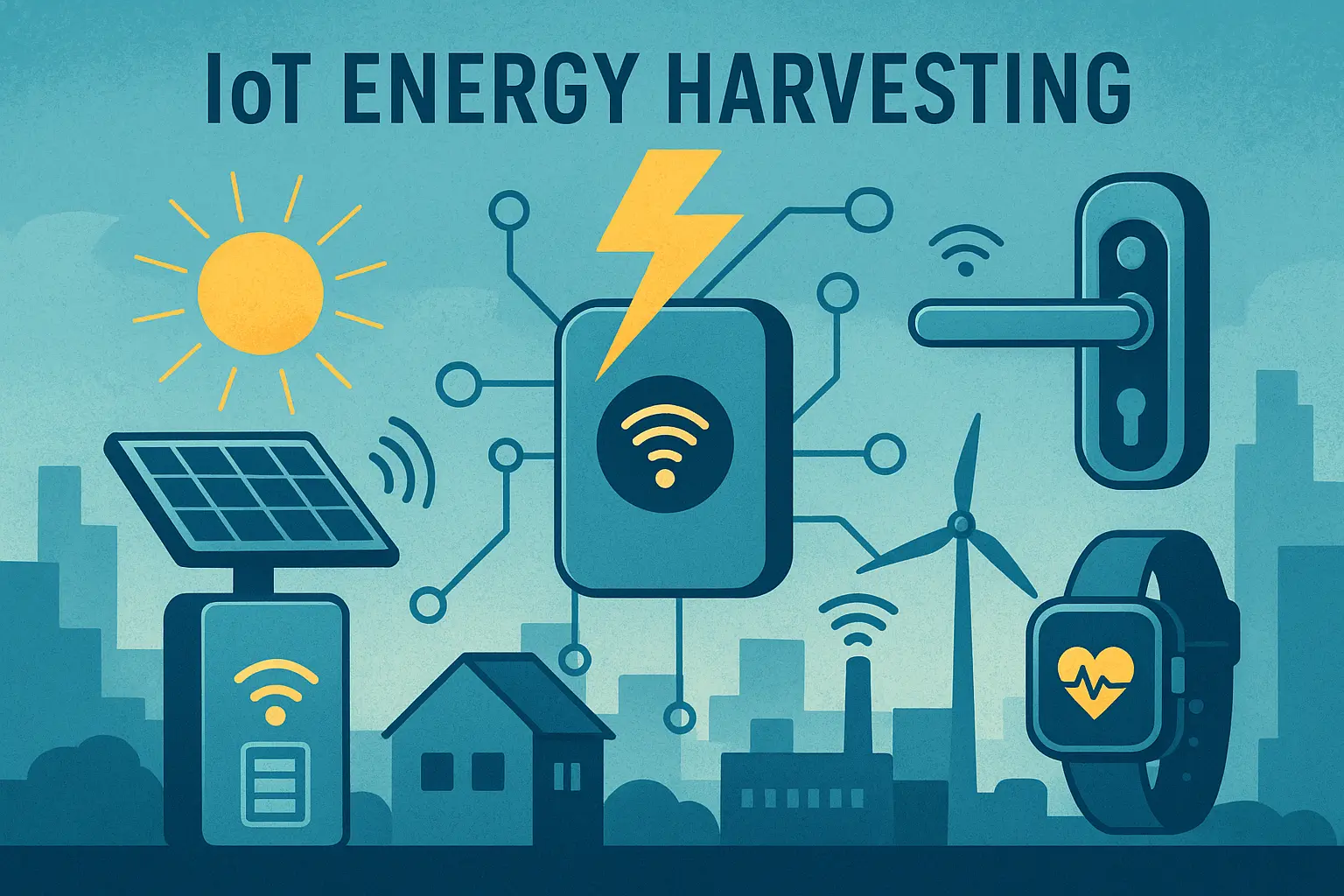
Last Updated: September 2026
The Internet of Things is rapidly changing the world around us. Smart homes, fitness trackers, smart factories, self-driving cars, and countless AI-powered gadgets are making life easier by the year. But there’s a challenge sitting quietly underneath all of it that most people never think about: battery life.
There are now roughly 19.8 billion IoT devices in the world, and that number is projected to more than double to over 40.6 billion by 2034. Thousands of these devices in industries, farms, hospitals, and smart cities need to run 24×7. Replacing or charging batteries across that many devices isn’t just expensive and time-consuming — for sensors buried in factory walls, sealed inside bridge supports, or tracking livestock in remote fields, it’s sometimes genuinely impossible.
That’s exactly the problem an energy harvesting sensor solves. These are sensors that don’t need batteries at all — they generate their own power from the environment using sunlight, heat, motion, vibration, or radio waves, letting IoT devices run continuously, efficiently, and without a single battery swap.
This guide covers what an energy harvesting sensor actually is, how it works, real 2026 deployments most people haven’t heard of yet, and how you can start experimenting with the technology yourself.
Table of Contents
What Is Energy Harvesting in IoT?
Energy harvesting in IoT means collecting energy from the environment and converting it into electricity to power a device. This allows IoT systems to work without ever charging or replacing a battery.
Easy definition: an energy harvesting sensor collects natural energy from its surroundings and converts it directly into power — no charging, no battery change, just continuous operation for years.
Why it matters:
- Billions of IoT devices are already deployed worldwide
- Battery replacement means real, recurring labor and cost
- Many sensors sit in remote or physically inaccessible locations
- Removing batteries entirely helps reduce e-waste and battery pollution at scale
This is exactly why device iot energy harvesting has moved from a niche engineering curiosity to a genuine growth market — one now valued at roughly $0.7 billion in 2026 and projected to reach $1.6 billion by 2033, growing at an 11.7% annual rate.
How Do Energy Harvesting IoT Sensors Work?
The process is simple and smart. It works in four steps:
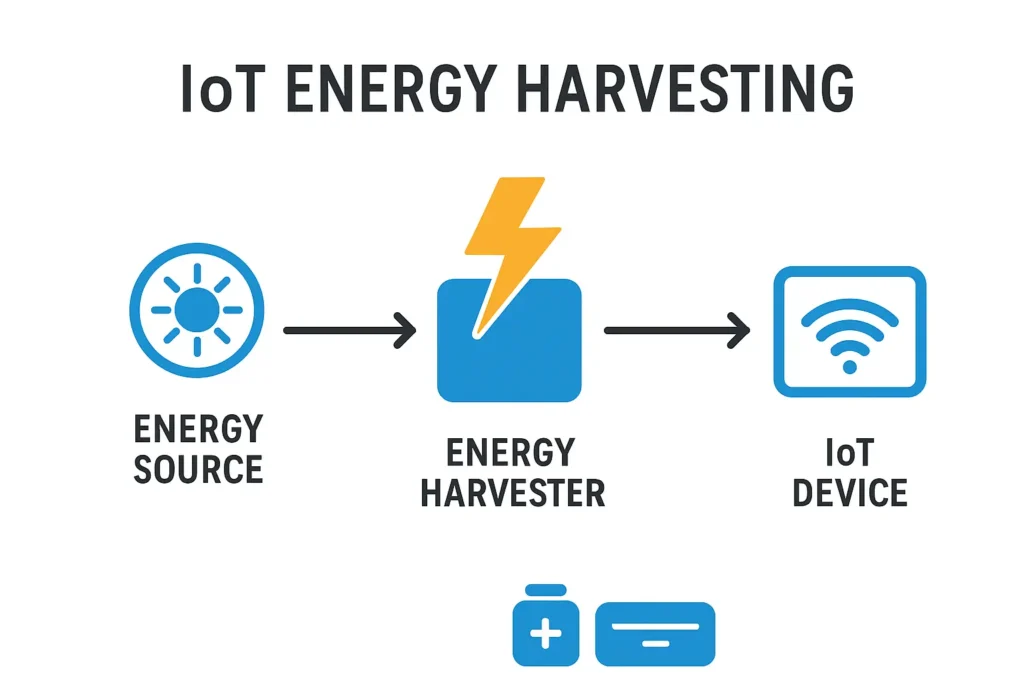
1. Energy Source Detection
Sensors detect available energy from surroundings: sunlight, heat, motion, or RF signals.
2. Energy Conversion
Devices like solar cells or thermoelectric generators convert this ambient energy into usable electricity.
3. Energy Storage
Power gets stored in supercapacitors or micro rechargeable batteries for use when the ambient source isn’t available.
4. Sensor Operation
The device runs entirely on stored harvested energy, without any external charging.
Types of IoT Energy Harvesting Sensors
| Type | Energy Source | Real Example | Use Case |
| Solar Energy | Sunlight | Solar-powered sensors | Smart cities, farms |
| Thermal Energy | Heat | Machine heat | Industrial monitoring |
| RF Energy | Radio waves | Wi-Fi & 5G signals | IoT tracking systems |
| Kinetic/Vibration | Movement | Vibration sensors | Predictive maintenance |
| Piezoelectric | Pressure/force | Smart shoes, doors | Wearable technology |
These methods allow an iot energy harvester to work for 5–10+ years without needing any battery replacement or maintenance. As of 2026, light-based (photovoltaic) harvesting leads the market with a 42.4% share, thanks to its scalability and compatibility with a huge range of applications — but energy harvesting with piezoelectric sensors is close behind, holding a 32.5% share driven by strong adoption across industrial, automotive, and consumer electronics.
The Real-World Deployment Nobody’s Talking About: Walmart’s 90 Million Battery-Free Tags
Here’s the part most “energy harvesting” articles miss entirely, because it happened quietly in 2026 rather than with a big product launch event.
Walmart is deploying Wiliot’s IoT Pixels — battery-free tags powered entirely by ambient RF energy — to track pallets across its supply chain at genuinely massive scale, with a stated goal of reaching 90 million tags by the end of 2026. That’s not a lab pilot or a proof-of-concept demo. That’s one of the largest retailers on Earth quietly proving that energy harvesting wireless sensor networks work reliably enough to run real, revenue-critical logistics infrastructure.
The mechanism is elegant: a specialized antenna called a rectenna captures ambient radio waves — the kind constantly present anywhere there’s Wi-Fi or cellular infrastructure — and converts them into the tiny amount of DC power an ultra-low-power sensor actually needs. RF harvesting like this works best where ambient RF density is high or controlled: retail shelves near access points, industrial environments dense with wireless infrastructure, or access-control zones where tags stay close to readers.
This single deployment is arguably the clearest signal yet that energy harvesting for IoT applications has crossed from “promising research” into “genuinely deployed at industrial scale.”
Real-Life Applications of IoT Energy Harvesting Sensors
1. Smart Cities
- Solar-powered streetlights
- Parking & traffic sensors
- Pollution tracking devices
- Weather monitoring stations
Many smart city models now use energy-harvesting sensors specifically to reduce wiring costs and ongoing maintenance burden.
2. Industry / Smart Factories
- Machine vibration monitoring
- Predictive maintenance sensors
- Energy usage analysis
- Equipment failure detection
3. Smart Agriculture
- Soil moisture sensors
- Smart irrigation controllers
- Livestock tracking
- Temperature sensing
4. Healthcare
- Wearable health monitoring devices
- Blood oxygen & heart rate sensors
- Smart hospital equipment
- Body temperature patches
5. Smart Homes
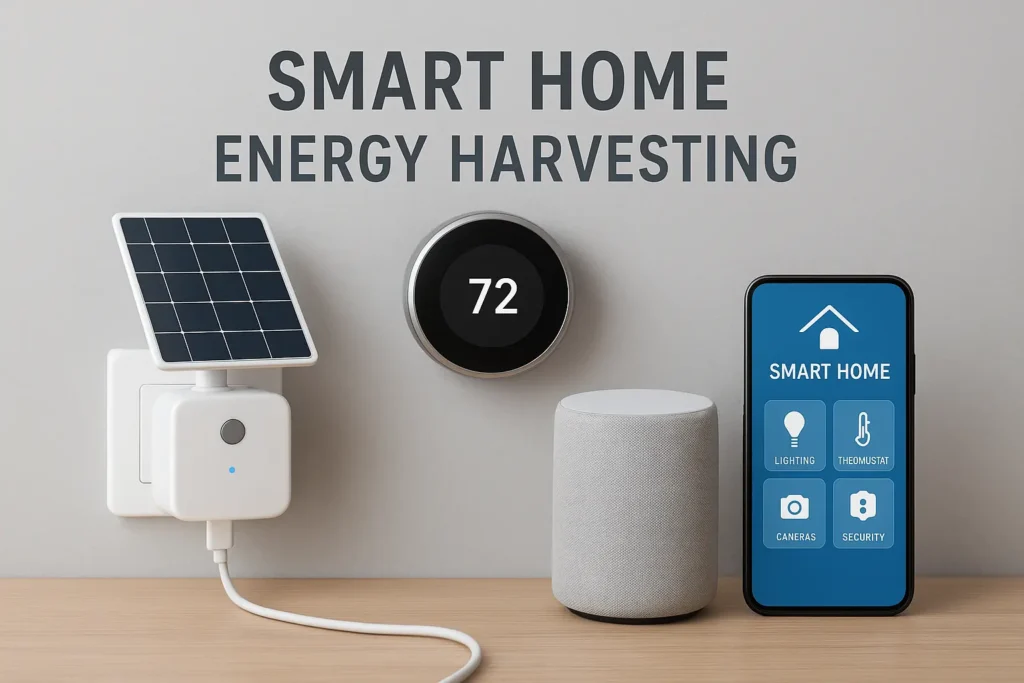
- Motion detection devices
- Smart switches & plugs
- Home security sensors
- Automatic temperature control
To understand how AI is transforming IoT-powered homes more broadly, check out this guide on how AI and IoT are powering smart homes in 2026, and if you’re setting up your own smart home, Smart Home IoT 2026: Devices, Setup & Real Savings covers exactly what to buy and how to configure it.
6. Environmental Monitoring
- Forest fire detection
- Wildlife tracking systems
- Weather monitoring stations
- Flood warning sensors
These devices can operate for years without charging — making an energy harvesting sensor practically ideal for remote, outdoor, or physically inaccessible deployment areas.
Why Energy Harvesting Is the Future of IoT
| Advantage | Benefit |
| No batteries required | Zero ongoing maintenance |
| Eco-friendly | Reduces e-waste significantly |
| Long working life | 5–10 years easily, often longer |
| Perfect for remote areas | No human intervention needed |
| Low power usage | Runs entirely on harvested energy |
Because of these benefits, energy harvesting sensor technology has moved well past “emerging trend” status. EU battery regulations are now actively pushing manufacturers toward self-powered designs, and regulatory pressure combined with genuine cost savings is accelerating adoption across every sector above. If you want to see this same “eliminate the ongoing cost” logic applied to a full household setup, I broke down the real numbers in How Much Electricity Does Smart Home Save? Real Numbers, Costs & ROI.
How Students & Engineers Can Try This Themselves
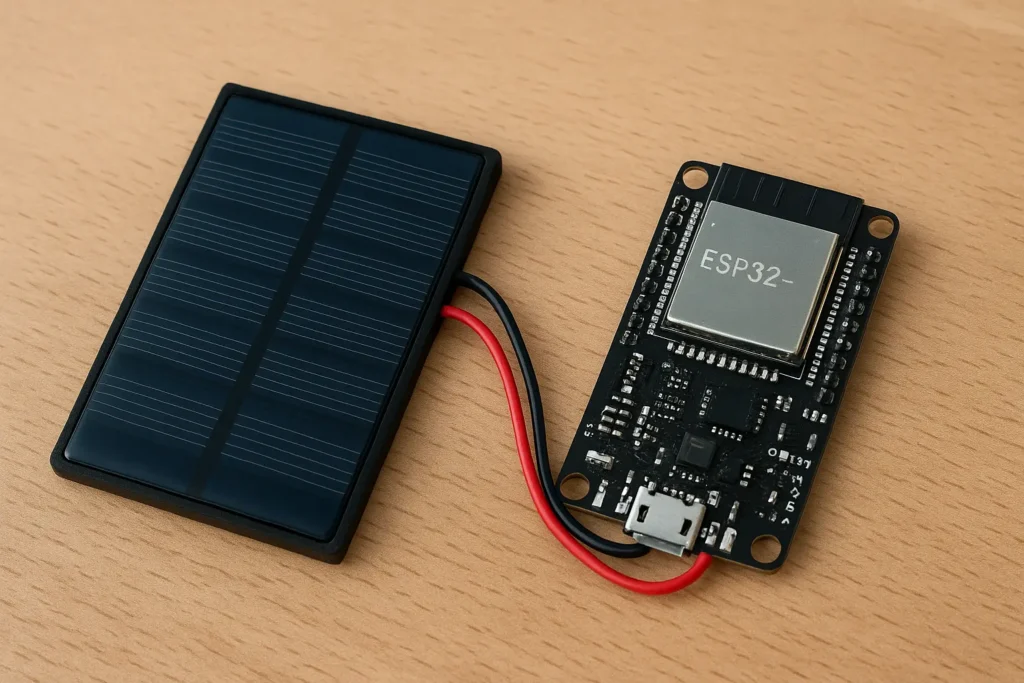
Components for a simple hands-on project:
- ESP32 or Arduino + solar input module
- Thermoelectric generator module
- Piezoelectric vibration sensor
- Lithium + supercapacitor storage circuit
- RF antenna harvesting setup for ambient power capture
If you want to go deeper into the underlying engineering principles, academic references like Piezoelectric Shells: Sensing, Energy Harvesting, and Distributed Control cover the theoretical foundation behind piezoelectric energy harvesting sensor design in serious technical depth — genuinely useful if you’re taking this beyond a weekend project into research territory.
Students can also explore AI-based apps that boost learning generally — here’s a full list of top AI tools for students in 2026.
Challenges of Energy Harvesting in IoT
| Challenge | Reason |
| Low energy output | Not suitable for heavy-power devices |
| High initial cost | Advanced sensors remain costly upfront |
| Energy fluctuation | Output depends on available light/heat/motion |
| Data speed issues | Not built for very high-speed processing |
With AI, edge computing, LPWAN, and 5G maturing rapidly, these challenges are shrinking every year — the Walmart deployment above is direct proof that the “too unreliable for real use” objection is increasingly outdated.
The Companies Actually Building This Technology
Beyond the usual conglomerate names, a few companies specialize specifically in energy harvesting rather than treating it as a side project:
- EnOcean — arguably the pioneer of the entire energy harvesting wireless sensor networks category, with an open standard widely used in building automation
- Texas Instruments and STMicroelectronics — leading suppliers of the ultra-low-power management chips that make harvesting viable
- Powercast and Wiliot — RF energy harvesting specialists, with Wiliot powering the Walmart deployment above
- Murata Manufacturing and Cymbet Corporation — key players in energy storage components (supercapacitors, thin-film batteries) that pair with harvested power
- SMK Electronics — launched its HarvestLoop™ platform at CES 2026, including a solar-powered coin battery and a LoRaWAN-connected tracker, signaling continued mainstream product investment in the space
Future of IoT Energy Harvesting (2026–2030)
The upcoming IoT world will be batteryless and self-powered by default in more categories every year. Expect:
- Energy harvesting combined with on-device AI for smarter, autonomous decisions
- Self-healing IoT networks that route around failed nodes automatically
- Quantum-safe wireless communication for harvested-power sensor networks
- Smart grid integration with renewable energy sources
- Energy harvesting wearables that genuinely never need charging
- LPWAN (LoRa / NB-IoT) combined with energy harvesting becoming a standard industrial pairing
FAQs – Batteryless IoT Sensors 2026
1. Can IoT devices work without batteries?
es. Energy harvesting sensors generate their own power from ambient sources and can run indefinitely without any external battery.
2. What is the biggest benefit of energy harvesting IoT?
It eliminates recurring maintenance costs and enables reliable operation in remote or inaccessible locations for years at a time.
3. Which energy source is most used in 2026?
Light-based (photovoltaic) harvesting currently leads with a 42.4% market share, with piezoelectric close behind at 32.5%, particularly in industrial and automotive applications.
4. Which microcontroller is used for energy harvesting projects?
ESP32, Arduino Nano, STM32, and Raspberry Pi Pico are all common, accessible choices for student and hobbyist energy harvesting projects.
5. Is IoT energy harvesting sensors expensive?
Initial component costs can be higher than a standard battery-powered sensor, but long-term maintenance and replacement costs drop dramatically, often making it cheaper over a multi-year deployment.
6. Is energy harvesting actually deployed at real scale yet, or still experimental?
It’s genuinely at scale now. Walmart’s deployment of Wiliot’s battery-free RF-powered tags, targeting 90 million units by the end of 2026, is strong evidence this has moved well past the experimental stage.
Conclusion — Energy Harvesting for IoT Devices
An energy harvesting sensor is no longer a futuristic concept — it’s already tracking pallets at Walmart, monitoring machines in factories, and watching over crops in fields, all without a single battery change. They save money, energy, time, and human effort while providing a genuinely sustainable way to power the next tens of billions of connected devices.
From smart cities to agriculture, healthcare, and homes — batteryless IoT devices are already changing how infrastructure gets built. This remains one of the strongest niches for students, engineers, and tech bloggers who want to build real expertise in a market still growing at double-digit rates.