

Last Updated: September 2026
Why Students Need AI Today
Let’s be honest. Studying today often feels boring and mentally tiring. Sometimes you open a book and already feel exhausted before you’ve read a page. I felt the same during my college days, especially with assignments piling up and exam pressure building.
That’s when I started using ai tools for students as part of my daily study routine.
From my experience, the best ai tools for assignment help in 2026 don’t replace learning. They support it. They explain topics in simple words, help organize notes, and make assignments feel less overwhelming.
But here’s something worth knowing before you pick any tool: there’s now real research on which way of using AI actually helps your grades — and which way quietly hurts them. That’s not something most “best AI tools” lists tell you, so I’m covering it here.
Table of Contents

My Real Experience Using AI for Study
I started using AI mainly for assignments, project ideas, note-making, and exam preparation. Whenever I got stuck on a topic, I asked AI to explain it like I was a complete beginner. That helped a lot.
I never copied answers directly. I always rewrote them in my own words, because learning only works when your brain is actually involved in the process.
Sometimes AI gives wrong or incomplete answers. That’s why I always double-check against books or trusted sources. AI saves time, but the final thinking should always stay human.
For me, AI didn’t make studying lazy. It made studying clearer.
The Research Nobody’s Talking About: How You Use AI Matters More Than Which Tool You Pick
Here’s something genuinely new for 2026 that changes how I’d recommend using any ai homework generator: researchers tracking how students actually use AI while studying found a clear split. Students who used AI purely to pull answers out — asking it to solve something and copying the result — scored worse on later tests than students who used no AI at all.
Meanwhile, students who used AI to quiz and prompt themselves — generating practice questions, testing their own understanding — improved the most.
That’s not a small distinction. It’s the entire difference between an assignment writer ai that quietly erodes your actual understanding and one that builds it. The tool matters less than which side of that split you’re on.
This tracks with the bigger picture too: a 2026 Inside Higher Ed survey found 55% of students say AI has mixed effects on their critical thinking — helpful sometimes, but capable of making them think less deeply if they lean on it the wrong way. Only 7% reported a clearly negative effect overall, which suggests the risk is real but very much dependent on how you personally use these tools, not the tools themselves.
What’s Actually Changed: University AI Policies in 2026
This is the part I wish someone had told me clearly when I started using AI for coursework, because the rules have shifted fast and vary wildly by institution.
As of 2026, a HEPI survey found 95% of UK undergraduates use generative AI in some form, and globally 86% of students report using AI in their studies, with nearly one in four using it daily. Universities are scrambling to catch up: some, like the University of Sydney, now mandate AI disclosure in assignments with real penalties for non-compliance. Others, like the National University of Singapore, are building AI literacy directly into the curriculum while still prohibiting undetected use. Yet roughly half of U.S. higher education institutions still have no formal AI policy at all, leaving individual professors to set their own rules.
Practically, here’s what that means for you right now: check your specific course’s AI policy before assuming any usage is fine. Rules genuinely vary assignment to assignment, not just school to school. And it’s worth knowing that AI detection tools are now used by roughly 68% of schools, with Turnitin’s detector integrated directly into Canvas, Blackboard, and Moodle — these tools aren’t perfectly accurate, but “essays written by AI and submitted as-is” carries real, measurable risk of getting flagged in 2026 in a way it might not have two years ago.
Best AI Tools for Students 2026 (Honest, Updated List)
These are free ai assignment writer and study tools I’ve personally used or tested — no hype, no affiliate pressure to oversell anything.
If you specifically want a shorter, budget-first list, I’ve also put together 5 Free AI Tools for Students India covering a slightly different angle.
| AI Tool | Best For | Why I Like It | Websites |
| Google Gemini | Homework help & explanations | Understands and explains in simple language | https://gemini.google.com/ |
| NotebookLM | Research from your own notes/PDFs | Only answers from documents you upload — genuinely near-zero hallucination, unlike general chatbots | https://notebook.google/ |
| Notion AI | Study notes & organization | Creates notes faster than writing manually | https://www.notion.com/ |
| Grammarly | Grammar & writing quality | Improves writing and explains why something was wrong, not just fixes it | https://www.grammarly.com/ |
| Canva AI | Projects & presentations | Makes school/college work look more professional | https://www.canva.com/ai-assistant/ |
| Quizlet AI | Exam preparation | Strong for revision and spaced-repetition memory practice | https://quizlet.com/ |
If you want to see how similar AI logic applies outside the classroom, I’ve also covered AI tools for stock market beginners that work on the same “support, don’t replace your judgment” principle.
1. Google Gemini — Top AI Tool for Explanations
Best for: Explanations, homework help, idea clarity
This tool explains topics in genuinely simple language, and you can ask follow-up questions without feeling embarrassed — that’s the single biggest advantage for students who felt too shy to ask a professor the “obvious” question.
2. NotebookLM — The Tool Most Lists Still Miss
Best for: Research and exam prep from your own course material.
This is genuinely the most important addition to this list since my last update. Unlike a general ai website for homework that can confidently make things up, NotebookLM only answers based on documents you actually upload — lecture PDFs, textbook chapters, your own notes.
That constraint is exactly what makes it reliable for university-level research, where a hallucinated fact in an essay can cost you real marks. The free tier allows up to 50 sources per notebook, which covers an entire semester’s readings for most courses.
3. Notion AI — Notes and Study Organization
Best for: Notes and study organization
Notion AI helps create structured notes quickly. If you struggle with organizing chapters or topics, this tool can genuinely save hours during exam season.
4. Grammarly — Grammar and Writing Improvement
Best for: Grammar, writing improvement
This is extremely useful for students who feel their English is weak. Grammarly doesn’t just correct mistakes — it explains the reasoning, which is what actually helps you improve rather than just fixing one paper at a time.
5. Canva AI — Projects and Presentations
Best for: Projects and presentations
Making assignments look clean and professional isn’t easy without design skills. Canva AI helps students design better slides, posters, and project layouts without needing any of that training — the same category of tool I’ve covered more broadly in Best AI Tools for Content Creators in 2026.
6. Quizlet AI — Revision and Exam Prep
Best for: Revision and exam preparation
Quizlet AI helps with flashcards, practice questions, and memory repetition — and per the research above, this kind of “test yourself” usage is exactly the pattern that correlates with genuinely better outcomes, not worse ones.
How to Use an AI Assignment Writer Without Cheating
sing AI is not cheating if used correctly — but “correctly” has gotten more specific in 2026 given how closely universities are now watching this.

AI should help you understand, not write your final answer for you.
Smart ways students can use AI:
- Ask for simple explanations of confusing concepts
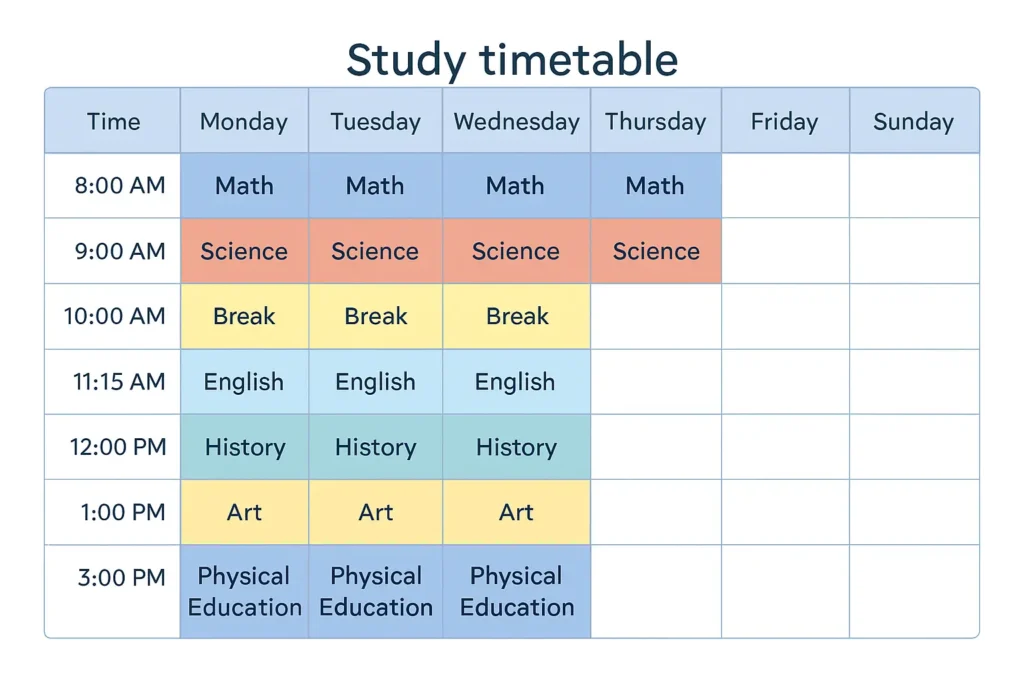
- Create realistic study timetables
- Generate revision summaries from your own notes
- Practice exam-style questions (this is the pattern research shows actually helps)
- Improve writing quality and understand why changes were suggested
- Check your specific course’s AI disclosure policy before submitting anything AI-assisted
AI is support. Not a shortcut, and increasingly, not something you can quietly hide either — treat it accordingly.
Where Students Can Use AI in Daily Study Life
From my experience, AI tools for students to complete assignments faster work best in these areas:
- Homework explanations
- Grammar checking while writing
- Note-making and summaries
- Project ideas and slide design
- Voice-to-text notes
- Study planning
- Practice questions before exams
My study speed almost doubled after using the right tools. Studying felt less stressful and more manageable.
AI is not limited to education anymore. It’s also changing how we work and live. If you’re curious, you can read my guide on free AI tools to automate daily office work, where I explain how people use the same tools professionally.
FAQs – AI tools for students
What are the best free AI tools for students in 2026?
Google Gemini, NotebookLM, Notion AI, Grammarly, Canva AI, and Quizlet AI are all genuinely useful and free (or free-tier available) for students, each suited to a different part of the study process.
Is using an AI assignment writer considered cheating?
It depends entirely on how it’s used and your institution’s specific policy. Using AI to understand a topic or check your writing is generally accepted; submitting AI-generated work as entirely your own is increasingly flagged by detection tools used in roughly 68% of schools as of 2026.
What is the best AI website for homework help?
Google Gemini and ChatGPT are strong general-purpose options for explanations, while NotebookLM is the better choice specifically when you need answers grounded in your own course materials rather than general web knowledge.
Can AI replace teachers?
No. AI can support teaching, but real learning still needs guidance, emotional connection, and human interaction that no current AI tool genuinely replicates.
Is AI safe for students to use?
Yes, if used carefully — always verify important answers against trusted sources, and avoid sharing personal or sensitive data with any AI platform.
Does using AI actually hurt learning?
It depends on how you use it. Research from 2026 shows students who used AI to generate practice questions and test themselves improved the most, while students who used AI purely to generate finished answers actually scored worse than students using no AI at all.
Can students use AI tools for homework?
Yes, but avoid copying blindly. Use AI to understand the material, then write your actual submission in your own words and understanding.
Final Thoughts
AI will not make students lazy. It will help them think better — if used wisely, and increasingly, if used within your institution’s actual rules.
The formula that worked for me: your brain + AI support = better learning.
Studying doesn’t have to feel painful. With the right mindset, the right tools, and an honest understanding of which usage patterns actually help versus quietly hurt, learning can become faster, calmer, and genuinely more effective.
AI won’t replace your effort. But used the right way, it can become your smartest study partner in 2026.