

Every developer I know has had this conversation at least once this year — usually late at night, usually half-joking, always a little serious underneath: will AI replace coding jobs before I even finish my career?
I get why the question won’t go away. At Google, roughly 75% of new code is now AI-generated.
GitHub Copilot alone accounts for 46% of code suggestions across enterprise repositories, climbing to 60% at companies that made it the default.
Ninety-two percent of U.S. developers now use AI coding tools daily. Those aren’t small numbers. If you only looked at that data, you’d assume the coding profession is basically over.
It isn’t. But the honest answer is more specific than a simple no.
Quick answer: Will AI replace coding jobs in 2026? Not wholesale — but it’s already reshaping who gets hired and for what. Entry-level roles built around repetitive implementation (CRUD apps, basic testing, boilerplate) are shrinking fast. Meanwhile, senior engineers who can direct AI, review its output, and handle system architecture are earning a 56% salary premium over peers without AI skills — up from just 25% a year ago. The job isn’t disappearing. It’s splitting into two very different tracks, and which side you land on depends entirely on what skills you build next.
Table of Contents
Does AI Replace Coding? What the Data Actually Shows
Let’s separate the headline stat from what it actually means, because “AI writes 75% of Google’s code” gets repeated constantly without the context that makes it meaningful.
AI-generated code and AI-replaced developers are not the same thing. Code generation has genuinely exploded — Stack Overflow’s 2026 developer survey found 74% of developers use AI assistants at least weekly, up from 46% just three years earlier.
But headcount tells a different story: software engineering job postings rose 11% in early 2026 compared to the year before, and the U.S. Bureau of Labor Statistics’ current outlook still projects 10% growth for software developers through 2035 — well above the 3% average for all occupations, even after accounting for AI’s productivity impact.
So is coding going to be replaced by AI in terms of raw output? Clearly, a huge share of it already has been. Is coding going to be replaced by AI in terms of the humans doing the job? The data says no — it says the job is bifurcating, hard, into two tracks that are moving in opposite directions.
Will AI Replace Coding Jobs for Juniors First? Who’s Actually at Risk
This is the part most “will AI replace coding” articles skip past, and it’s the part that actually matters for your career decisions.
Shrinking fast:
- Junior developers doing repetitive CRUD app work
- QA engineers focused purely on manual test-case execution
- Code review roles centered on style and syntax checking rather than architecture
- Technical writers generating boilerplate documentation
Entry-level developer roles for ages 22–25 have declined nearly 20% since 2024. That’s a real, measurable contraction — not hype, not speculation.
Growing at the same time:
- Senior engineers with strong system architecture and domain expertise
- “Agentic engineers” who manage AI like a team of capable juniors — directing, reviewing, correcting
- Security engineers and ML infrastructure specialists
- Engineers who combine coding with product sense and stakeholder communication
Here’s a number that should reframe the whole conversation: job postings mentioning “agentic AI” skills grew 10,854% year-over-year by early 2026. That’s not a market shrinking. That’s a market reorganizing itself around a completely different skillset, fast enough to make most retraining advice already outdated by the time it’s published.
Will Coding Be Replaced by AI Entirely? What Engineers Actually Think
Here’s a detail that rarely makes it into the panic headlines: over 95% of developers still don’t fully trust AI-generated code for mission-critical logic without human review, even with adoption near-universal. And in Stack Overflow’s 2026 global survey, 82% of developers believe their jobs will evolve, not disappear, by 2030.
That’s not developers being in denial. It reflects something AI genuinely still struggles with: the “why” behind a decision. AI can generate five ways to scale a database. It can’t weigh the actual human cost of maintaining that architecture against the financial cost of the cloud credits for your specific company, informed by a conversation that happened in a meeting it was never part of.
Writing code is closer to laying bricks than to architecture — and laying bricks was never really the hard part of the job.
AI Tools That Actually Matter in 2026 — What Changed
Your toolkit for this looks meaningfully different than it did even a year ago. A few honest updates and corrections:
GitHub Copilot evolved well past autocomplete. Its coding agent can now take a GitHub issue, plan an approach, write code across multiple files, run tests, and open a draft pull request — largely unsupervised. This is the single biggest shift in what “AI replacing coding” actually looks like in practice: not typing suggestions, but autonomous task completion with human review at the end.
If you want to actually get comfortable directing agents like this instead of just reading about them, I put together an Agentic AI Learning Path for 2026 that walks through it from beginner to expert.

Replit Agent has become one of the most genuinely useful tools for beginners specifically — describe what you want built, and it plans, codes, and deploys a working app end-to-end, no separate hosting setup required.
Cursor built an entire AI-native code editor around the idea that the IDE itself should understand your whole codebase, not just the file you have open.
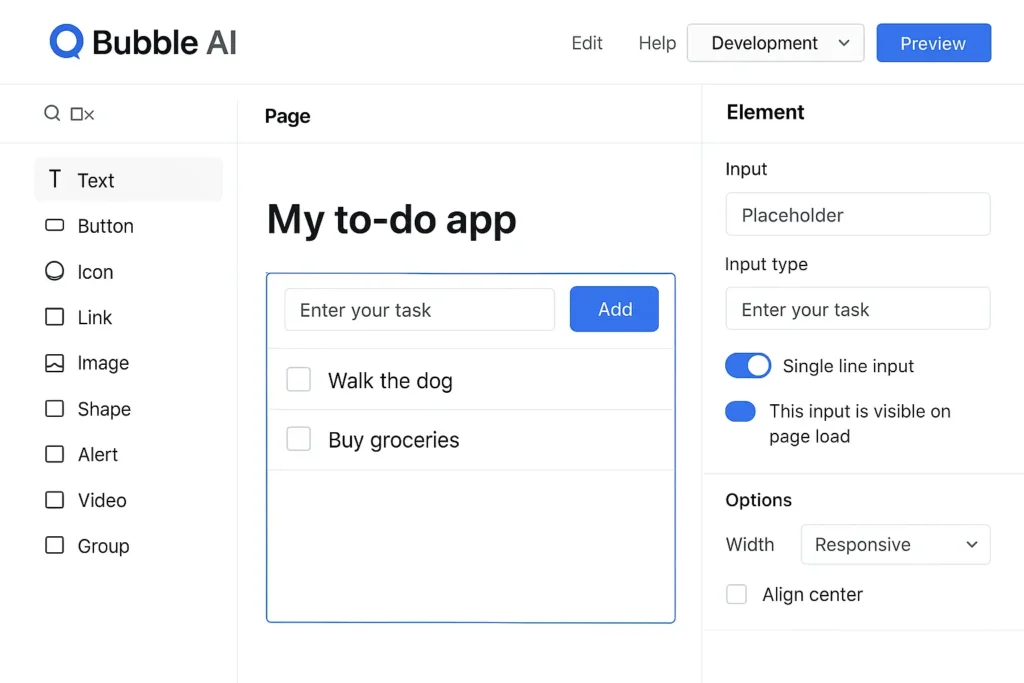
Bubble AI remains a solid no-code option for building functional web apps visually, now with considerably stronger AI-assisted workflow automation than a year ago.
CodeWP is still the go-to for WordPress-specific AI code generation — plugins and snippets generated and integrated quickly.
One correction worth making plainly: Peltarion, previously recommended in no-code AI roundups, was shut down and folded into King back in 2022 — it’s still occasionally listed in outdated “best AI tools” articles, but it hasn’t been available to new users in years.
How to Choose the Right AI Coding Tool
- Define your actual goal — full autonomous app building (Replit Agent), AI-assisted professional development (Copilot, Cursor), or visual no-code (Bubble AI) are genuinely different use cases
- Match it to your skill level honestly — some tools assume zero coding background, others assume you can read and correct what the AI produces
- Start on free tiers before committing to a paid plan
- Test on a small, low-stakes project first — this applies whether you’re a total beginner or a senior engineer evaluating a new agentic tool for your team
Real Benefits of AI-Assisted Development in 2026
- Speed: Projects that took weeks now take days, sometimes hours for smaller scope
- Cost efficiency: Fewer developers needed for small-scope, well-defined tasks – the same shift I’ve covered for non-technical founders in Best AI Tools for Business Owners Who Want Faster Growth Without Hiring More Staff
- Accessibility: Non-programmers can now build genuinely functional software, and the same trend is showing up well beyond coding — I’ve rounded up 5 free AI tools to automate daily office work that follow the same pattern
- Higher ceiling for experienced engineers: Less time on repetitive implementation means more time on the architecture and product decisions that actually differentiate good software from mediocre software
Will AI Replace Coding Jobs by 2030? Looking Ahead
The trajectory through 2030 looks like an acceleration of what’s already happening, not a sudden shift. Expect AI to handle nearly all boilerplate, testing, and routine implementation by default. Expect the roles that survive and thrive to require less raw typing and more judgment — architectural decisions, security trade-offs, product-sense calls that a model can’t make without someone’s actual business context.
The realistic prediction: coding as “typing syntax” is already substantially automated. Coding as “deciding what should be built and why” isn’t close to automated, and there’s no clear technical path suggesting it will be by 2030.
FAQs – Will AI replace coding jobs
Will AI replace coding jobs in 2026?
No, not wholesale. Entry-level, repetitive coding roles are shrinking measurably, while senior engineering roles focused on architecture, security, and AI oversight are growing and commanding higher salaries.
Can AI replace coding entirely?
Not currently, and not on any near-term horizon. AI excels at implementation — writing code from clear instructions — but still struggles with the judgment, trade-off analysis, and business context that senior engineering decisions require.
Does AI replace coding for beginners trying to build their first project?
For simple projects, largely yes — tools like Replit Agent and Bubble AI can take you from idea to a working app with minimal coding knowledge. For complex, production-grade software, human oversight remains essential.
Will coding be replaced by AI for professional software engineers?
Data through 2026 shows the opposite trend for skilled engineers: those who effectively direct and review AI output are earning a 56% salary premium over peers without AI skills, and job postings for AI-oversight roles are growing dramatically.
Is coding going to be replaced by AI in the next few years?
Most 2026 industry data points to transformation rather than replacement — the U.S. Bureau of Labor Statistics still projects 25% growth in software developer roles through 2032, faster than most other occupations.
Which coding jobs will be replaced by AI first?
Junior CRUD-app development, manual QA testing, style-focused code review, and boilerplate documentation are the roles already seeing the steepest declines.