
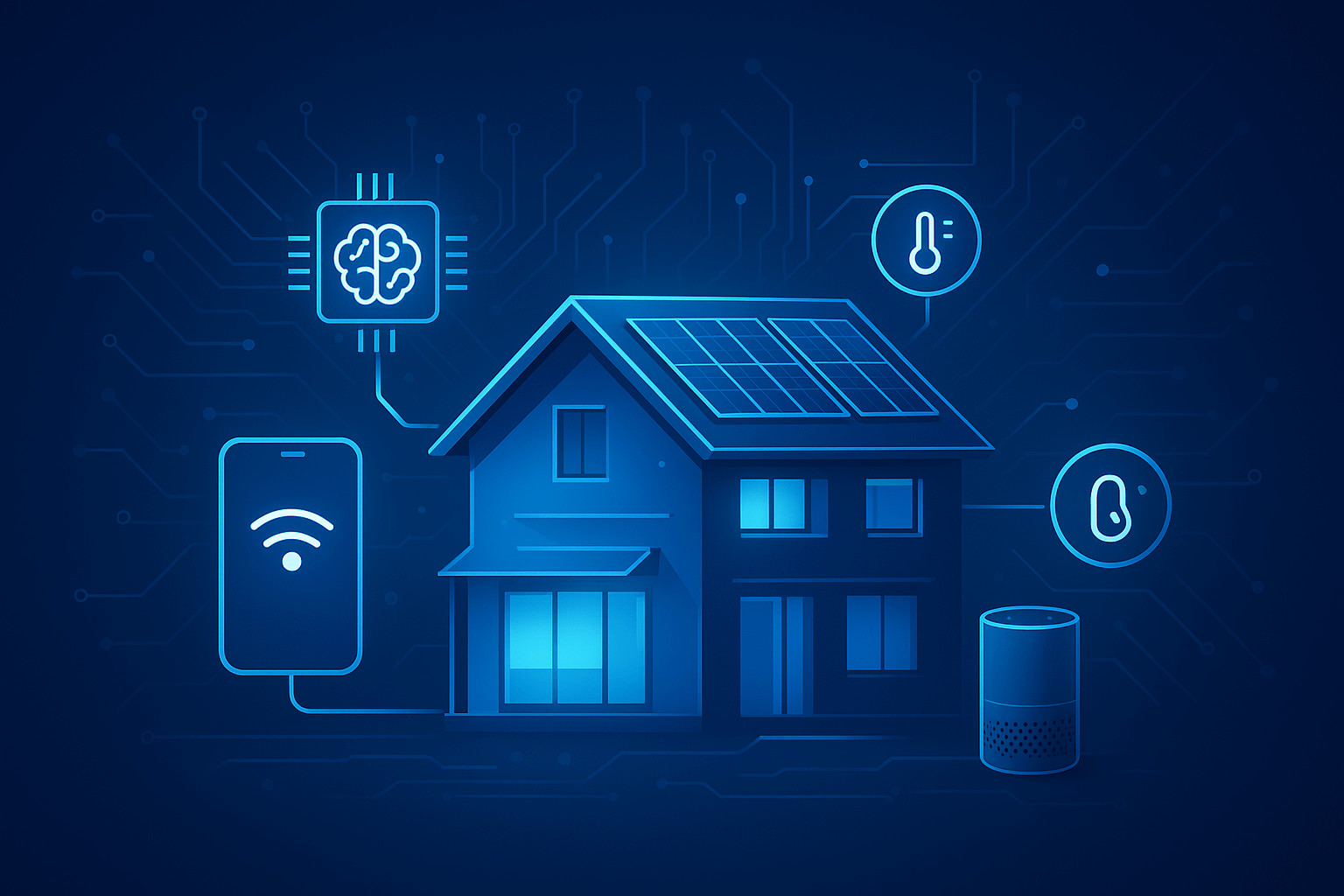
Introduction – AI and IoT Smart Homes
In today’s world, AI and IoT Smart Homes are changing the way we live — connecting devices intelligently to make our daily lives easier. These AIoT-powered homes combine artificial intelligence with the Internet of Things to bring automation, security, and personalization into one system.
Ai and IoT smart homes are no longer just about switching lights or fans from your phone.
That era is gone — today’s homes are becoming intelligent systems that think and act on their own.
As someone who loves exploring IoT and AI-based projects, I’ve seen how fast these two technologies are changing the way we live. In 2026, they’re not just connecting devices — they’re connecting intelligence.
Think of it like this :
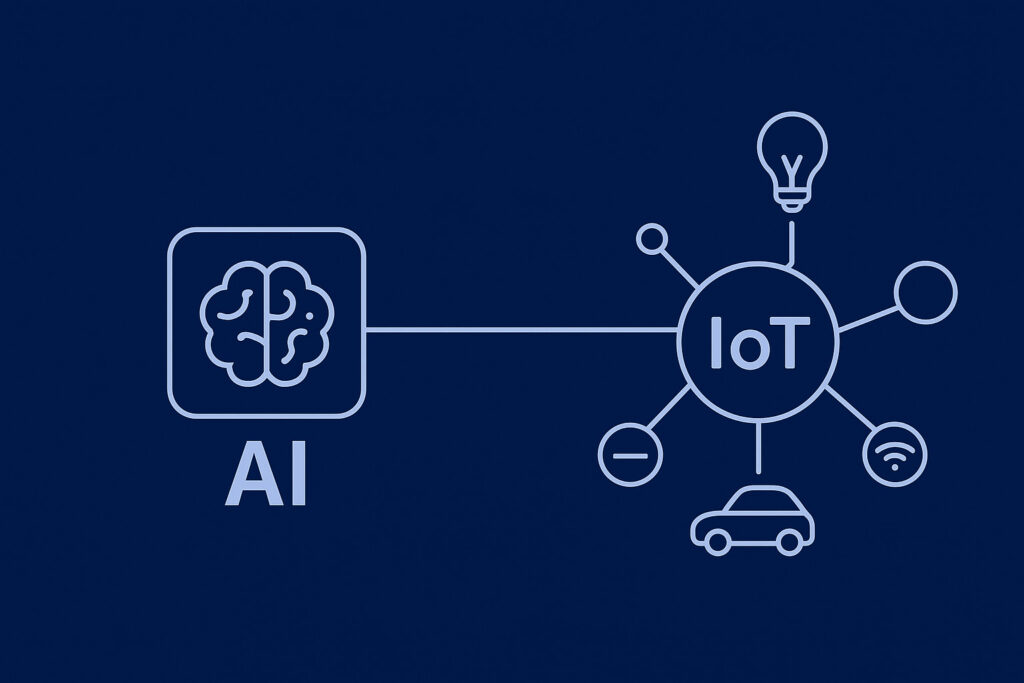
- IoT (Internet of Things) is the body — full of sensors, devices, and smart systems.
- AI (Artificial Intelligence) is the brain — analyzing data, learning habits, and making decisions.
Together, they form AIoT (Artificial Intelligence of Things) — technology that doesn’t just listen to you, but understands you.
Table of Contents
1. Predictive Maintenance in AI and IoT Smart Homes (The Money Saver)
One of the smartest advantages of AIoT is predictive maintenance.
Imagine your air conditioner suddenly breaking down during peak summer — not a great feeling, right?
Now imagine your Ai and IoT smart homes warning you before that happens.
AI uses data from IoT sensors (like temperature, vibration, or power use) to detect small changes that signal possible issues.
If the A/C fan motor starts drawing too much power, the AI instantly alerts you for service — before it fails.
This simple step saves money, prevents costly breakdowns, and keeps your home running smoothly.
That’s not just technology — that’s smart living.
If you’re interested in how AI and IoT improve safety beyond homes, check out my other project — Driver Sleep Detection and Alarm System — where I used sensors and Python to prevent drowsy driving accidents.
2. Hyper-Personalization — The Lifestyle Upgrade
AI doesn’t just make your home smart — it makes it personal.
AIoT learns your daily habits and automatically adjusts your environment to match your mood and routine.
For example :
- When you wake up, your favorite playlist starts automatically.
- Lights adjust to the perfect brightness for your morning.
- Your coffee machine begins brewing just as you enter the kitchen.
AI quietly studies your preferences and creates a space that feels designed just for you.
It’s not just comfort — it’s your home understanding you.
The integration of AI and IoT is now the backbone of modern smart home technology.
3. Edge Computing in AI and IoT Smart Homes (The Privacy Win)
A big question people ask is: “Where does all my smart home data go?”
That’s where edge computing comes in.
Instead of sending every bit of data to the cloud, edge devices process it locally — right inside your home.
This gives you:
- Faster response times
- Stronger privacy protection
- Less internet dependency
Example: Your smart security camera can recognize motion or faces without sending footage to external servers.
That means your data stays safe — inside your home.
According to TechCrunch, AI-powered IoT systems are expected to grow by over 25% annually by 2026, making them one of the fastest-growing smart home innovations
4. Real-Life AIoT Technology 2026 Examples
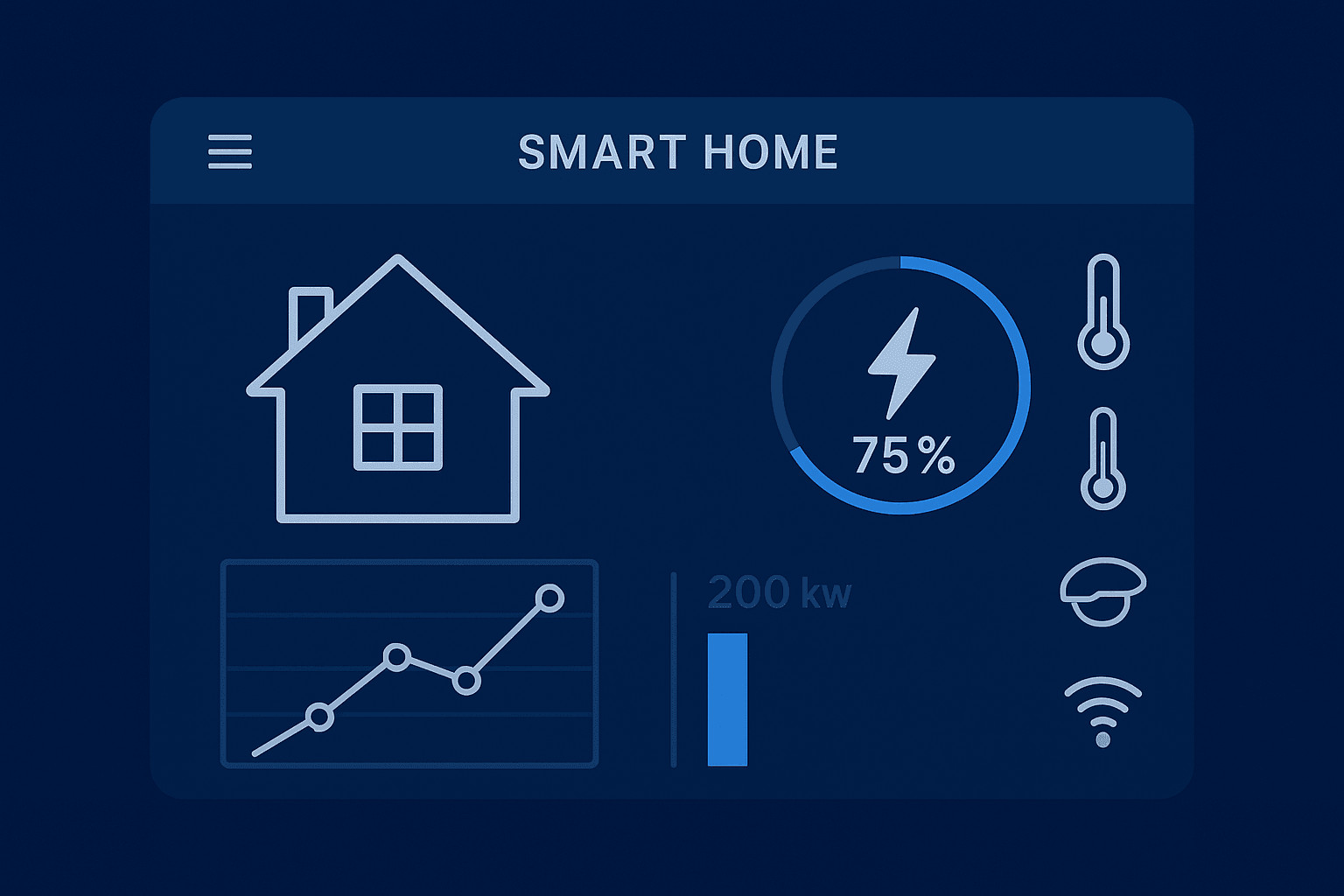
AI-powered IoT systems track real-time energy use and suggest ways to reduce waste.
Here are a few real-world examples from 2026 where AI and IoT work perfectly together :
Smart Energy Systems :-
If you forget to switch off lights or fans before leaving home, sensors detect no one’s around and turn them off automatically.
This saves energy, reduces bills, and makes your home eco-friendly — one of the biggest trends in 2026.
Security Cameras with AI :-
AI-based cameras can detect unusual movement or suspicious activity and send instant alerts — keeping your home safe from theft or intrusion.
Voice Assistants :-
Modern voice assistants, powered by AI, are integrated with IoT to control almost every corner of your home — from security to entertainment — all through natural conversation.
All these systems work together, learn over time, and make your home smarter, safer, and more efficient.
These AIoT devices communicate with each other to create intelligent, energy-efficient living spaces.
5. The Future of AIoT
In the coming years, AIoT homes will go far beyond simple automation.
They’ll become fully aware ecosystems that manage energy, track health, and predict your needs.
Imagine this Future of AI in Home Automation :
- Your fridge alerts you when fruits or vegetables are about to spoil.
- It automatically adds missing groceries to your shopping list — or even orders them for you.
- Your lights, AC, and security work together seamlessly, powered by AIoT intelligence.
As someone who enjoys building IoT-based systems, I believe the real power of AI lies in how quietly it blends into everyday life.
You won’t even notice it working — but you’ll feel the comfort, efficiency, and safety it brings.
Smart homes are evolving from “connected” to “conscious” — efficient, adaptive, and effortless.
The future of home automation depends on smarter algorithms that make devices learn from user behavior.

Conclusion – When Technology Feels Like Magic
By 2026, the best homes won’t just be connected — they’ll be conscious.
AI and IoT together will make daily life smoother, safer, and more personalized than ever.
You won’t have to give commands — your home will simply know what to do.
It will predict your needs, save energy, and protect your privacy without you even noticing.
The best part? You don’t need to be a tech expert to experience it — AIoT is designed to make life simpler for everyone.
Welcome to the future — where your home doesn’t just listen…
it thinks for you.
1. What is AIoT in smart homes?
AIoT (Artificial Intelligence of Things) combines AI’s learning ability with IoT’s connectivity. In smart homes, it means devices can understand behavior, make decisions, and automate tasks without manual control.
2. How does AI help IoT in home automation?
AI uses the data collected by IoT sensors to learn your habits and adjust systems like lighting, temperature, or security automatically. It turns basic automation into intelligent decision-making.
3. Is AIoT safe for home data and privacy?
Yes — modern smart homes use edge computing and local data processing, which means most of your private data stays inside your home network instead of going to the cloud.
4. What are some examples of AI and IoT working together?
Smart thermostats adjusting temperature based on weather, AI cameras detecting unusual movement, and smart speakers managing devices through voice commands are common examples.
5. What is the future of AI and IoT in 2026 and beyond?
In 2026, AIoT systems will become more energy-efficient, predictive, and personalized — offering faster performance, better security, and effortless control for daily living.
If you enjoy reading about AI, IoT, and smart tech innovations, stay tuned on TechByDevansh.com for future AI and IoT projects and tutorials.