

A single decision in a courtroom may end up shaping the future of artificial intelligence more than any product launch or keynote speech.
Elon Musk’s controversial $140 billion pay package isn’t just about money, power, or corporate drama. It quietly raises a much bigger question: how fast can Tesla move in the global AI race—and who controls that future?
The Elon Musk $140 billion pay package has become one of the most important tech decisions of the decade, with direct implications for Tesla’s AI future.
At first glance, this looks like another headline about executive compensation. But look deeper, and you’ll see something far more important. This deal could influence Tesla’s progress in self-driving technology, humanoid robots, and large-scale AI infrastructure over the next decade.
This article breaks it down in simple terms—what the pay package means, why it matters for AI, how Tesla compares to other AI giants, and what this decision could mean for jobs, careers, and the future of technology.
Table of Contents
What Is Elon Musk $140 Billion Pay Package? (Simple Explanation)
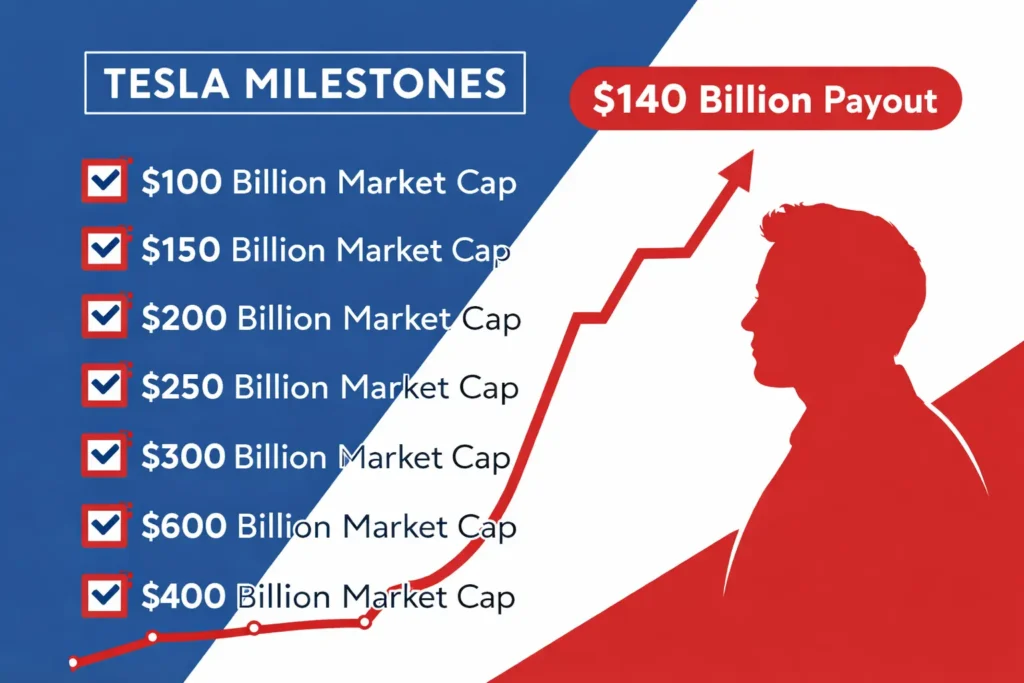
Elon Musk’s pay package is not a traditional salary or bonus.
It is a performance-based stock compensation plan, meaning Musk only earns shares if Tesla hits extremely aggressive targets related to:
- Market value growth
- Revenue milestones
- Long-term company performance
In simple words:
If Tesla wins big, Musk wins big.
If Tesla fails, he gets nothing.
The plan was challenged and blocked earlier due to governance concerns, but it resurfaced because Tesla shareholders believe Musk’s leadership is deeply tied to the company’s long-term vision—especially its AI strategy.
This isn’t about rewarding past success. It’s about locking Musk’s attention and effort into Tesla’s future, particularly in artificial intelligence.
Why This Deal Is Really About AI — Not Just Tesla Cars
Most people still think of Tesla as an electric vehicle company. That view is outdated.
Tesla today is positioning itself as:
- An AI company
- A robotics company
- A real-world autonomy platform
Electric cars are just the data-collection layer.
Tesla’s long-term vision centers around AI-driven autonomy rather than just electric vehicles.
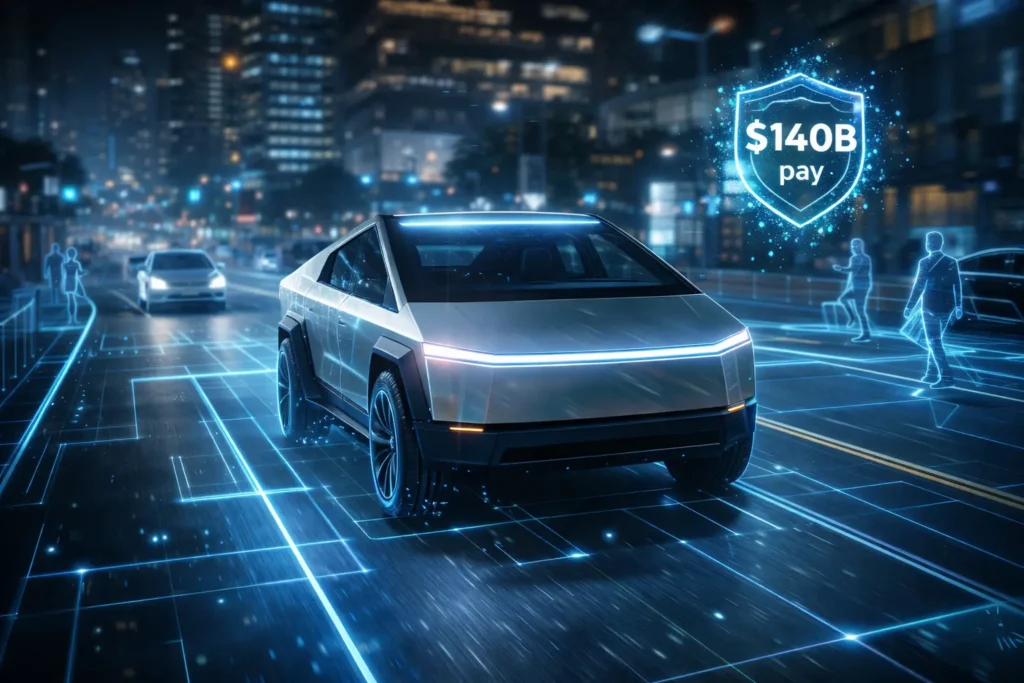
Tesla’s real advantage lies in:
- Billions of miles of real-world driving data
- AI models trained on physical environments
- Custom AI hardware like the Dojo supercomputer
- Full Self-Driving (FSD) neural networks
- Optimus humanoid robot development
This pay package ties Musk’s future wealth directly to whether Tesla succeeds as an AI-first company, not just an automaker.
Advanced autonomy depends heavily on AI-based driver monitoring systems that improve safety and real-world reliability.
Tesla AI vs Other AI Giants: A Competitive Reality Check
Tesla is not competing in the same way as OpenAI, Google, or Nvidia. Each player has a different strength.
AI Competition Snapshot
| Company | Core AI Strength | Key Advantage |
|---|---|---|
| Tesla | Real-world data + autonomy | Physical AI & robotics |
| Search + data scale | Knowledge & infrastructure | |
| OpenAI | Generative AI | Language models |
| Nvidia | AI hardware | GPUs & AI chips |
Tesla’s advantage is real-world feedback loops. Every car on the road becomes a moving sensor. That’s something most AI companies simply cannot replicate.
However, Tesla also faces risks:
- Heavy dependence on Musk’s leadership
- Slower regulatory approval for autonomy
- Massive computing costs
The pay package exists to keep Tesla competitive in this high-stakes AI landscape.
The Hidden Risk: What If Elon Musk Walked Away?
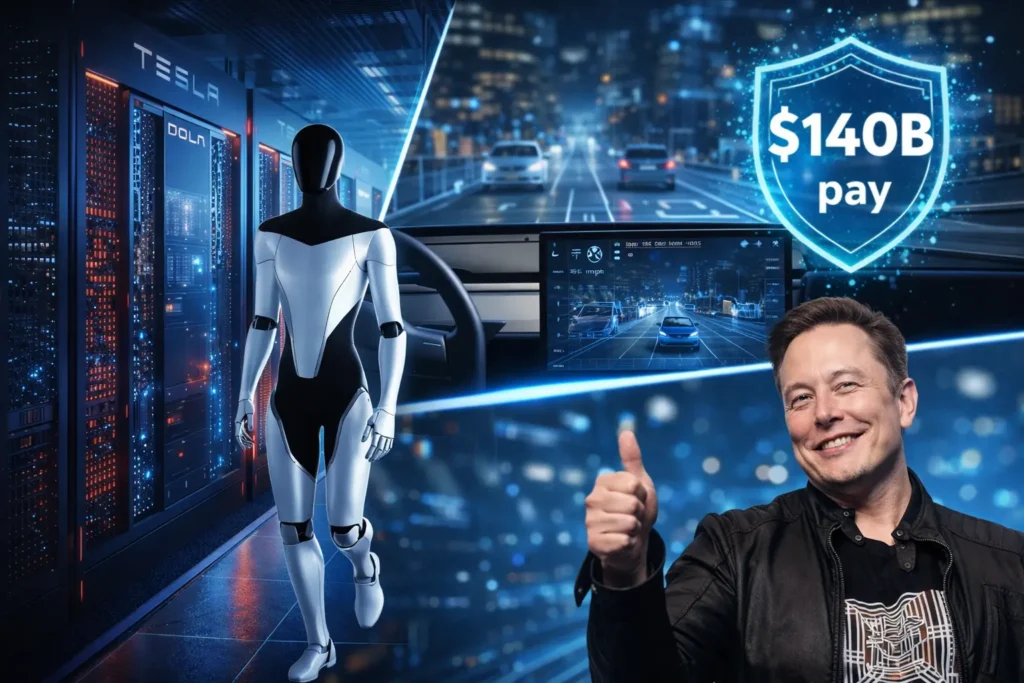
This is a question investors quietly worry about.
What if Musk had lost this pay package?
Possible outcomes:
- Increased focus on xAI instead of Tesla AI
- Slower progress on Full Self-Driving
- Difficulty retaining top AI researchers
- Reduced confidence among long-term investors
Tesla’s AI strategy is deeply tied to Musk’s vision. Whether that’s a strength or a risk depends on execution.
This pay package is essentially a bet that keeping Musk fully committed is worth the controversy.
How This Decision Impacts AI Jobs and Tech Careers
This isn’t just about billionaires and shareholders. It affects real people working in tech.
Tesla’s push into AI, robotics, and automation creates demand for roles like:
- AI engineers
- Machine learning researchers
- Robotics engineers
- Cloud and DevOps engineers
- AI infrastructure specialists
- Data engineers
Career Impact Snapshot
| Area | Demand Impact |
|---|---|
| AI Engineering | Very high |
| Robotics & Automation | Rapid growth |
| DevOps & Cloud | Essential backbone |
| Data Engineering | Critical for AI pipelines |
For students and professionals, Tesla’s AI direction signals where the tech industry is heading: AI systems that operate in the real world, not just on screens.
As AI systems scale, supporting roles like cloud and DevOps engineering are becoming critical to modern tech careers.
Why Investors Are Divided
Supporters argue:
- Musk is irreplaceable for Tesla’s AI roadmap
- Performance-based pay aligns incentives
- Long-term innovation requires bold leadership
Critics argue:
- The pay package sets a risky precedent
- Governance concerns still exist
- Over-reliance on one individual is dangerous
Both sides have valid points.
This is not a simple good-or-bad story. It’s a calculated risk in a rapidly changing AI economy.
Experts believe AI systems will increasingly move from digital tools to real-world decision-making platforms.
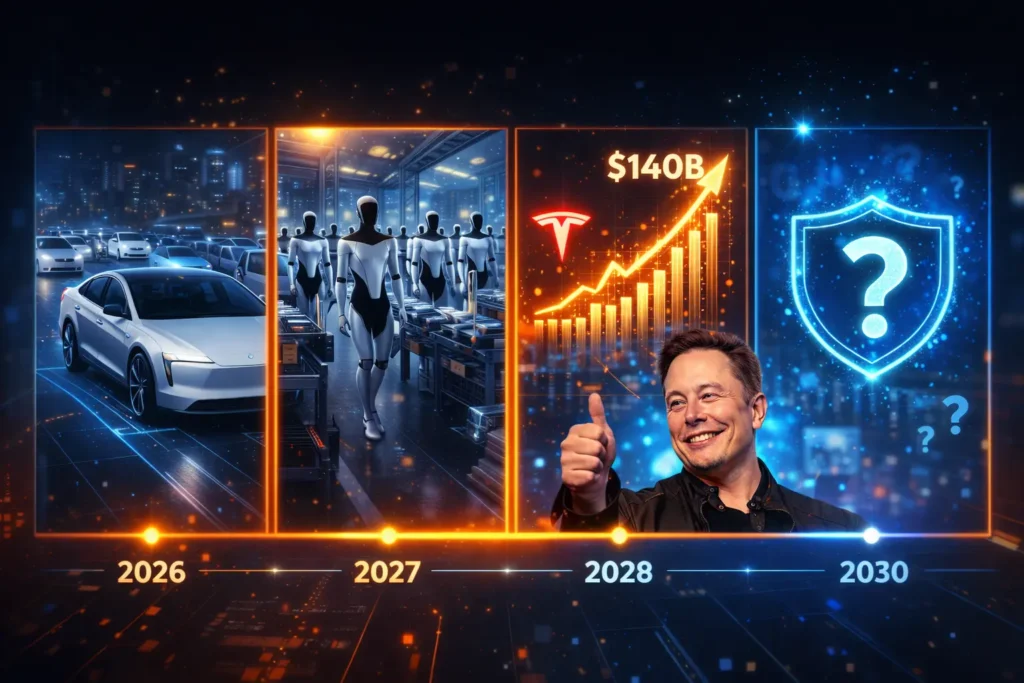
The Bigger Picture: Tesla’s AI Future (2026–2030)
Looking ahead, Tesla’s AI ambitions include:
- Fully autonomous driving at scale
- AI-powered robotics for manufacturing and services
- Real-time AI decision systems
- Integration of AI across energy, mobility, and automation
If successful, Tesla could evolve into an AI platform company, not just a product company.
This pay package is less about today’s valuation and more about who controls the next phase of applied AI.
This shift isn’t limited to cars—AI is also transforming space exploration and future missions in ways we’re only beginning to understand.
What This Means for the Future of AI as a Whole
Tesla’s approach challenges the current AI narrative.
Instead of focusing only on text, images, or chatbots, Tesla is betting on AI that interacts with the physical world.
That shift could redefine:
- Transportation
- Manufacturing
- Logistics
- Smart cities
- Robotics-assisted work
Whether Tesla wins or not, the direction is clear: AI is moving out of the cloud and into reality.
Final Thoughts: Why This Story Matters Beyond Headlines
Elon Musk’s $140 billion pay package is not just a corporate controversy. It’s a signal.
A signal that:
- AI leadership is now a strategic priority
- Data and autonomy are the new battlegrounds
- The future of tech will be shaped by bold, high-risk decisions
For readers interested in AI, careers, and the future of technology, this story is worth following—not because of the number, but because of what it represents.
If you care about how artificial intelligence will shape the next decade, this decision offers a rare look behind the curtain.
FAQ
What is Elon Musk’s $140 billion pay package?
It is a performance-based stock compensation plan tied to Tesla’s long-term growth, not a fixed salary.
Why does Elon Musk’s pay package matter for Tesla AI?
Because it incentivizes Musk to focus on Tesla’s AI, autonomy, and robotics strategy instead of other ventures.
Is Tesla more of an AI company than a car company?
Yes. Tesla increasingly operates as an AI and robotics company using vehicles as data-collection platforms.
How does this impact AI jobs and tech careers?
It boosts demand for AI engineers, DevOps professionals, robotics experts, and cloud specialists.
Is the pay package good or bad for Tesla investors?
It’s a calculated risk. Supporters see innovation potential, while critics worry about governance and dependence on one leader.
Can Tesla compete with companies like OpenAI and Google in AI?
Tesla’s strength lies in real-world AI and autonomy, which differs from text-based or cloud-only AI models.
If you enjoy understanding how major tech decisions influence the future of AI, automation, and careers, this is a topic worth keeping an eye on. The real impact of this decision will unfold over time—not in headlines, but in how technology evolves.