
AI tools are everywhere now — chatbots, image generators, writing assistants — but most of them feel… similar.
They respond fast.
They sound smart.
But they still wait for instructions.
Manus AI Agent changes that dynamic.
Instead of behaving like a chatbot, Manus AI positions itself as a reasoning-based AI agent — one that understands objectives, plans actions, and works through tasks logically. That difference is subtle, but it’s exactly why Manus AI Explained is quietly gaining traction among developers, researchers, and productivity-focused users.
This guide explains what Manus AI actually is, how it works, and why many believe it represents the next stage of practical AI.
Table of Contents
What Is Manus AI?
Manus AI is an agentic AI platform designed to think before acting.
Rather than producing instant replies, it focuses on:
- Understanding intent
- Structuring problems
- Executing tasks step by step
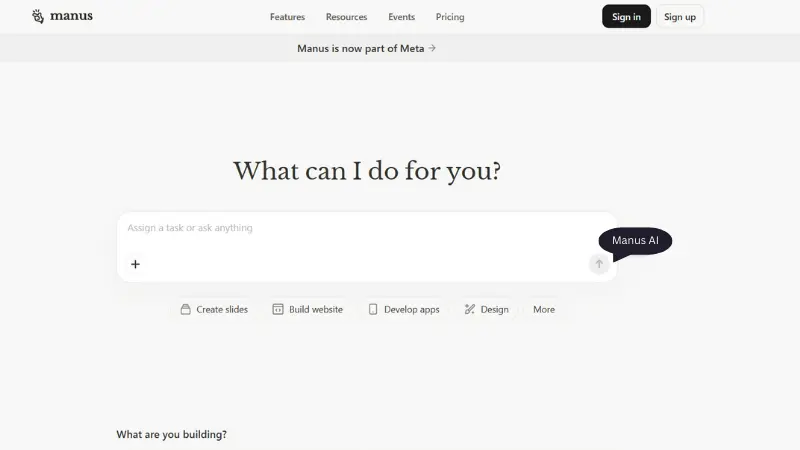
This makes Manus AI less of a “chat tool” and more of a digital assistant that reasons.
If ChatGPT feels like a brilliant conversationalist, Manus AI feels like a careful planner.
That distinction matters — especially for real work.
The idea of AI assistants that think and act is not limited to software, as projects like Razer Project Ava hint at a future where AI integrates deeply with hardware and daily life.
Why Manus AI Is Getting Attention in 2026
Manus AI didn’t go viral overnight. Its growth has been quieter — and that’s usually a good sign.
1. Growing Demand for AI That Handles Complexity
Users are no longer impressed by AI that only answers questions. They want tools that can:
- Handle multi-step instructions
- Think logically
- Reduce manual effort
Manus AI is built specifically for these scenarios.
2. Shift From Chatbots to AI Agents
2026 is shaping up to be the year of AI agents, not chatbots.
Manus AI fits this trend perfectly because it:
- Breaks goals into actions
- Executes tasks with reasoning
- Feels proactive rather than reactive
This positions it closer to an AI task automation tool than a conversational assistant.
With reasoning-based models like DeepSeek gaining popularity, interest in AI agents has exploded. Manus AI fits perfectly into this trend, which is why it’s showing up as a breakout query.
How Manus AI Actually Works
Manus AI follows a reasoning-first workflow, which looks like this:
- Goal Understanding – It interprets what you want to achieve
- Task Decomposition – It breaks the goal into logical steps
- Execution Planning – It determines the best order of actions
- Iterative Thinking – It adjusts based on progress
This approach makes it suitable for:
- Research workflows
- Planning tasks
- Productivity systems
- Automation ideas
It’s AI that thinks in sequences, not just sentences.
Manus AI Features (Explained Simply)
Let’s look at the main Manus AI Explained features that make it different.
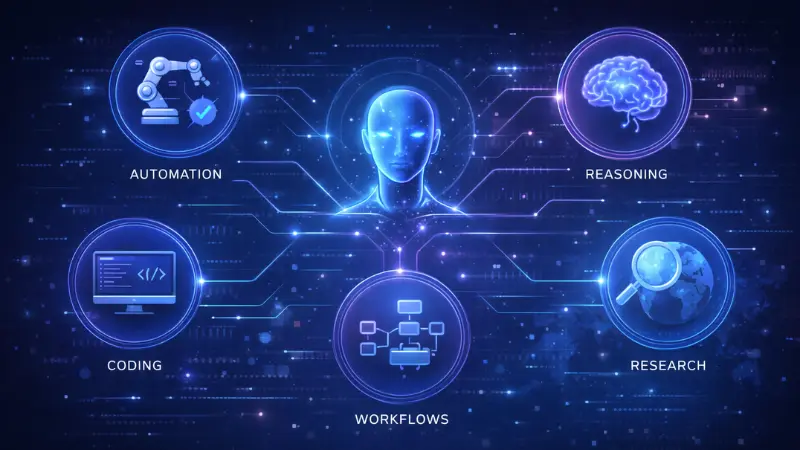
Reasoning-Based Decision Making
Manus AI emphasizes logic over language, reducing random or irrelevant responses.
This makes it useful for users who care about:
- Accuracy
- Structure
- Predictable outcomes
Publications like MIT Technology Review have highlighted the growing importance of reasoning-focused AI systems in next-generation tools.
Agent-Like Task Execution
Unlike traditional AI tools, Manus AI behaves more like a task-oriented assistant.
It can help with:
- Research planning
- Workflow structuring
- Content outlines
- Automation concepts
That’s why it’s often described as an AI that plans and executes tasks.
Minimal, Focused Interface
Manus AI Explained avoids feature overload.
This improves:
- Focus
- Learning curve
- Practical usability
It’s clearly designed for people who want results, not distractions.
Manus AI vs ChatGPT: A Practical Comparison
Many users are already comparing Manus AI vs ChatGPT, so here’s a simple breakdown:
| Area | Manus AI | ChatGPT |
|---|---|---|
| Core Strength | Reasoning & execution | Creativity & conversation |
| Task Planning | Advanced | Basic |
| Automation | Strong | Limited |
| Best For | Productivity & logic | Writing & ideas |
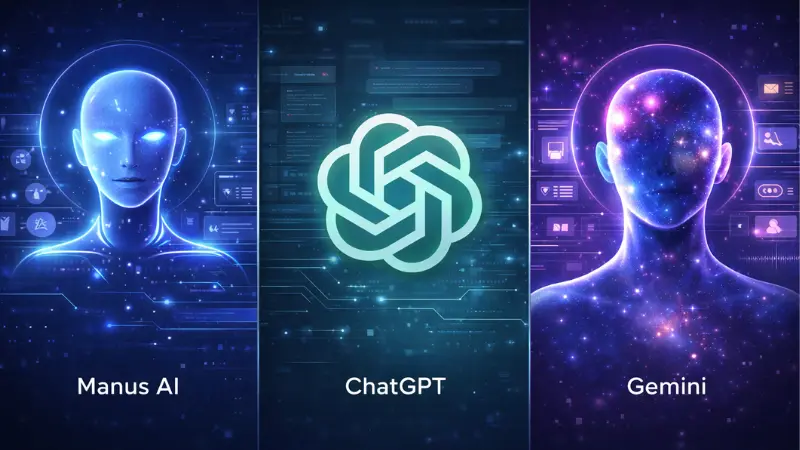
In short:
ChatGPT talks well.
Manus AI works methodically.
Many professionals may end up using both.
For users focused on research and real-time answers, tools like Perplexity AI offer a different experience compared to task-oriented platforms like Manus.
Who Will Benefit Most From Manus AI?
Developers & Technical Users
- Logical task breakdown
- System planning
- Automation experimentation
Knowledge Workers & Creators
- Research organization
- Structured planning
- Productivity improvement
Teams & Startups
- Process optimization
- AI-assisted workflows
- Agent-based experimentation
Is Manus AI Free?
A very common question is: Is Manus AI free?
Currently:
- Manus AI offers limited free usage
- Advanced features are likely to move behind paid plans
This is typical for early-stage AI platforms refining their models.
Is Manus AI Worth Trying in 2026?
If you want:
- An AI that reasons
- An AI that plans
- An AI that reduces thinking load
Then Manus AI is absolutely worth testing.
It doesn’t replace creative AI tools — it complements them.

FAQs – Manus AI Explained
What is Manus AI?
Manus AI is a reasoning-focused AI platform designed to plan, think, and execute tasks intelligently.
Why is Manus AI trending?
Manus AI is trending due to its agent-like behavior, automation features, and growing interest in reasoning-based AI tools.
Is Manus AI better than ChatGPT?
Manus AI is better for task planning and automation, while ChatGPT is stronger in creativity and conversation.
Is Manus AI free to use?
Manus AI offers limited free access, with paid features expected as the platform evolves.
Who should use Manus AI?
Developers, creators, startups, and professionals looking for productivity-focused AI tools can benefit from Manus AI.
Final Thoughts: Why Manus AI Explained Matters
Manus AI isn’t popular because of hype — it’s gaining attention because it reflects where AI is actually heading.
Less talking.
More thinking.
More doing.
For users interested in agentic AI platforms, Manus AI is one of the most interesting tools to watch in 2026.
2 thoughts on “Manus AI Explained: Why This AI Agent Feels Different in 2026”