

Last Updated: August 1, 2026
The global semiconductor industry is watching China’s memory ambitions more closely than ever — and ChangXin Memory Technologies (CXMT) is now at the center of that story.
CXMT’s Shanghai IPO has moved beyond the planning stage. The Chinese DRAM manufacturer completed its listing in July 2026 and raised approximately 57.92 billion yuan ($8.6 billion), making it the largest semiconductor IPO ever completed on China’s mainland market. The company’s shares surged sharply during their market debut, highlighting strong investor interest in China’s growing memory-chip industry.
But the CXMT IPO is more than a major fundraising event. It represents China’s broader effort to strengthen its domestic DRAM supply, reduce dependence on overseas memory manufacturers, and build a more resilient AI hardware supply chain.
CXMT produces DRAM memory used in smartphones, PCs, servers, and other computing systems. Its growing role matters because modern AI infrastructure depends not only on powerful processors but also on large amounts of fast, reliable memory.
This article explains what the CXMT Shanghai IPO means for the China DRAM market, AI memory demand, global semiconductor competition, and the future of the memory-chip industry.
Table of Contents
What Is CXMT and Why Is It Important?
CXMT (ChangXin Memory Technologies) is China’s leading domestic DRAM manufacturer. DRAM (Dynamic Random-Access Memory) is a critical component used in:
- Smartphones
- Data centers
- PCs and laptops
- AI accelerators
- Cloud infrastructure
Until now, the global DRAM market has been dominated by Samsung, SK Hynix, and Micron. China has long depended on foreign suppliers for advanced memory — a vulnerability exposed by trade restrictions and export controls.
CXMT exists to change that.
According to the official CXMT company profile, the company focuses on DRAM design, manufacturing, research, and memory products for devices such as smartphones, PCs, servers, and other computing systems.
CXMT IPO 2026: Latest Listing, Funding and Market Update
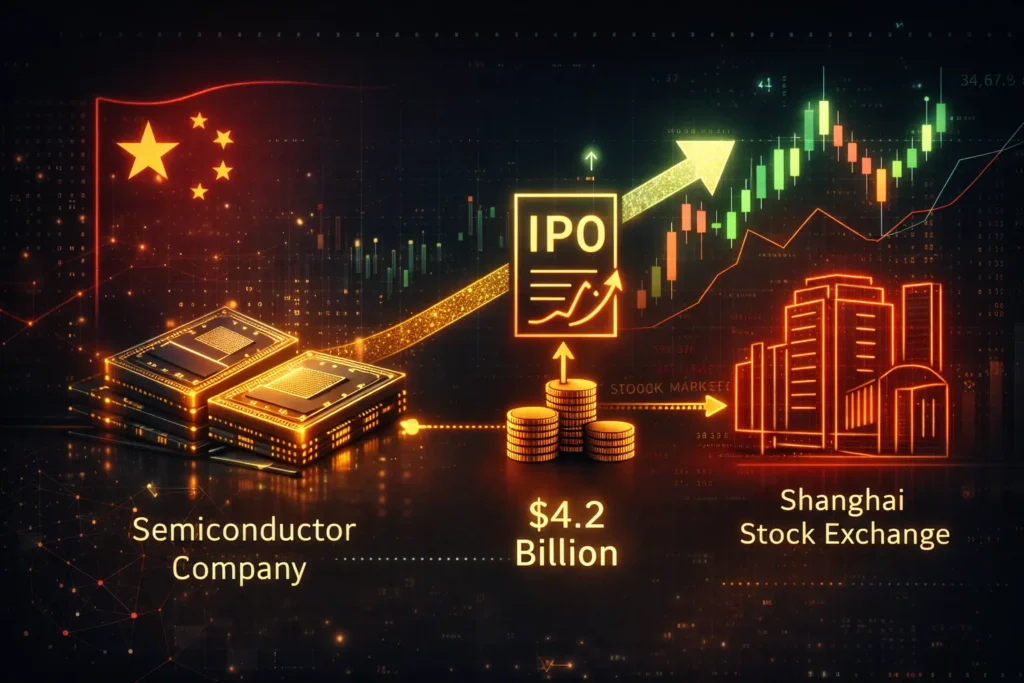
CXMT completed its Shanghai STAR Market listing in July 2026 after raising approximately 57.92 billion yuan ($8.6 billion) through its IPO. The offering was the largest semiconductor IPO completed on mainland China and one of Asia’s largest IPOs of 2026.
The company sold shares at an IPO price of 8.66 yuan per share. During its market debut, CXMT’s stock rose sharply, reflecting strong demand from investors focused on China’s semiconductor self-reliance and the rapid growth of AI-related memory demand.
CXMT plans to use the capital to support production expansion, research and development, and other business needs. The larger funding base could help the company scale its DRAM manufacturing capacity and invest in more advanced memory technologies.
However, a successful IPO does not automatically close the technology gap with established memory leaders. CXMT’s long-term progress will depend on manufacturing yields, product quality, advanced-memory development, customer adoption, and its ability to maintain growth through the semiconductor cycle.
Reuters reported that CXMT raised approximately 57.92 billion yuan ($8.6 billion) through its Shanghai IPO, making it the largest semiconductor offering completed on mainland China.
Why DRAM Matters More in the AI Era
DRAM has always been essential for computers, smartphones, and servers. AI is making memory even more important because modern AI systems need large amounts of memory to store model data, process requests, and support high-throughput workloads.
It is important to separate standard DRAM from HBM, or High-Bandwidth Memory. HBM is designed for extremely high-bandwidth workloads and is widely used alongside advanced AI accelerators. Standard server DRAM, including DDR5, plays a different but equally important role by providing system memory for CPUs, servers, databases, storage systems, and AI infrastructure.
CXMT’s current importance to the AI hardware market is therefore not simply about replacing HBM suppliers. Its growth in DDR5 and other DRAM products could strengthen the broader memory layer that supports AI servers and data centers.
This distinction is often missed in coverage of the CXMT AI memory strategy. AI infrastructure is not built from GPUs alone. It also depends on server memory, storage, networking, packaging, and power infrastructure.
China’s DRAM Expansion and the AI Race
The completed CXMT IPO is part of China’s broader push for semiconductor and AI self-reliance. The funding could support domestic DRAM production, technology development, and a more resilient supply chain for Chinese computing and AI infrastructure.
China understands that:
- AI chips need memory
- Memory supply controls AI growth
- Depending on foreign suppliers is risky
By expanding domestic DRAM production, China strengthens its position in:
- AI servers
- Cloud computing
- Edge AI
- Consumer electronics
This is especially important as AI demand explodes heading into 2026 and beyond.
CXMT’s AI Opportunity Is Bigger Than HBM
One of the most interesting parts of CXMT’s growth story is that its AI opportunity may extend beyond the high-end HBM market.
AI data centers require large amounts of conventional DRAM for host servers, CPUs, memory-heavy databases, storage systems, model-serving infrastructure, and supporting workloads. As AI deployments expand, demand can grow across several memory categories rather than only in HBM.
CXMT already offers DRAM products for applications such as PCs, mobile devices, servers, and other computing systems. Its DDR5 development is particularly important because newer server platforms increasingly depend on higher-capacity and higher-performance memory.
CXMT’s DDR5 product information provides more details about its memory technology, performance targets, and product specifications.
This means CXMT could benefit from AI infrastructure growth even if it does not immediately become a leader in the most advanced HBM segment. The company’s near-term opportunity may be to expand China’s domestic supply of mainstream and server memory while continuing to invest in more advanced products.
For the global market, this could gradually change where memory is manufactured and sourced — especially if Chinese cloud providers, server companies, and device makers increase their use of domestic DRAM.
How CXMT Could Change the Global DRAM Market
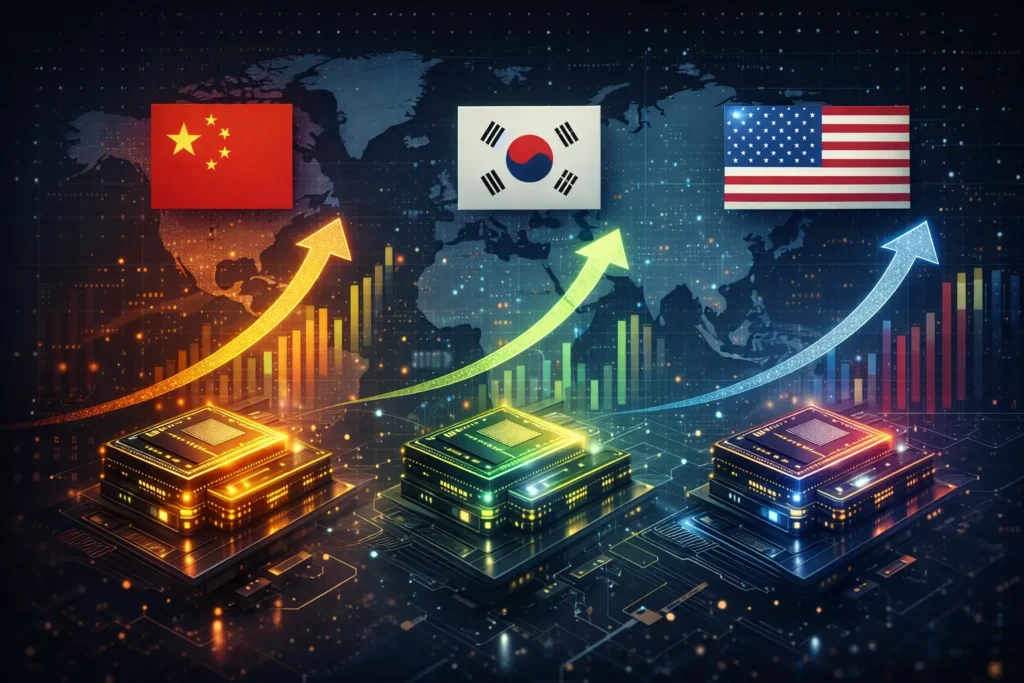
CXMT is still smaller than the established global memory leaders, but its growth is becoming difficult to ignore. Industry research estimated that CXMT’s DRAM revenue increased sharply in early 2026 and that its global market position strengthened.
The company may not need to outperform Samsung, SK hynix, or Micron across every technology category to influence the market. A large increase in CXMT production could affect:
- China’s dependence on imported DRAM
- Competition in mainstream and server-memory segments
- Pricing for selected memory products
- Supply-chain diversification for Chinese technology companies
- Long-term investment in domestic semiconductor manufacturing
The biggest effect may initially be regional rather than global. If more Chinese companies purchase locally produced DRAM, foreign suppliers could face changes in demand within one of the world’s largest electronics markets.
Over time, higher production capacity could also give CXMT more influence over global DRAM supply. However, the impact will depend on product quality, manufacturing yields, customer qualification, and the company’s ability to compete during both strong and weak memory cycles.
What the CXMT IPO Means for AI Hardware in 2026
The CXMT IPO provides the company with significant capital at a time when AI is increasing demand across the memory supply chain.
For China, stronger domestic DRAM production could support:
- AI servers and cloud infrastructure
- Domestic data-center expansion
- Chinese AI startups and model developers
- PCs, smartphones, and edge-AI devices
- Greater supply-chain resilience
CXMT’s role should not be described as a direct solution to every AI memory shortage. AI accelerators depend heavily on HBM, while server platforms also require large amounts of conventional DRAM. CXMT’s current DRAM portfolio may be especially relevant to the broader server and computing infrastructure surrounding AI systems.
The long-term opportunity is that China could build a more complete domestic AI hardware ecosystem, with local companies supplying more of the processors, memory, servers, networking equipment, and software needed for large-scale AI deployment.
As AI infrastructure grows, the demand for reliable cloud platforms, automation, and scalable operations is also increasing. Our guide to the future of DevOps and AI infrastructure skills explains how AI workloads are changing modern technology teams.
The Geopolitical Angle No One Can Ignore
Semiconductors are no longer just about technology. They are about power and leverage.
The CXMT IPO reflects:
- China’s response to US-led chip restrictions
- A shift toward domestic tech resilience
- Long-term planning rather than short-term profits
Memory chips may not grab headlines like GPUs, but they are just as critical — and often easier to scale domestically over time.
Why CXMT’s Valuation and Technology Position Are Different
CXMT’s strong IPO performance shows that investors see strategic value in China’s domestic memory industry. However, market valuation and semiconductor capability are not the same thing.
A high valuation can reflect expectations about future growth, government support, domestic demand, and the strategic importance of memory chips. It does not automatically mean that CXMT has already matched Samsung, SK hynix, or Micron in advanced manufacturing, HBM production, product breadth, or global customer reach.
This difference is important for anyone searching for CXMT stock, CXMT IPO valuation, or CXMT vs Samsung SK hynix Micron.
The more useful question is not simply, “Is CXMT worth more?” It is:
Can CXMT convert IPO funding into higher production, stronger technology, reliable yields, and long-term customer adoption?
That execution phase will determine whether the company becomes a lasting global memory competitor or remains primarily a strategic domestic supplier.
Risks and Challenges Ahead for CXMT
Despite the ambition, CXMT faces real challenges:
- Catching up on advanced process technology
- Competing with highly optimized global players
- Managing yields at scale
- Navigating geopolitical scrutiny
The IPO provides capital and strategic momentum, but it does not guarantee technological success.
And intent matters in long-term tech races.
Why This Story Matters Beyond China
Even if you’re not following Chinese markets closely, this story affects you.
Because:
- AI hardware prices depend on memory supply
- Cloud costs are influenced by DRAM pricing
- Global tech companies watch supply shifts carefully
CXMT’s DRAM expansion could quietly influence:
- AI service pricing
- Cloud infrastructure costs
- Hardware availability
These effects won’t be immediate — but they will compound over time.
The growing demand for AI services is also driving interest in practical software that helps creators and businesses use AI more effectively. Explore our best AI tools for content creators for useful AI platforms and workflows.
What to Watch Next After the CXMT IPO
The IPO is complete, but the most important part of the CXMT story begins after the listing. Investors, semiconductor companies, and AI infrastructure buyers should watch five areas:
1. Production expansion: Can CXMT increase DRAM output while maintaining strong manufacturing yields?
2. DDR5 adoption: Will more server and data-center customers adopt CXMT’s newer memory products?
3. Advanced-memory progress: How quickly can CXMT develop and commercialize more advanced memory technologies?
4. Customer diversification: Can the company expand beyond domestic demand and build a broader customer base?
5. Export-control risk: Will restrictions on advanced semiconductor equipment affect CXMT’s technology roadmap or production efficiency?
These factors will provide a clearer picture of CXMT’s long-term position than the first-day movement of its stock price.
FAQs: CXMT IPO and China’s DRAM Expansion
What is the CXMT IPO?
The CXMT IPO was the Shanghai stock-market listing of ChangXin Memory Technologies, a major Chinese DRAM manufacturer. CXMT raised approximately 57.92 billion yuan ($8.6 billion) in July 2026, making it the largest semiconductor IPO completed on mainland China.
Why is CXMT important for China’s semiconductor strategy?
CXMT is China’s leading domestic DRAM manufacturer. Its growth supports China’s push to reduce reliance on foreign memory suppliers and secure critical components needed for AI, cloud computing, and data centers.
How does the CXMT IPO impact the global DRAM market?
If CXMT successfully expands production, it could reduce China’s DRAM imports and increase competition in the global DRAM market. Over time, this may influence pricing, supply stability, and long-term memory market dynamics.
Is CXMT competing with Samsung, SK hynix and Micron?
CXMT competes in the global DRAM industry, but Samsung, SK hynix, and Micron remain more established in advanced memory technology, global production scale, and international customer reach. CXMT’s strengths include China’s large domestic market, strategic importance, and expanding production capacity.
Why is DRAM critical for AI hardware in 2026?
AI models require massive memory bandwidth to process large datasets efficiently. As AI workloads grow, DRAM availability becomes a major bottleneck, making memory chips essential for AI servers and data centers.
How does CXMT’s DRAM expansion affect AI development in China?
Expanded DRAM production could help stabilize memory supply for Chinese AI companies, support local AI startups, and reduce vulnerability to export restrictions affecting advanced hardware.
When did the CXMT IPO take place?
CXMT completed its Shanghai STAR Market listing in July 2026. The company raised approximately 57.92 billion yuan ($8.6 billion), providing significant funding for production expansion, research, and future memory technology development.
What are the biggest risks for CXMT after the IPO?
Key challenges include improving manufacturing yields, catching up with advanced memory technology, managing large-scale production, and navigating geopolitical and trade restrictions.
Could CXMT lower DRAM prices globally?
In the short term, major price changes are unlikely. However, over the long term, increased supply from CXMT could apply downward pressure on prices, especially in the Chinese market.
Is the CXMT $4.2B IPO a short-term news story or a long-term trend?
It’s a long-term trend. The IPO signals China’s multi-year commitment to memory independence and AI infrastructure, making it more than just a one-time market event.

For more updates on AI hardware, semiconductor competition, and major technology developments, explore our latest Tech News and AI industry coverage.
Final Thoughts: Why You Should Watch CXMT Closely
CXMT’s completed IPO is about more than one company raising capital.
It’s about:
- China strengthening its AI hardware foundation
- Memory becoming the next battleground in tech
- The slow but steady reshaping of global supply chains
As AI accelerates toward 2026, memory will matter as much as compute — and CXMT wants a seat at that table.
Whether it succeeds or struggles, one thing is certain:
the DRAM market is entering a new phase, and CXMT is part of that story.