
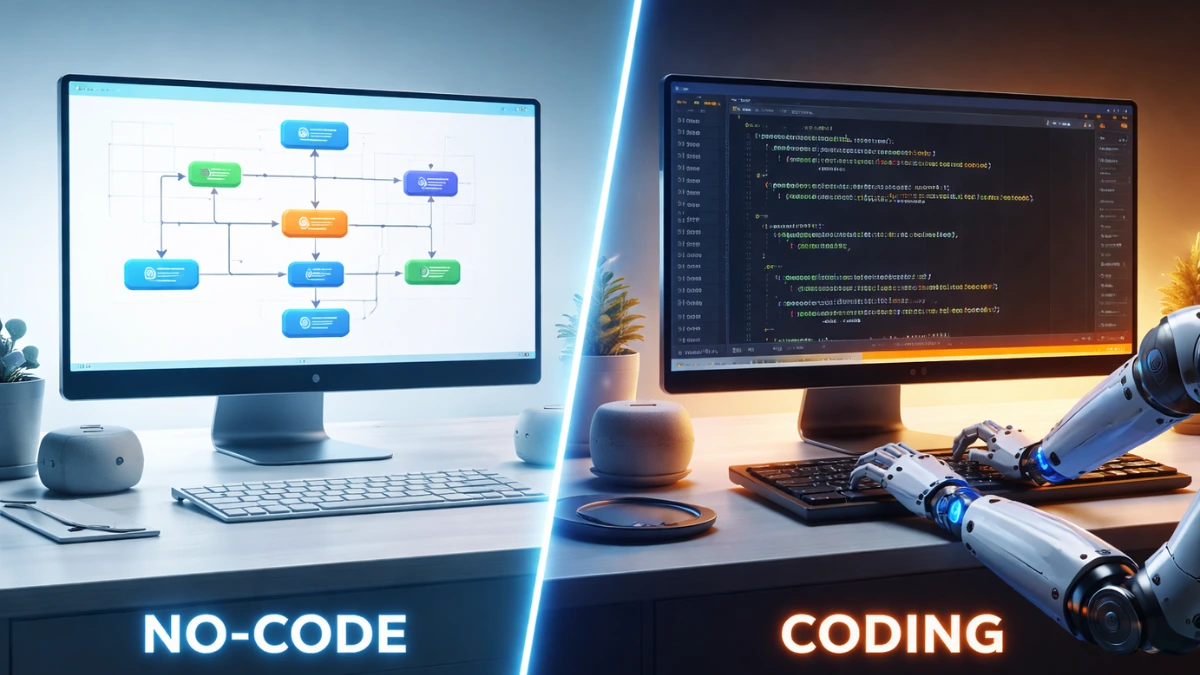
Have you ever gotten frustrated with a clunky automated customer service call? That robotic voice asking you to “please say or press your account number” for the third time? We’ve all been there. The promise of AI voice agents has been huge, but the reality often feels… limited.
This week, a startup named VoiceRun landed $5.5 million in seed funding to tackle that exact problem. But their solution isn’t yet another drag-and-drop, no-code builder. Instead, they’re betting big that the future of powerful, human-like AI won’t be built by clicking boxes—it’ll be written in code by developers, supercharged by AI assistants.
This move throws a fascinating wrench into the biggest debate in tech right now: the code versus no-code showdown. Is the dream of letting anyone build software killing the quality of the software we get? Let’s dig in.
Table of Contents
The News: More Than Just a Funding Headline
First, the facts. VoiceRun, founded by Nicholas Leonard and Derek Caneja, is building what they call a “voice agent factory.” Their platform is designed for enterprise developers who want to build sophisticated AI voices for things like customer service, booking systems, or interactive products.
The key detail that makes this news significant isn’t just the money. It’s their founding thesis, stated clearly by CEO Leonard: “We realized that the future of software would be coded, validated, and optimized by coding agents.”
In other words, they’re not building tools to replace developers. They’re building tools for developers and their AI co-pilots to use together. This is a subtle but massive shift in thinking.
The Great Divide: Clicks vs. Code in AI Development
To understand why this matters, let’s look at the two worlds colliding here. The rise of no-code and low-code platforms has been a revolution, democratizing creation. But for complex AI, it might be hitting a wall.
| The No-Code / Low-Code Path | The Code-First Path (VoiceRun’s Bet) |
|---|---|
| How it Works: Visual interfaces, drag-and-drop flowcharts, filling in text prompts. | How it Works: Writing and editing actual code in a development environment. |
| Big Advantage: Incredibly fast to start. Perfect for prototyping, demos, and simple automations. | Big Advantage: Ultimate flexibility and control. Can handle unique, complex logic and customizations. |
| The Catch: Can be rigid. If the visual tool doesn’t have a feature for, say, a specific dialect or a nuanced decision tree, you’re stuck. | The Catch: Requires developer skills. It’s a steeper learning curve than pointing and clicking. |
| Best For: Rapid experimentation, simple bots, and teams without dedicated developers. | Best For: Mission-critical, scalable, and highly customized AI agent development for businesses. |
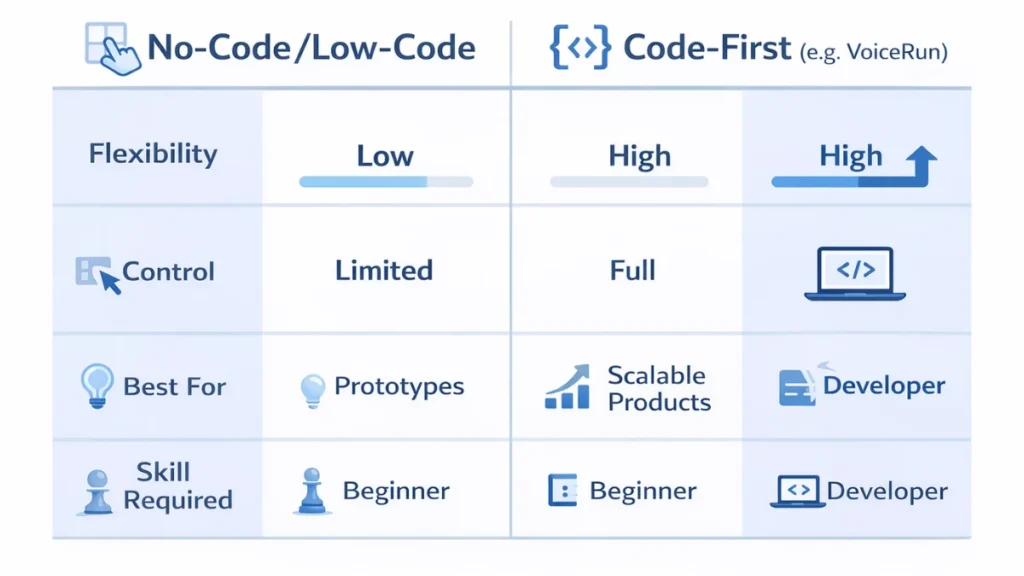
VoiceRun’s founders argue that visual tools create a “long tail of millions of examples of little things you might want to do that aren’t supported.” In code, however, if you can imagine it, you can probably build it.
The “AI Co-Developer”: The Real Game-Changer
This is where the story gets really interesting. VoiceRun isn’t just advocating for a return to hardcore, old-school programming. They are designed for a new hybrid workflow: the developer plus the AI coding agent.
Think of tools like GitHub Copilot or Amazon CodeWhisperer. These AI assistants are becoming another member of the dev team. VoiceRun’s platform is built with the idea that code is the native language for these AI coders. An AI can understand, modify, and improve a codebase far more deeply than it can navigate a proprietary visual diagram.
Leonard puts it simply: “They are going to do a far better job operating in code than in a visual interface.”
This vision is part of a broader explosion in advanced AI models and assistants that are changing how both code and content are created.
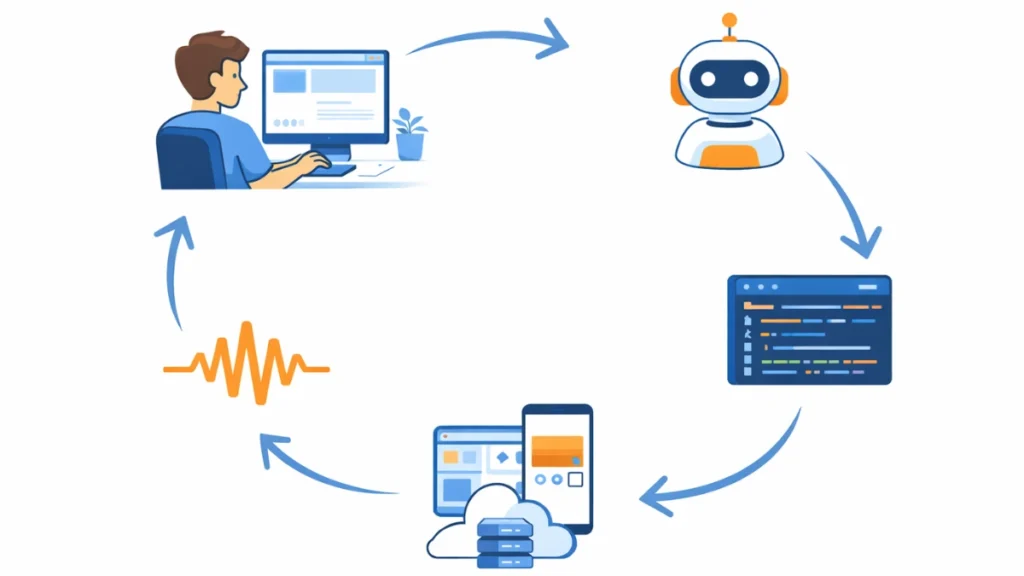
This vision suggests a future where developers don’t write every line themselves, but act as architects and supervisors. They define the problem, review the code written by the AI, and ensure quality. This partnership could unlock a new level of productivity and sophistication in building AI voice agents and beyond.
Why This “Pro-Code” Shift Matters for Everyone
You might think, “I’m not a developer, why should I care?” This shift signals a crucial maturation in the AI tools we’ll all interact with.
- Better, Less “Robotic” Experiences: The flexibility of code allows for more natural conversation flows, better handling of edge cases, and personalized touches. That means the next time you call a company, the AI voice might actually solve your problem without making you scream “REPRESENTATIVE!”
- Customization Over Cookie-Cutter Solutions: A restaurant’s reservation bot can have the brand’s unique tone. A bank’s agent can handle complex security protocols. Code allows tools to be tailor-made, not one-size-fits-none.
- Data Ownership and Control: For businesses, keeping their core logic and customer data within their own codebase, rather than inside a third-party no-code platform, is a major security and strategic advantage.

This drive for more powerful and efficient AI isn’t just about software. It’s fueled by major advances in hardware, like China’s massive push into DRAM production, which aims to power the next generation of AI chips.
FAQs – code vs no-code AI
Q: Is no-code AI development dead?
A: Not at all. No-code platforms are perfect for prototyping, simple automations, and empowering non-developers. The trend signaled by VoiceRun is about high-complexity, enterprise-grade AI—for these advanced uses, code offers necessary precision and control.
Q: As a developer, should I learn AI coding tools like VoiceRun?
A: Yes, absolutely. This trend validates that developer skills are crucial in the AI era. Understanding how to use code-first AI platforms and work with AI coding assistants (like GitHub Copilot) is becoming a key competitive advantage for building sophisticated products.
Q: What’s the main advantage of a “code-first” platform?
A: The core advantage is flexibility. With code, you can create custom logic, handle unique edge cases, and integrate with any system. You’re not limited by the pre-built features of a visual interface, which allows for more robust and personalized AI agents.
It’s Not a War, It’s a Choice
The takeaway from VoiceRun’s $5.5 million vote of confidence isn’t that no-code is dead. Far from it. No-code and pro-code tools are solving different problems.
- Use no-code platforms when you need speed, simplicity, and a proof-of-concept. They are the ultimate democratizers.
- Look to code-first platforms like VoiceRun when you’re building something that needs to be robust, unique, scalable, and built to last. They are the precision instruments.
The future of AI development isn’t about one winning. It’s about having the right tool for the job. For the highest-quality, most human-like AI experiences that move beyond simple scripts, the path forward is looking more and more like it will be written—with a very capable AI assistant by our side.
What’s your take? Do you think the need for high-quality AI will push more complex development back towards code-based tools, or will no-code platforms evolve to catch up? Let me know in the comments.
1 thought on “VoiceRun’s $5.5M Bet: Why AI’s Future May Be Written in Code, Not Clicked”