

Agentic AI is quickly emerging as one of the most practical and in-demand areas of artificial intelligence. Unlike traditional AI models that only respond to prompts, agentic AI systems can plan, reason, take actions, and improve outcomes with minimal human input.
If you’re wondering how to enter this field or future-proof your AI career, this Agentic AI learning path 2026 breaks everything down in a clear, realistic, and beginner-friendly way.
Table of Contents
What Is Agentic AI and Why It Matters in 2026
Agentic AI refers to AI agents that can autonomously complete tasks, interact with tools, retrieve information, and make decisions over multiple steps. These systems are already being used in workflow automation, enterprise copilots, research assistants, and customer operations.
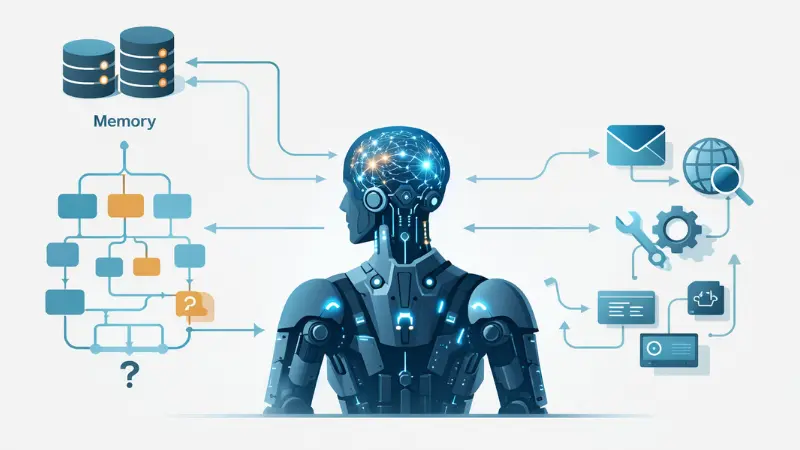
In 2026, companies are moving beyond simple chatbots toward AI agents that can operate independently, which is why agentic AI skills are becoming highly valuable.
According to learning resources published by Analytics Vidhya, agentic AI is becoming a core skill for building autonomous and enterprise-ready AI systems.
Step 1: Build Strong Foundations in AI Agents
Before using tools or frameworks, it’s important to understand how agentic systems work.
Focus on learning:
- Difference between LLM apps and AI agents
- Single-agent vs multi-agent systems
- Memory, planning, and action loops
- Basic AI safety and reliability concepts
This foundation helps you avoid building fragile or unreliable agent systems later.
Learning to research and validate AI outputs is essential, and tools like Perplexity AI can help beginners cross-check facts and improve reasoning skills.
Step 2: Start with No-Code and Low-Code Agents
Once the basics are clear, begin experimenting with no-code and low-code agent tools. These platforms help you understand agent behavior without heavy programming.
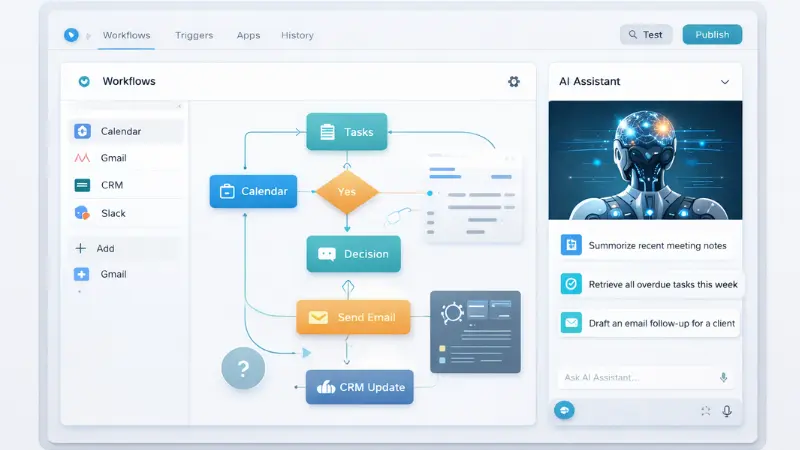
At this stage, try building:
- Simple task-based agents
- Workflow copilots for emails or scheduling
- Human-in-the-loop automation systems
This step makes learning agentic AI more practical and less overwhelming.
For beginners experimenting with no-code AI tools, platforms like Perchance AI Chat are useful for understanding prompt-driven behavior and early-stage agent interactions.
Step 3: Learn Python and API-Based Agent Development
To move beyond basic agents, coding becomes essential. Python is the most widely used language in agentic AI development.
Key skills to learn:
- Python fundamentals for AI workflows
- REST APIs and tool calling
- FastAPI for building agent backends
- Secure authentication and permissions
This stage marks your transition from hobby projects to real-world agentic systems.
Python developers often use FastAPI to build secure and scalable APIs that allow AI agents to interact with external tools and services.
Step 4: Agentic Reasoning and Decision-Making
Advanced agentic AI relies on structured reasoning rather than simple prompts.
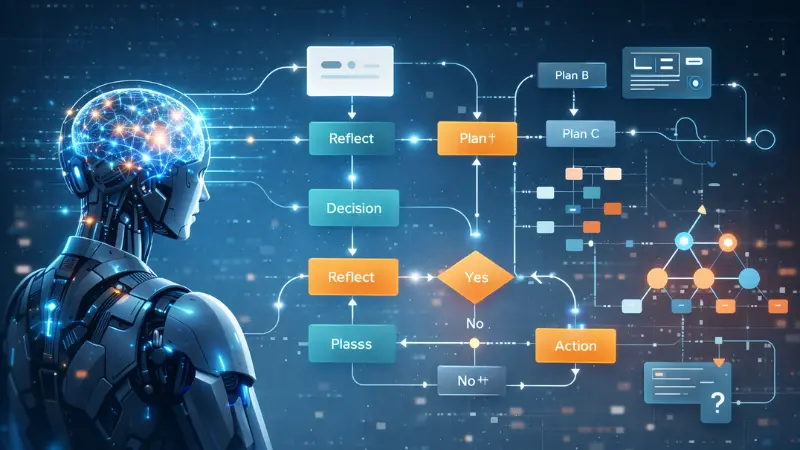
Here you’ll explore:
- Reason-and-act patterns
- Multi-step planning techniques
- Self-reflection and evaluation loops
- Reducing hallucinations and errors
These skills separate basic AI users from true agentic AI experts.
Advanced agentic reasoning techniques are closely tied to improvements in large language models, as highlighted in ongoing research from OpenAI.
Step 5: From RAG to Agentic RAG Systems
Retrieval-Augmented Generation (RAG) becomes far more powerful when combined with agents.
You’ll learn:
- Vector databases and embeddings
- When agents should retrieve data
- Long-term memory handling
- Self-improving retrieval workflows
This step is critical for building AI agents that work with real business data.
Step 6: Multi-Agent Systems and Governance
In advanced stages of the agentic AI roadmap, you’ll work with:
- Multi-agent collaboration systems
- Agent frameworks and orchestration
- Observability and performance tracking
- Security, compliance, and governance

These skills are especially important for enterprise and production-level AI systems.
Career Scope: Is Agentic AI Worth Learning?
Yes. Learning agentic AI in 2026 opens doors to roles such as:
- AI Agent Developer
- Automation Engineer
- Applied AI Engineer
- Enterprise AI Consultant
As companies struggle to deploy reliable agents, professionals who understand agentic AI architecture and governance will be in high demand.
The growing interest in tools like Manus AI shows how agentic AI is rapidly moving into real-world applications and enterprise workflows.
FAQs – Agentic AI learning path 2026
What is agentic AI?
Agentic AI refers to AI systems that can plan, reason, and take actions autonomously using tools and memory.
Is agentic AI hard to learn?
Agentic AI becomes manageable when learned step by step, starting with foundations and moving toward coding and frameworks.
Do I need coding to learn agentic AI?
Basic no-code tools can help initially, but Python and API knowledge are required for advanced agentic AI systems.
What is the best agentic AI learning path 2026?
A structured path covering foundations, no-code agents, Python, agentic reasoning, RAG systems, and governance is ideal.
Is agentic AI a good career choice?
Yes, agentic AI skills are increasingly demanded across automation, enterprise AI, and applied AI engineering roles.
Final Thoughts
This Agentic AI learning path 2026 is designed to help you move step by step—from understanding basic concepts to building production-ready AI agents. Whether you’re a student, developer, or working professional, agentic AI is one of the most future-ready skills you can invest in today.
1 thought on “Agentic AI Learning Path 2026: A Complete Beginner-to-Expert Guide”