
Feeling that nervous buzz in the tech community? The one that whispers about AI taking our jobs and “traditional” roles fading away? If you’re in DevOps, you’ve felt it. Let’s cut through the hype and talk honestly about the DevOps future 2027. Spoiler alert: it’s bright, but it looks different.
Table of Contents
Let’s Address the Elephant in the Server Room
Here’s the raw truth I keep hearing from my network: many engineers are anxious. They’ve mastered Kubernetes, automated pipelines with Terraform, and built resilient cloud infrastructures. Now, they’re asking, “Is all this becoming obsolete? Is DevOps a dead-end career?”
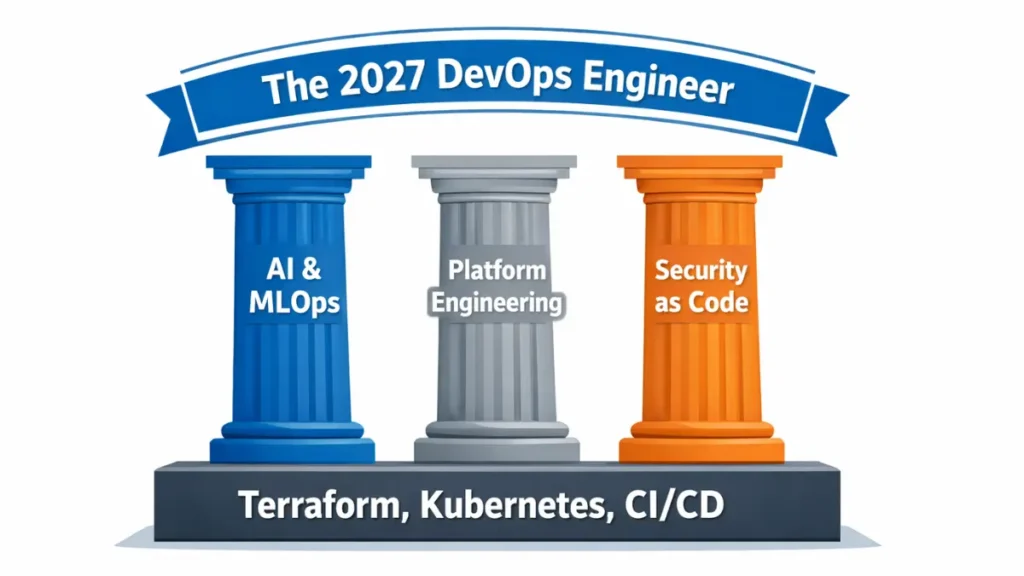
The short answer is no. But the complete, more exciting answer is this: DevOps isn’t dying; it’s graduating.
The foundational work—the manual scripting, the basic cloud provisioning—is being automated away by smarter tools (many built by DevOps principles!). This isn’t a threat; it’s an invitation. An invitation to level up, to focus on higher-impact, more interesting problems.
The role isn’t disappearing. It’s evolving from being a “tool operator” to a “system designer.” The future belongs to engineers who build the platforms that run the automation.
The 3 Skills That Are Your Career Insurance for 2027
Forget chasing every new tool. Lasting relevance comes from foundational skills. Based on where the industry is moving, here are the three non-negotiable skill sets you should start cultivating today.
Skill 1: AI Infrastructure & MLOps Literacy
You don’t need to become a data scientist. But you absolutely need to understand how to host, scale, and maintain the intelligent applications your company will build.
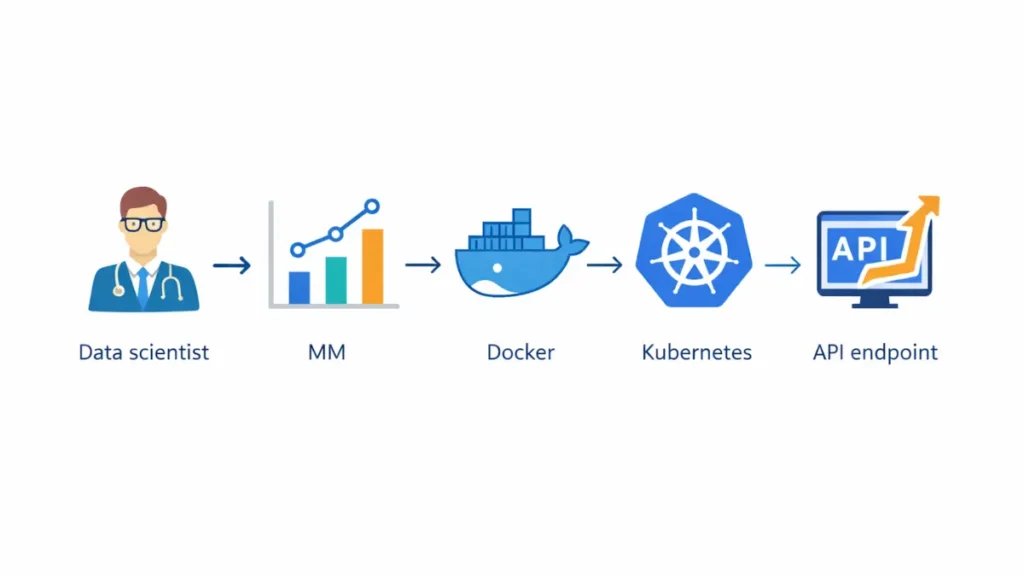
This is about becoming the bridge between the data team and production. Think of it as DevOps for AI.
- What it means: Managing infrastructure for model training (think GPU clusters), serving predictions at scale, and monitoring model “drift” in production.
- Why it’s critical: Every company is becoming a software company, and soon, every software company will leverage AI. Someone needs to make it run reliably.
- Your First Step: This weekend, try containerizing a simple open-source ML model (like from Hugging Face) with Docker and deploying it. You’ll instantly see the familiar challenges of environment, dependencies, and scaling—but with a new twist.
Skill 2: The Platform Engineering Mindset
This is the natural evolution. Instead of just providing CI/CD pipelines, you build the golden-path platform that lets other developers safely deploy their own code with a click.
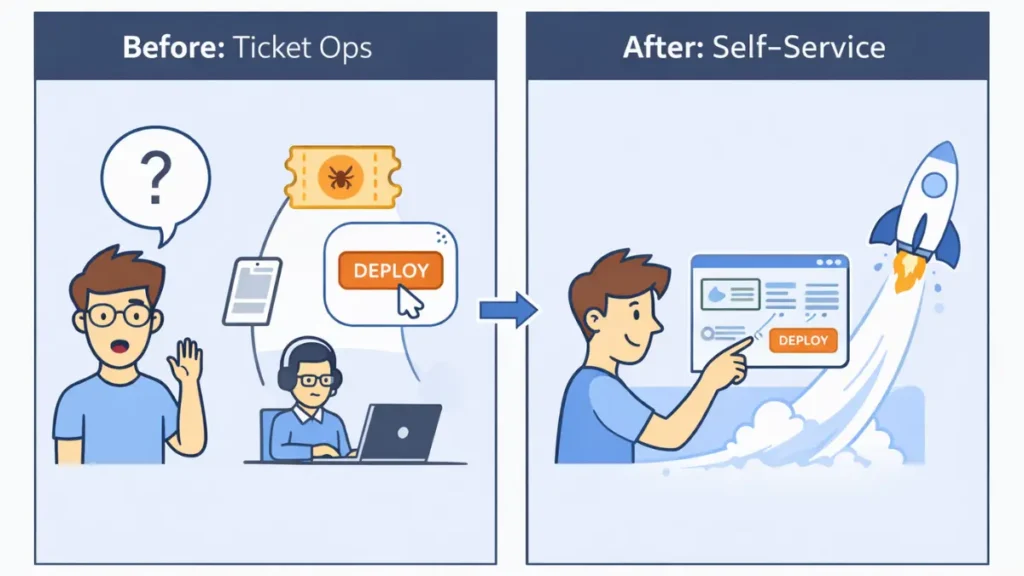
You shift from supporting teams to empowering them.
- What it means: Creating self-service internal developer platforms (IDPs). Tools like Backstage are becoming the central dashboard for engineering organizations. Your job is to curate the templates, tools, and guardrails.
- Why it’s critical: It scales engineering velocity. It reduces cognitive load for developers and eliminates “ticket ops.” It’s the ultimate force multiplier.
- Your First Step: Go to backstage.io, star their GitHub repo, and run the demo. Don’t try to master it—just explore the concept. See it as the “UI” for your future infrastructure.
Skill 3: Security & Compliance as Code (The Governance Layer)
As systems become more automated and complex, the biggest risks are at the speed of software. Manual security checks can’t keep up. The solution? Bake security directly into the fabric of your systems.
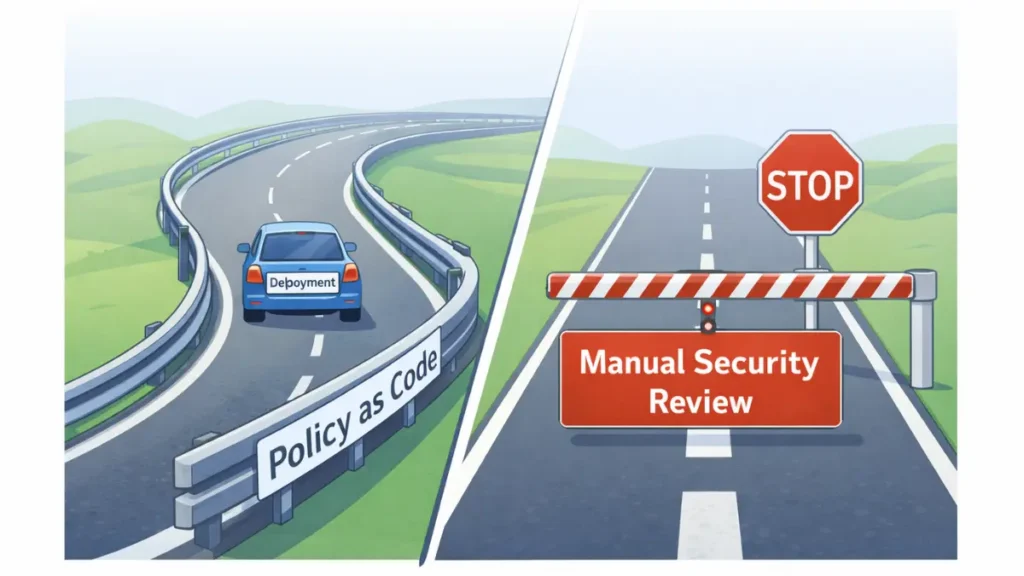
- What it means: Defining your security policies (e.g., “no public S3 buckets,” “all pods must have limits”) as code. Using tools like Open Policy Agent (OPA) or Checkov to automatically enforce these rules in every pipeline, on every infrastructure change.
- Why it’s critical: It’s the only way to be both fast and secure. It moves security from being a bottleneck (“gatekeeper”) to being an enabler (“guardrail”).
- Your First Step: Write one simple OPA “Rego” policy. Make it check that all your Kubernetes deployments have a
limitssection defined. Apply it in a test cluster. Feel the power of automated governance.
How This All Fits Together: A Day in DevOps future 2027
Let’s connect the dots. Imagine this near-future scenario:
A data scientist completes a new fraud detection model. Instead of filing a ticket, they go to the company’s Internal Developer Portal (Skill 2). They click “Deploy AI Model,” which triggers a secure pipeline. The platform automatically provisions the right AI Infrastructure (Skill 1), and Policy as Code rules (Skill 3) validate the deployment for security and cost-compliance before it ever goes live.
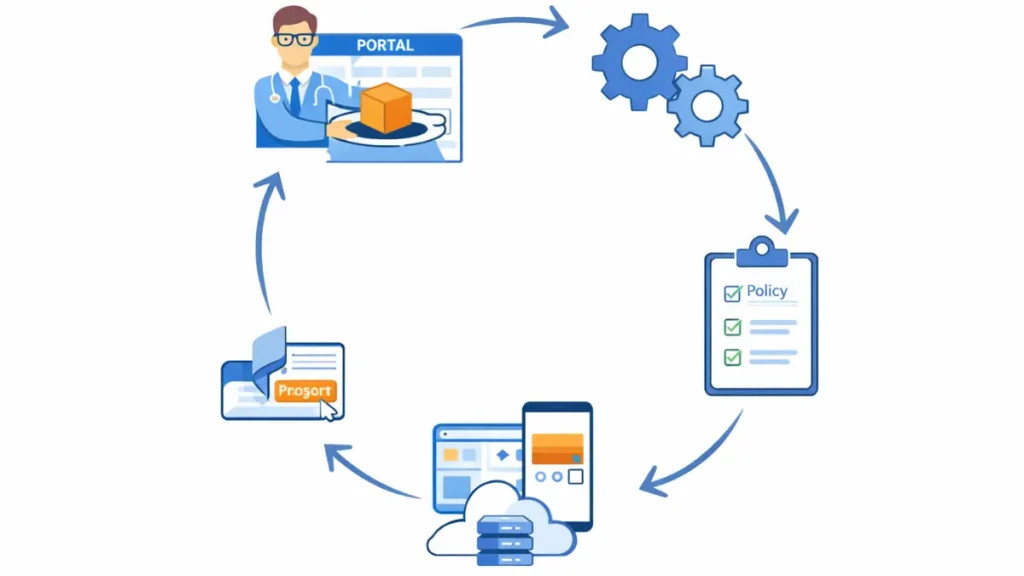
You, the evolved DevOps engineer, didn’t manually configure a server. You designed, built, and now maintain the secure, compliant, self-service platform that made this magic happen. Your impact is multiplied across the entire organization.
Your Action Plan: Start Here, Not from Scratch
This isn’t about starting over. Your current DevOps knowledge is your superpower. Terraform, Kubernetes, and CI/CD are the bedrock upon which these new skills are built.
Here is your concrete, one-month plan:
- Week 1-2: Skill 1 Dip. Complete one hands-on tutorial on deploying an ML model with Docker. Get it to output a prediction via a REST API.
- Week 3: Skill 2 Exploration. Set up a local Backstage demo. Add one simple “software template” for a microservice.
- Week 4: Skill 3 Foundation. Enforce one simple security policy (like the CPU limit example) in a demo Kubernetes environment using OPA.
FAQ: Your Burning Questions, Answered
Q: So, should I stop learning Kubernetes and Terraform?
A: Absolutely not! They are now considered the essential, foundational layer—the “assembly language” of the cloud. You use them to build the higher-order systems (the platforms) we talked about.
Q: Is this only for senior/staff-level engineers?
A: Not at all. Understanding this trajectory is most valuable for mid-level engineers planning their next move. It gives your learning direction and purpose, helping you choose the right projects and skills to focus on.
Q: Will my cloud certifications become useless?
A: Quite the opposite. Cloud expertise is the canvas for all this work. A certification in advanced cloud architecture or security specialty will be more valuable than ever, as it underpins these advanced skills.
The Bottom Line: Your Future is About Leverage
The goal is no longer just to keep the lights on. The goal is to build leverage—systems that allow your entire company to innovate faster and more securely.
The question isn’t “Is DevOps dead?” The real question is: “Are you ready to evolve with it?”
👉 Ready to map out your personal evolution? Dive deeper with my step-by-step guide: The DevOps Engineer Roadmap 2026, and pay special attention to the new “Horizon” section I just added.